
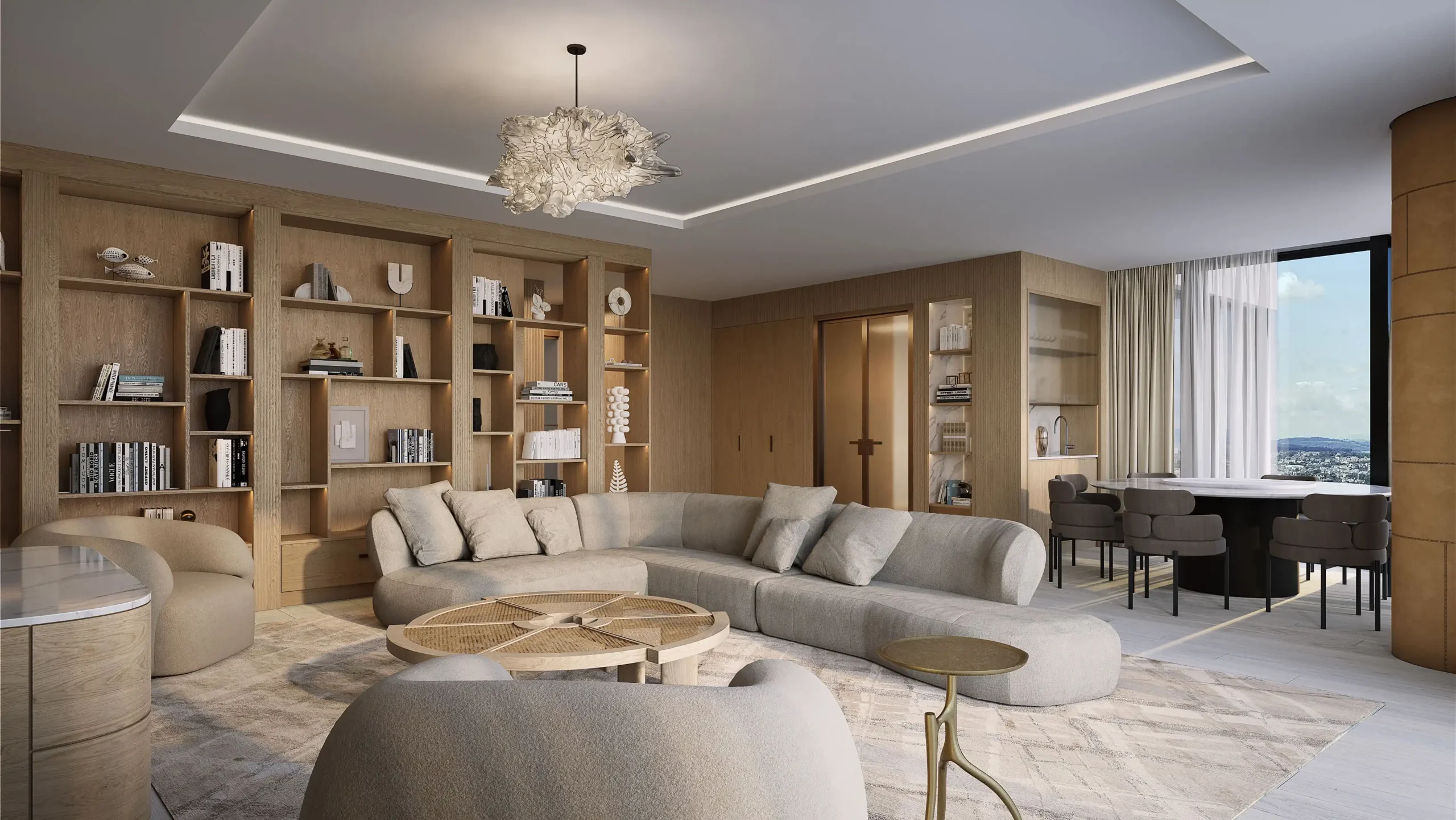
Quick answer: A remote video factory audit is useful when it is run as a live, evidence-led review rather than a virtual showroom tour. For importers and procurement teams buying custom cabinets, ask the factory to follow an agreed route, show current work without edited cuts, and connect what you see to documents, samples, and the order you are considering. The audit should cover factory identity, material and hardware control, production flow, quality checks, packing, and the people who will answer technical questions. It can reduce uncertainty before a quotation, sample approval, or production release, but it does not replace a site audit or independent inspection when the order value, compliance exposure, or project risk makes those checks necessary.
Who this guide is for
- Importers comparing cabinet manufacturers before requesting samples or placing a first order.
- Procurement teams that need an evidence trail before approving a supplier.
- Developers, contractors, and distributors coordinating cabinet specifications across several rooms or units.
- Buyers who cannot visit the factory immediately but still need a disciplined first review.
Key takeaways
- A useful remote video factory audit is live, routed, and tied to a clear list of evidence; a polished factory film is not enough.
- Ask to see the work area, incoming materials, production steps, quality checkpoints, and export packing in one connected session.
- Compare what is shown with the supplier’s business documents, current samples, drawings, and quotation. Do not rely on any one item by itself.
- The most revealing questions concern traceability: what material is being used, who checks it, how a cabinet is identified, and how a defect is handled.
- Finish the call with a written evidence list, unanswered questions, and a decision on whether to proceed, pause, request a sample, or arrange an on-site inspection.
Remote video factory audit: the decision table
On mobile, swipe left or right to view all table columns.
| Audit stage | What to ask for on the live call | Useful evidence | Red flag | What to do next |
|---|---|---|---|---|
| Factory identity | Start outside or at the entrance and move into the working areas without a jump cut. | Live introduction, location context, responsible production contact. | The caller will only show a meeting room, showroom, or pre-recorded clip. | Request a second live walkthrough and company documents before moving forward. |
| Material control | Show panels, edge banding, hardware, and finish samples available for current work. | Sample boards, incoming inspection records, hardware cartons, and agreed references. | Materials cannot be linked to the quoted specification or samples vary without explanation. | Ask for a signed specification and sample approval process. |
| Cabinet production | Follow a cabinet or panel through cutting, drilling, edge banding, assembly, and dry fit where possible. | Current work reference, cabinet code, process explanation, machine and operator view. | Only finished showroom cabinets are shown; no production activity is visible. | Ask for a process-specific follow-up call or plan an on-site audit. |
| Quality control | Ask who checks dimensions, finish, drilling, door alignment, and hardware before packing. | In-process checks, inspection station, and an honest explanation of rework handling. | “QC is done” is the only answer, with no check point or responsible person. | Request the project QC plan and a pre-shipment inspection proposal. |
| Packing and export readiness | Show a packed cabinet, edge protection, accessory packing, and the room or cabinet identification method. | Packing sequence, corner protection, accessory boxes, and photo records. | Loose hardware, unprotected finished panels, or no way to match cartons to rooms. | Request a packing specification and project labelling example. |
| Documentation and follow-up | Confirm what will be sent after the call and who owns the action list. | Controlled drawing revision, material schedule, audit recording, and dated evidence list. | Documents do not match the call or no one accepts ownership of open points. | Hold the order until the evidence is reconciled. |
What can a remote video factory audit actually confirm?
A live call can help you establish whether the supplier can show a real production environment, explain its cabinet process, and provide evidence that fits the order you are discussing. It is particularly helpful early in supplier selection, before a sample order, or while a buyer is deciding whether an in-person visit is justified.
It cannot independently prove every claim. A video call does not replace a physical assessment of building condition, machine maintenance, workforce capability, product testing, or legal and certification status. It is also not a substitute for a pre-shipment inspection when a finished order must meet an agreed specification. Treat it as one step in due diligence, alongside documents, samples, drawing review, reference checks where appropriate, and inspection planning.
For a first cabinet order, the strongest use of a remote audit is to reduce obvious uncertainty. Can the factory discuss plywood, MDF, particle board, PET, lacquer, veneer, edge banding, hinges, and drawer runners in a way that matches your requested specification? Can it explain how an apartment kitchen, wardrobe, vanity, or wall-panel package is organised for production and packing? Those are practical questions a showroom video cannot answer well.
Prepare the audit script before the camera turns on
Send a short agenda before the call. It gives the factory time to invite the right people, but it also prevents the session from becoming a general introduction. Ask for a continuous live connection where the host can move between areas when requested. A factory may have safety or confidentiality limits around certain equipment or customer projects; note those limits and ask for alternative evidence rather than assuming a restricted area proves a problem.
1. Confirm who is speaking and what the factory makes
Ask the host to introduce the production manager, quality contact, and export or project coordinator. Clarify whether the business is the manufacturer, a trading company working with a factory, or a combination of both. None of those models is automatically unsuitable, but the role must be clear because it determines who controls drawings, materials, production changes, and after-sales support.
Then agree the product scope. A factory that produces painted kitchen doors may not necessarily build the same tall units, aluminium profiles, stone interfaces, or export packing system that your project requires. Review the relevant KEJIA custom cabinet products or the supplier’s comparable product range against your own bill of quantities rather than judging capability from one attractive display kitchen.
2. Ask for a live route, not a highlight reel
Start with a simple route: entrance or loading area, material storage, panel processing, edge banding or finishing, assembly or dry fit, QC, and packing. The exact sequence varies by cabinet construction and factory layout, so do not insist on a theatrical path. What matters is that the host can move naturally between functions and explain what each area is doing.
Ask for a current job at one or two points in the call. You do not need confidential customer information. A generic cabinet carcass, door sample, drawer box, or finished panel can still show whether the factory understands drilling, edge quality, hinge installation, finish protection, and assembly tolerances.
3. Test the specification against physical evidence
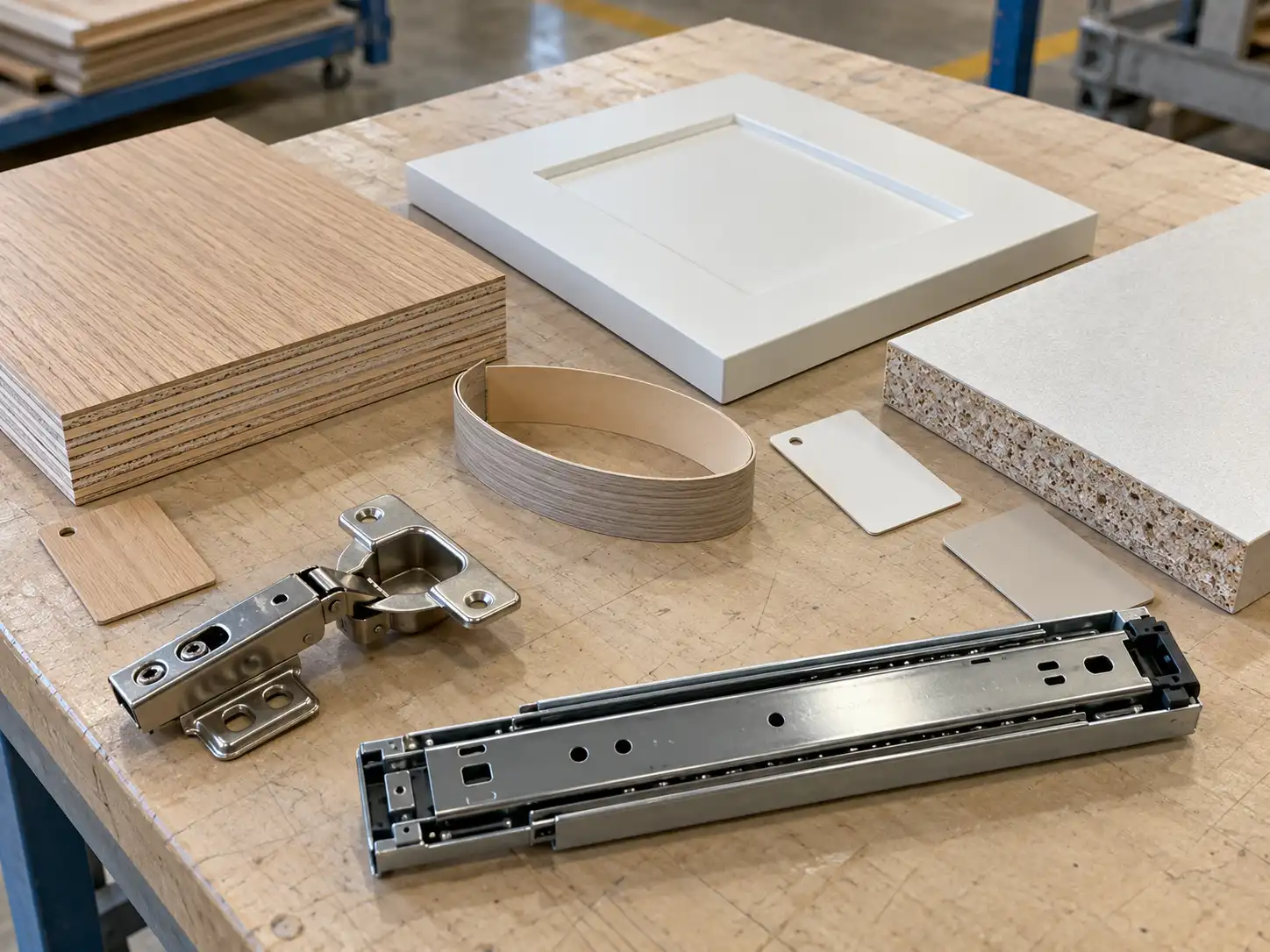
Have your quotation, finish schedule, and cabinet drawings open during the call. Ask the host to show a comparable board, door finish, edge-banding detail, hinge, runner, and packing material. If the project specifies moisture-resistant sink-base construction, painted MDF doors, plywood carcasses, or a particular hardware level, ask how that requirement is controlled from purchase through production.
Do not expect every item from your future order to be on the floor. Instead, listen for a consistent explanation of how the factory identifies the approved sample, manages a substitution request, and stops a change from reaching the line without buyer approval.
What evidence should a cabinet buyer request after the call?
The call is easier to assess when it ends with a defined document request. Ask for the items that clarify a decision, not a large folder of unrelated certificates. A certificate should be checked for issuer, scope, and relevance, then read alongside current production evidence. The ISO 9001 quality management overview explains the standard at a high level, but an audit still needs project-specific proof of how the factory controls the order in front of you.
On mobile, swipe left or right to view all table columns.
| Evidence area | Ask for | Why it matters for custom cabinets |
|---|---|---|
| Company and production role | Business registration details, factory address, named project contact, and a clear statement of manufacturing responsibility. | Establishes who can approve drawings, control production, and respond to defects. |
| Product specification | Quotation, finish schedule, cabinet construction notes, hardware list, and approved samples. | Gives the audit a baseline beyond verbal descriptions. |
| Drawing control | Latest plan, elevations, cabinet schedule, revision record, and approval route. | Reduces the risk of producing from a superseded drawing set. |
| Material and hardware control | Supplier or brand information where agreed, sample references, substitution process, and incoming check method. | Helps prevent unapproved changes to panels, finishes, hinges, or runners. |
| QC process | In-process and final inspection points, defect handling process, and photo-record method. | Shows how the factory finds issues before packing. |
| Packing plan | Packing method, accessory packing, room or cabinet coding, and damage-report process. | Supports receiving and installation on overseas projects. |
| Delivery support | Lead-time assumptions, packing list format, shipping handover information, and replacement-part process. | Makes delivery responsibilities clearer before the order is released. |
Which parts of cabinet production deserve the closest look?
For custom cabinet work, a good remote audit spends less time on staged displays and more time on the transitions where errors become hard to reverse. Ask to see panel storage and identification, the edge quality on a recently processed component, drilling or hardware preparation, a carcass or drawer-box assembly, and a finished-door inspection. If a project includes multiple finishes, ask how samples are kept with the order and how visible panels are protected after approval.
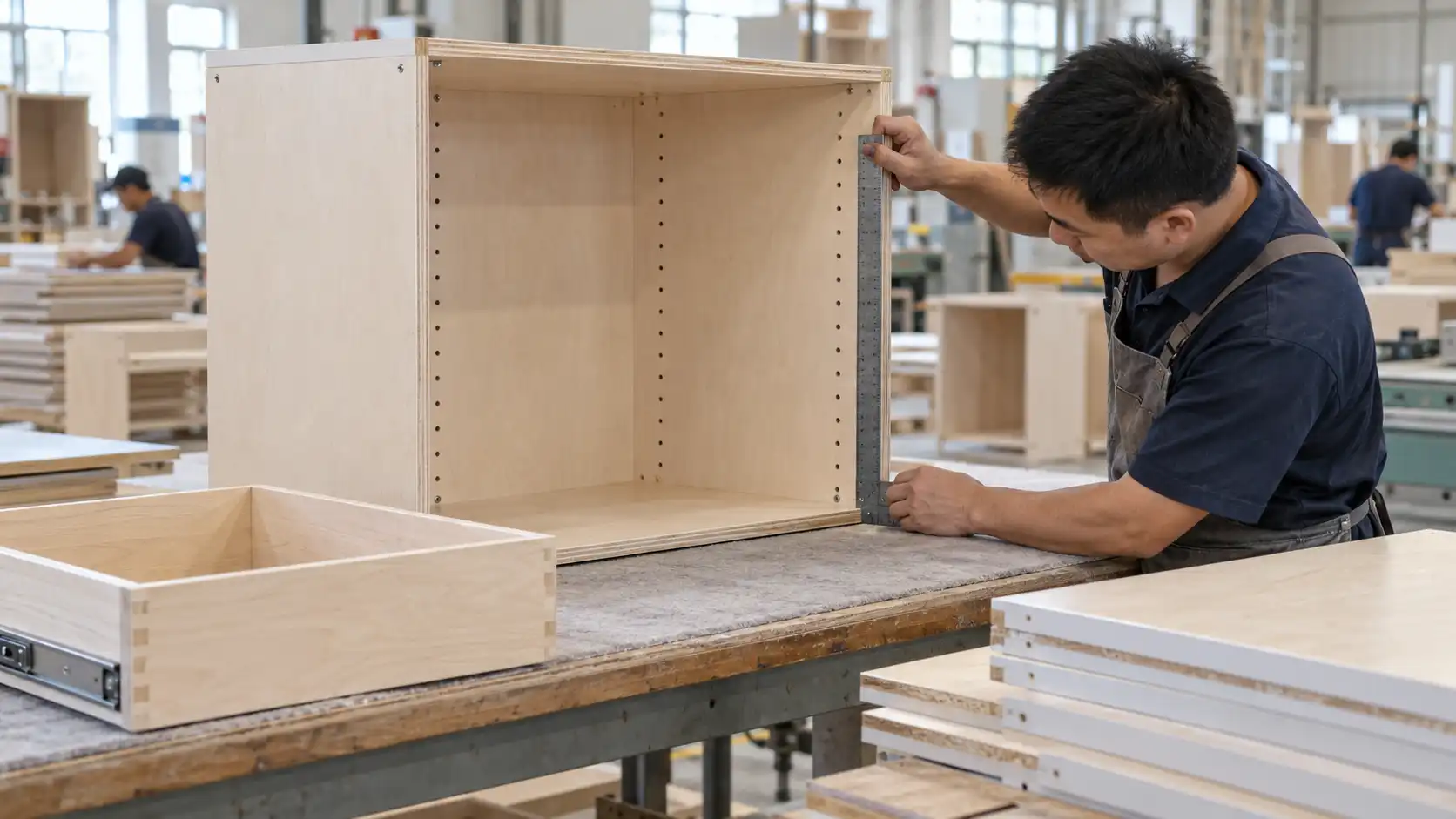
The factory-side questions are often straightforward. How are cabinet codes carried from shop drawing to panel, packing list, and room? Who confirms the drilling pattern when a hinge, runner, pull-out, or appliance changes? How is the front finish protected before it is packed? What happens if the site reports a missing panel or damaged door? A credible answer identifies the control point and the person responsible for resolving an exception.
Remote video factory audit red flags that deserve a follow-up
One awkward camera movement is not enough to reject a supplier. Connectivity, safety rules, noise, or customer confidentiality can make a call imperfect. Look instead for patterns that leave a core claim unverified.
The call never moves beyond a showroom or office
This does not establish production capability. Ask for another live session with a production manager and a route through the working areas. If that cannot be arranged, treat the factory claim as unverified rather than filling in the gaps yourself.
The host cannot connect materials to the agreed specification
Cabinet quality is influenced by the actual panel, finish, edge treatment, and hardware selected for the order. If the explanation changes between the quotation, the call, and the sample, pause the release and request one signed specification with a substitution approval process.
There is no answer for drawing revisions or cabinet codes
Custom cabinet projects depend on controlled drawings. A factory should be able to explain which revision is active and how a kitchen, wardrobe, or vanity is identified through production and packing. If the answer is only “we follow the drawing,” ask who checks it and where that record lives.
Quality control is described only in general terms
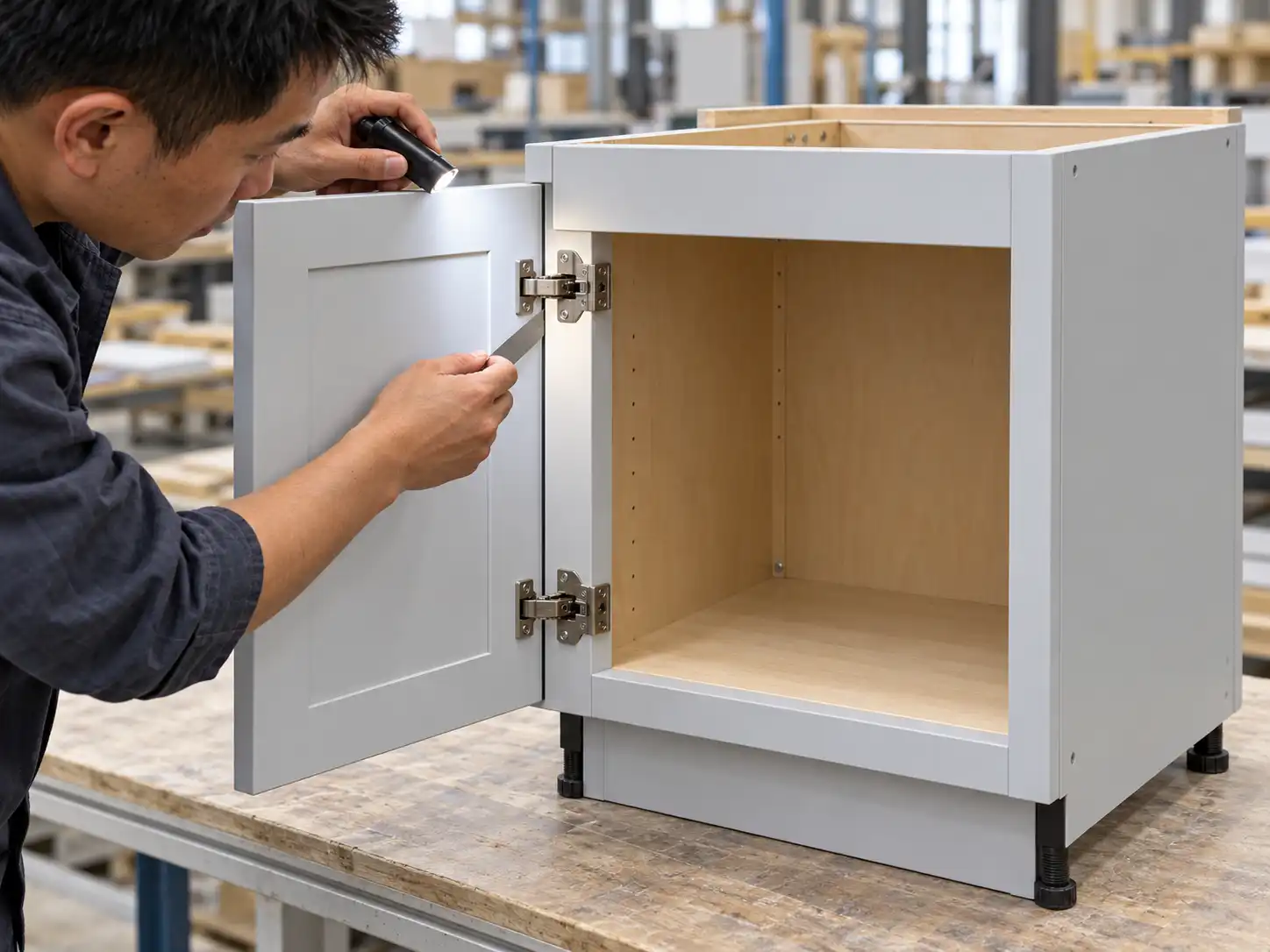
“We inspect everything” is not an audit answer. Ask which checks happen before packing: dimensions, drilling, finish, door gaps, hardware function, and quantity. Ask what happens to a rejected panel. A simple, specific explanation is more useful than a long promise.
Packing does not protect visible components or installation accessories
Finished doors, side panels, glass, handles, and small hardware can be damaged or misplaced if the packing method is vague. Request photos or a live view of a comparable export pack, including edge protection, accessory boxes, and the way cartons are matched to rooms or cabinet codes.
The follow-up file does not match the call
If the documents sent afterward describe different materials, lead times, factory roles, or production capability, do not treat the discrepancy as a minor administrative issue. List each inconsistency, request a written clarification, and keep the order on hold until the approved information is aligned.
How should you decide what happens after the audit?
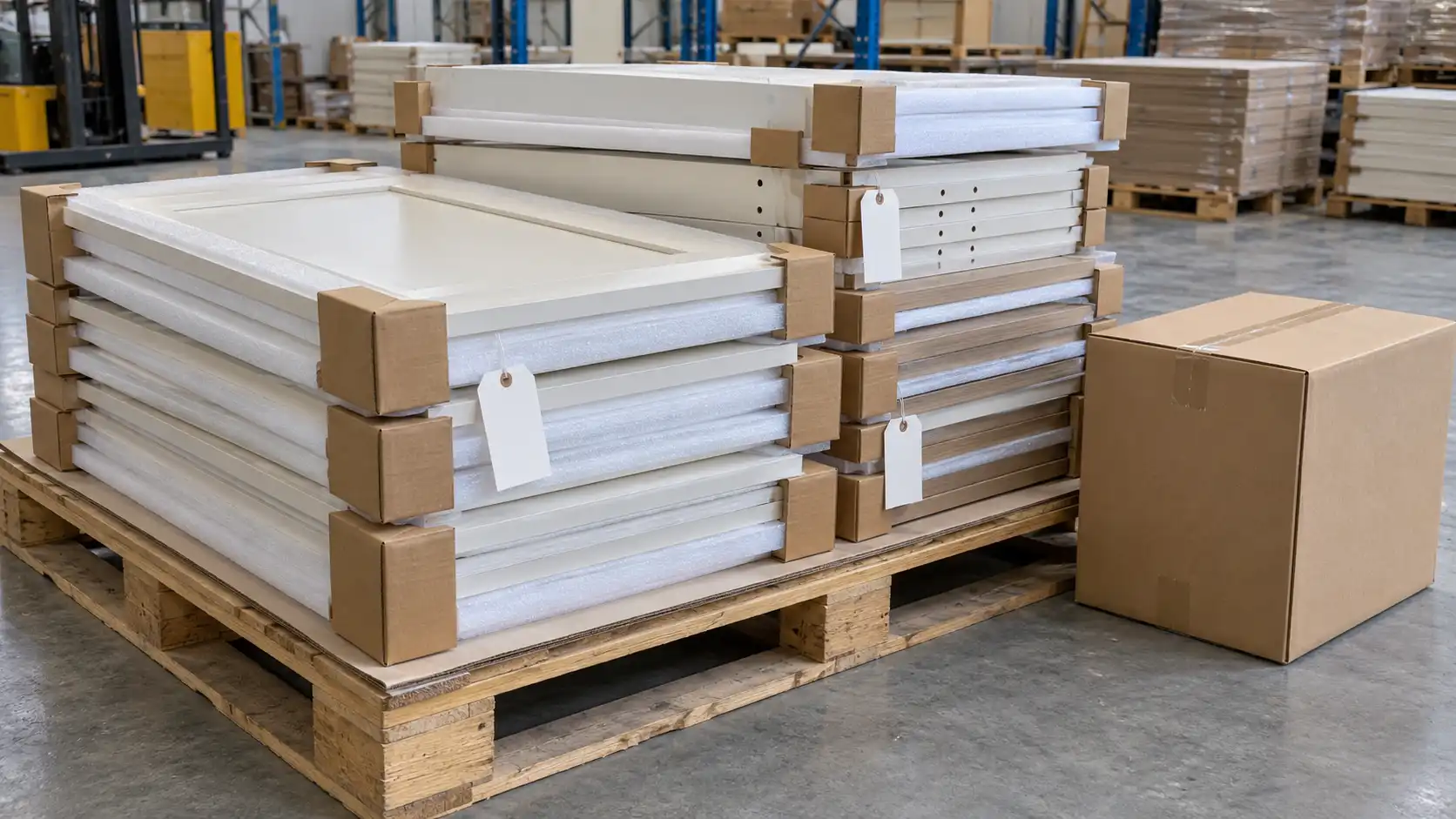
Use the audit to choose the next control, not to force a pass-or-fail result from incomplete evidence.
On mobile, swipe left or right to view all table columns.
| Audit result | Practical interpretation | Recommended next step |
|---|---|---|
| Evidence is coherent | The live walkthrough, documents, sample references, and technical answers broadly agree. | Move to drawing review, sample approval, and a defined QC and packing plan. |
| Evidence is partly complete | The factory appears capable, but a material, drawing, or packing point remains unverified. | Request targeted documents or a short follow-up video before releasing the affected scope. |
| Evidence conflicts | The call and documents disagree, or a key process cannot be shown or explained. | Pause the order; obtain clarification, arrange an on-site audit, or compare another supplier. |
| Project risk is high | The order is large, technically complex, compliance-sensitive, or difficult to replace. | Combine the remote audit with a physical factory visit or an independent inspection plan. |
Factory insight: make the video audit useful for production, not just supplier selection
From a cabinet manufacturer’s side, the most productive audit calls lead to a cleaner project handover. Buyers who share an outline drawing, product mix, target market, and expected delivery window can ask better questions about material availability, panel construction, edge banding, hardware, lead time, packing, and sample approval. The factory can then show the relevant process rather than a generic plant tour.
At KEJIA, a project review should connect the approved specification to the production drawing, cabinet code, material and hardware choice, finish sample, packing method, and after-sales contact. The remote call is a useful chance to test whether those links exist. It should end with defined owners for open items, especially where an appliance, stone interface, finish match, or site measurement can change the cabinet construction.
Remote video factory audit checklist for importers and procurement teams
- Agree the live route, call time, participants, and evidence list in advance.
- Confirm the supplier’s manufacturing role and the person responsible for production, QC, and project coordination.
- Keep the quotation, drawings, finish schedule, and sample references available during the call.
- Request live views of material storage, processing, assembly or dry fit, QC, and packing appropriate to the cabinet type.
- Ask how panels, doors, hardware, and accessories are identified and kept with the correct order or room.
- Check how drawing revisions, substitutions, defects, and replacement parts are controlled.
- Request only the documents needed to close the decisions that remain open.
- Record the date, participants, areas viewed, evidence received, and unanswered questions.
- Decide whether the next step is a sample, drawing review, targeted follow-up call, site audit, or pre-shipment inspection.
Frequently asked questions
Is a remote video factory audit enough before ordering cabinets from China?
It can be a useful early control, especially before a sample order or a first quotation shortlist. It is not enough by itself when the order is high value, technically complex, compliance-sensitive, or difficult to correct after shipment. Combine it with an approved specification, samples, drawing control, and the level of inspection that fits the project risk.
Should the factory send a recorded tour instead of a live audit?
A recorded tour can introduce the facility, but it is weaker evidence because the buyer cannot choose the route, ask for a closer view, or test an answer against current work. Use a recording as background material. Use a live call for the audit questions and ask for dated follow-up evidence where needed.
What should I ask to verify cabinet materials on video?
Ask the factory to show comparable panels, door finishes, edge-banding details, hardware, and sample references while you compare them with the quotation and approved finish schedule. Then ask how a substitution is approved and how the selected material is identified for the order. The control process matters as much as the item shown on camera.
Can a video audit prove that a factory holds a certification?
No. A video call may show a document, but you should verify the certificate separately with the relevant issuer or certification body and confirm that its scope is relevant. More importantly, a certificate does not replace current evidence of how the factory controls your cabinet drawings, materials, QC, and packing.
What are the most important cabinet QC checks to ask about?
Ask how the factory checks panel size, drilling, edge banding, finish condition, door and drawer operation, hardware fit, cabinet codes, accessory quantity, and packing protection. The exact sequence differs by product, but the factory should be able to name the check point, responsible person, and action taken if something fails.
What if the factory cannot show a confidential customer project?
That can be reasonable. Ask for a comparable generic cabinet, a non-confidential production area, obscured work-order information, or a later call focused on the process you need to verify. The goal is not to obtain another customer’s information; it is to see whether the claimed cabinet process and controls can be demonstrated.
When should I arrange an on-site factory audit instead?
Arrange one when the investment, project exposure, or technical complexity is high enough that a video review leaves material uncertainty. It is also sensible when the supplier’s role, documents, process capability, or follow-up evidence remains inconsistent after a targeted remote audit.
Request factory documentation before you release the order
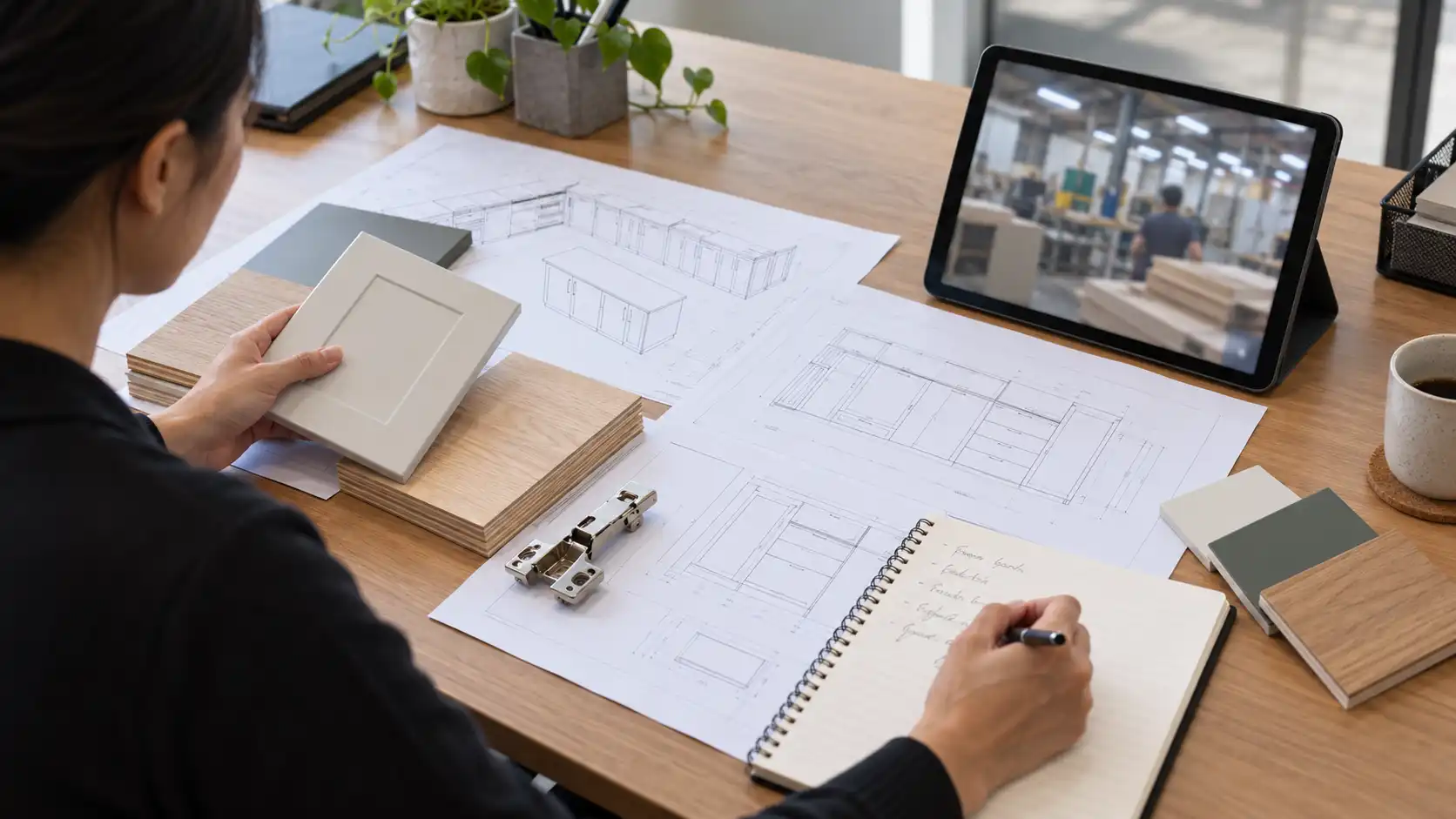
A remote video factory audit works best when it creates a short, usable evidence trail. Before releasing a cabinet order, make sure the audit findings match the approved drawings, material and hardware schedule, QC plan, packing method, and project contacts. Request factory documentation from KEJIA with your cabinet list, drawings, target market, and delivery requirements. We can help identify the documentation and technical points that need to be settled before production.