



Kitchen Cabinet Remodel Guide: Materials, Storage, and Budget Choices That Last
This kitchen cabinet remodel guide helps you make choices that improve daily use, maintenance, and long-term value.They are choices that make a kitchen easier to use, easier to clean, and easier to keep looking good over time. For most remodels, that means choosing warm low-gloss finishes, specifying materials clearly, planning storage around daily routines, protecting moisture-prone zones, and spending more on drawers and hardware than on decorative upgrades you rarely touch.
This guide is for homeowners planning a kitchen remodel and for designers helping clients compare cabinet proposals. Use it to turn a broad style preference into specifications you can compare before you place an order.
Kitchen Cabinet Remodel Guide: 6 Decisions to Make First
On mobile, swipe left or right to view all table columns.
| Decision | What is changing in 2026 | Best for | What to verify before buying |
|---|---|---|---|
| Overall look | Warm woods, soft neutrals, matte surfaces, and gentle curves | Kitchens that should feel calm rather than clinical | A large finish sample under your actual room lighting |
| Door material | Clearer comparison of core, surface, and edge treatment | Any project receiving multiple quotes | The panel core, surface finish, edge banding, and warranty terms |
| Storage | More drawers, pull-outs, and appliance-specific zones | Households that cook frequently or have compact kitchens | What each cabinet will store before the layout is approved |
| Whole-home coordination | Matching finishes across kitchen, vanity, wardrobes, and doors | Multi-room renovations | Batch, color code, edge profile, and replacement-piece availability |
| Durability | More attention to moisture sealing, hardware, and load rating | Sink bases, heavy drawers, and family kitchens | Edge quality, hinge adjustment, runner rating, and sink-base protection |
| Budget | Spending on daily-use components before decorative extras | Most mid-range remodels | The cost difference between drawers, hardware, lighting, and finish upgrades |
1. Warm Minimalism Replaces Cold Modern
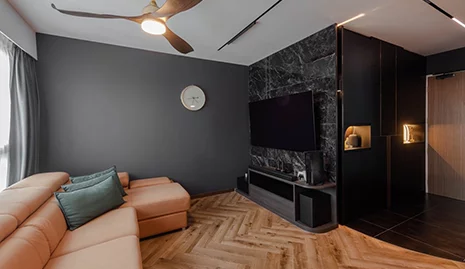
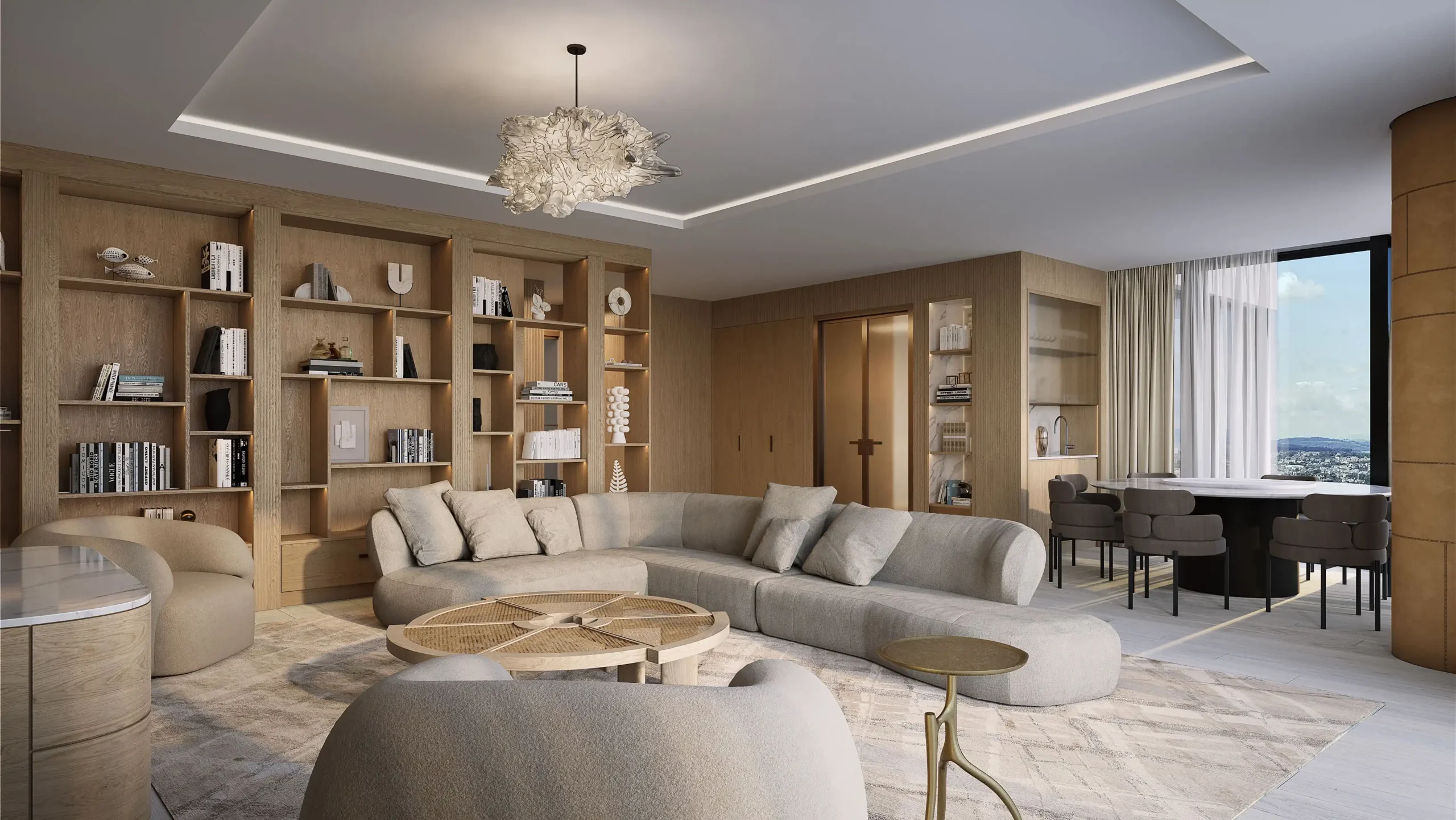
All-white, high-gloss, handleless kitchens can still work, but the warmer direction is easier to live with for many households. Think wood-grain doors, clay or off-white tones, muted metals, and low-reflection surfaces. The goal is not to make the room rustic. It is to give a clean-lined kitchen more visual depth and a less showroom-like feel.
Choose warmth without making maintenance harder
For a practical version of this look, start with a matte or lightly textured surface. These finishes generally show fingerprints and small daily marks less readily than a mirror-gloss door. Pair a wood-grain base cabinet or tall unit with a quieter solid color on the island or upper cabinets, rather than applying the same statement finish everywhere.
Before committing, take samples home and view them near the window, under ceiling lighting, and at night. A finish that reads as warm beige in a showroom can look gray, yellow, or pink in a different room.
Materials that support a warm-minimalist kitchen
- Wood-grain melamine-faced panel (MFC): a budget-conscious, low-maintenance option with many realistic textures.
- PET-faced doors: a smooth, even surface suited to contemporary solid colors.
- Matte lacquer: a refined, low-reflection option when color depth is the priority.
- Wood veneer: a natural-grain option that needs more careful specification for color variation and maintenance.
The best finish is not automatically the most expensive one. It is the one that fits your lighting, cleaning habits, budget, and tolerance for visible wear.
2. How to Compare Kitchen Cabinet Materials Before You Buy
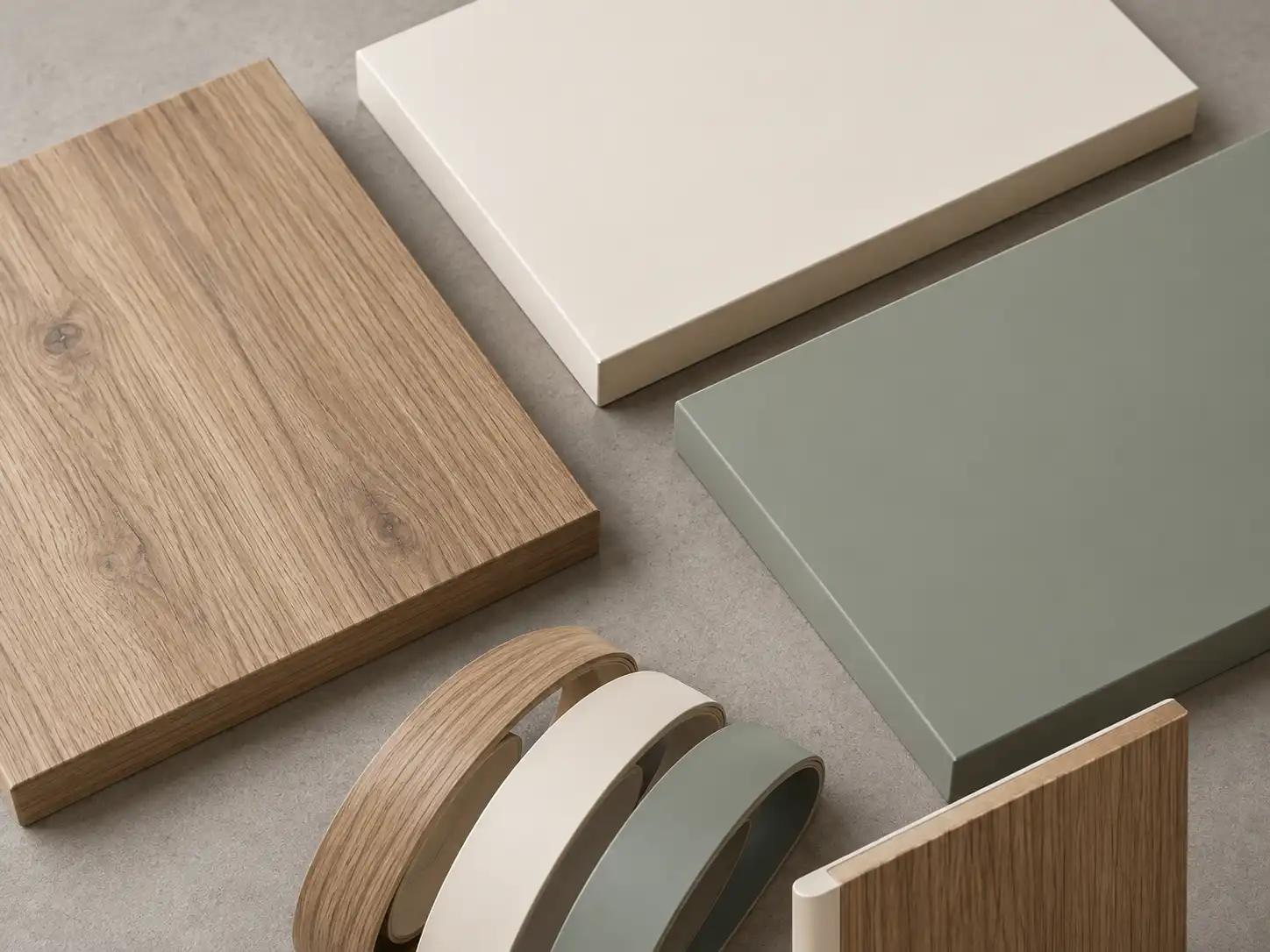
The word “board” is not a complete material specification. A useful cabinet quote separates the material into three layers: the brand or collection, the panel core, and the visible surface. Without those details, two quotes that look similar may describe very different products.
Many 2026 kitchen cabinet trends look appealing in a showroom, but their long-term value depends on the material details behind the visible door finish.
Ask every supplier for the same three-part description
Use this format in your request for quotation:
[brand or collection] + [core material] + [surface finish] + [edge treatment]
For example: “melamine-faced particleboard with matching ABS edge banding” is clearer than “imported board.” If a door has a different construction from the cabinet carcass, ask for both specifications separately.
2026 cabinet material comparison
On mobile, swipe left or right to view all table columns.
| If your priority is | Ask about | Why it may fit | Question to ask before signing |
|---|---|---|---|
| Low maintenance and controlled cost | Melamine-faced panel | Finished surface, broad color range, and straightforward cleaning | What is the panel thickness and edge-banding material? |
| Coordinated grains and colors | A specified decorative board collection | Matching doors, panels, and edges can simplify finish coordination | Is the same decor available for fillers, end panels, and future replacements? |
| Sleek solid colors | PET-faced doors | Smooth, uniform appearance for modern layouts | How will scratches, fingerprints, and edge details appear in the selected color? |
| Soft color depth | Matte lacquer | Low reflection can make shapes and colors read clearly | What is the repair process if a door is damaged after installation? |
| High reflection | High-gloss lacquer or acrylic-type finish | A more dramatic visual effect | How visible will fingerprints and light scratches be in this room? |
Do not compare materials by name alone. Review a full-size sample, inspect the edge treatment, and request the exact specification to appear in the final order documents.
3. Plan Storage Around How You Actually Cook
The common frustration is rarely just “not enough cabinets.” It is usually that frequently used items are in awkward places, deep shelves hide what is at the back, and appliances do not have a planned home.
Among 2026 kitchen cabinet trends, better storage planning has more everyday impact than most purely decorative upgrades.
Start with a five-and-five storage audit
Before the design is frozen, list your five most-used appliances and five most-used dry goods. Then ask where each will be stored and where it will be used. This simple exercise exposes gaps early: a rice cooker with no landing space, pans stored far from the hob, or a pantry that is too shallow for its containers.

When drawers outperform shelves
Deep drawers make pots, pans, food containers, and small appliances easier to see and reach than a base cabinet with a fixed shelf. Pull-out larders can improve access in narrow kitchens, but only if their width, load rating, and contents fit the household. A mechanism is valuable when it solves a real access problem—not merely because it looks impressive in a showroom.
For every cabinet, name its intended use before approving the plan. Cabinets without a purpose tend to become clutter storage.
4. Coordinate Cabinets, Doors, and Vanities Across Rooms
Renovating the kitchen, entry, bathroom, and bedrooms together can create a more coherent home. It also introduces a risk: whites, wood grains, edge profiles, and sheen levels can look different when products come from unrelated batches or suppliers.
Prevent mismatched finishes before production
If several rooms will share a visual language, confirm the following in writing:
- the decor or color code for each visible finish;
- whether panels, doors, fillers, and end panels use the same batch or matched collection;
- the edge profile and handle finish for every room;
- who is responsible for replacement parts if a door is damaged or a measurement changes.
One supplier is not always necessary. What matters is a documented finish schedule and a physical sample approved under the lighting where the products will be installed.
5. Check Durability Before Installation Day
Two kitchens may look equally good on installation day but perform differently after years of steam, spills, heavy pans, and repeated opening. The difference often comes down to edge sealing, hardware adjustment, load capacity, and moisture protection.
Cabinet handover checklist
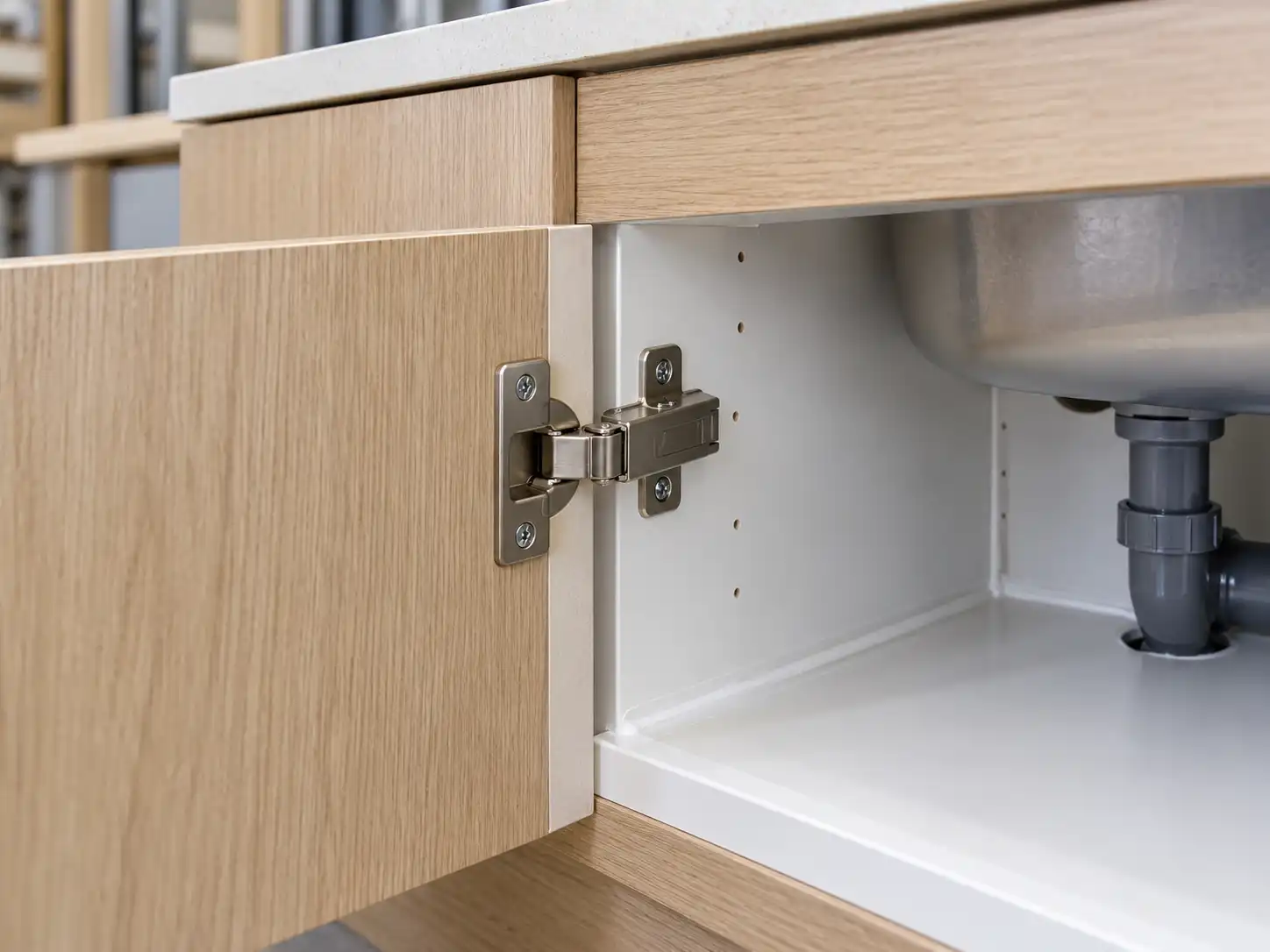
- Edge banding: Run a finger along exposed edges. They should feel flush and continuous, without gaps, sharp points, or lifting sections.
- Doors and drawers: Open every one. Soft-close action should be smooth, and adjacent door gaps should be consistent.
- Drawer runners: Ask for the manufacturer and stated load rating, especially for wide pot drawers.
- Sink base: Confirm that cut edges, pipe openings, and vulnerable lower areas have been sealed against incidental moisture.
- Dishwasher and steam zones: Check the supplier’s protection detail for panels beside appliances that release heat or moisture.
- Spare parts: Ask how replacement doors, hinges, handles, and panels are ordered if you need them later.
Quality is easier to verify when the quotation, drawings, and handover checklist all describe the same materials and hardware.
6. Allocate Your Kitchen Remodel Budget Where It Matters
In a mid-range kitchen remodel, the most visible upgrade is not always the one that improves daily life most. Put budget into components you use every day and construction details that are difficult to change after installation.
The strongest 2026 kitchen cabinet trends are therefore best treated as a decision framework: spend on durable function first, then use finish and styling to express the look you want.
Spend here
- Drawers instead of fixed shelves in heavily used base cabinets.
- Durable hinges and drawer runners with an appropriate load rating.
- Accurate measurement, installation, and moisture protection around the sink.
- Finish samples and a clear written specification before production begins.
Save here when it does not serve your routine
- Statement finishes on cabinets that are rarely opened or seen.
- Lighting inside every cabinet when a few task-focused lights would do more.
- Complex corner mechanisms when a simpler drawer or shelf layout provides better access.
The best-value kitchen is not the lowest quote or the most upgraded one. It is the one where the materials, storage, hardware, and installation detail match how the household actually lives.
Common Questions About 2026 Kitchen Cabinet Trends
Are warm wood kitchen cabinets still in style in 2026?
Yes. Warm wood tones, matte finishes, and soft neutrals remain useful because they add depth without requiring ornate detailing. Choose a sample based on your actual lighting and pair it with durable surfaces appropriate for your cooking and cleaning habits.
Is melamine a good choice for kitchen cabinets?
Melamine-faced panel can be a practical choice when the panel core, thickness, edge banding, and moisture-sensitive zones are specified clearly. It offers broad design options and easy cleaning, but quality varies by panel construction and fabrication detail.
Are drawers worth the extra cost in base cabinets?
For frequently used pots, pans, dishes, and appliances, drawers often improve access enough to justify their cost. Prioritize them in the cooking, prep, and cleanup zones before adding more specialized accessories.
What should a cabinet quotation include?
It should identify the cabinet carcass, door construction, visible surface, panel thickness, edge treatment, hardware brand or specification, countertop scope, installation scope, lead time, and warranty terms. A quote without these details is difficult to compare fairly.
Which cabinet areas need the most moisture protection?
The sink base, dishwasher-adjacent panels, and any cut edges around plumbing are especially vulnerable. Ask how exposed edges and openings will be sealed, then inspect those areas before final sign-off.
Should kitchen and bathroom cabinetry use matching finishes?
They do not need to be identical, but a shared color family, sheen level, and hardware finish can make a multi-room renovation feel intentional. Approve physical samples together rather than matching colors from a screen.
Final Recommendation
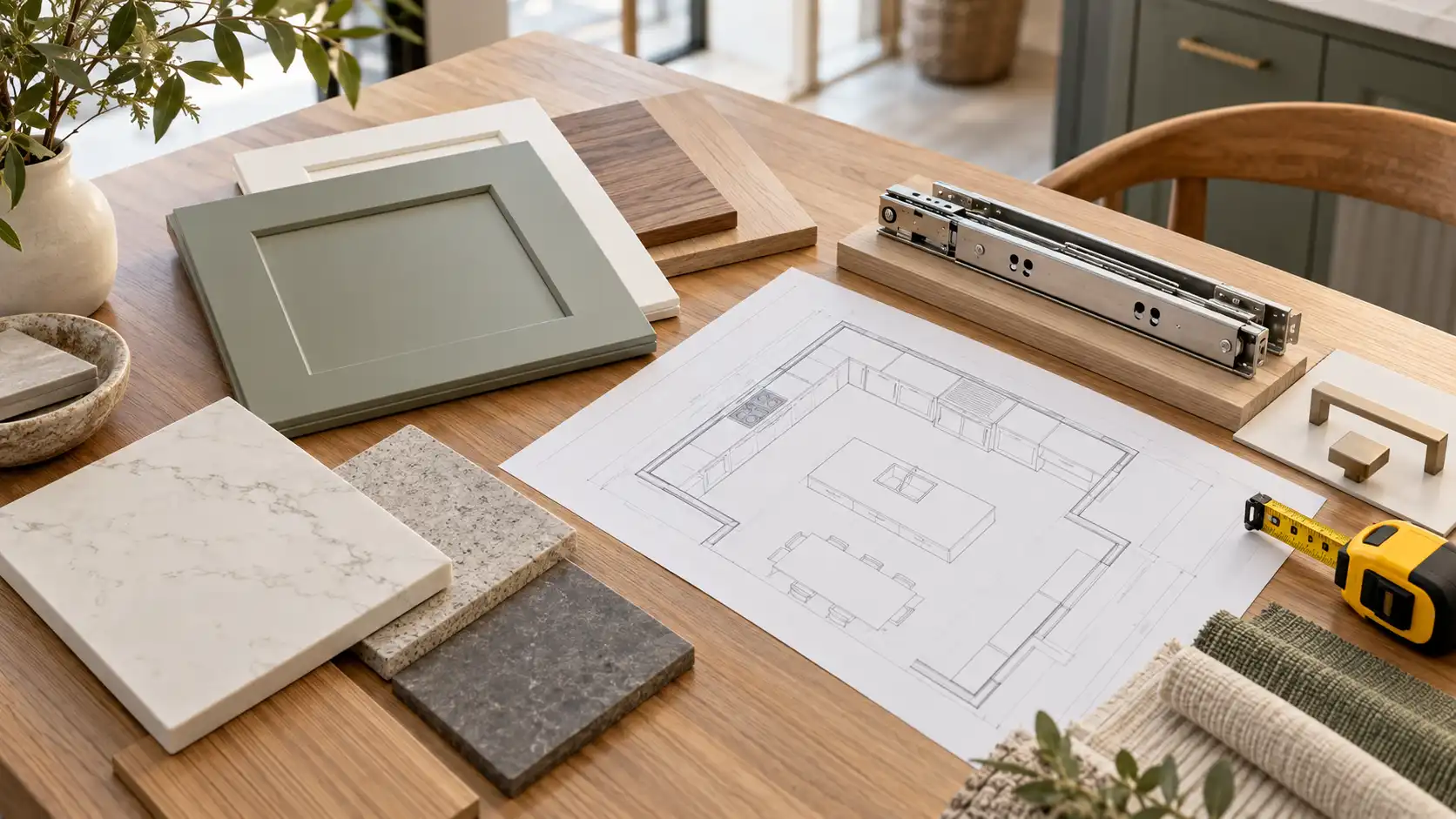
Use 2026 trends as a starting point, not a checklist. Choose a finish that works in your lighting, demand a material specification you can compare, plan storage around your daily routine, and inspect construction details before handover. Those choices will influence how the kitchen feels long after a particular color or style has moved on.
Before placing an order, ask your supplier or designer for a complete material-and-hardware schedule, a finish sample approval, and a cabinet handover checklist.