




Who This Guide Is For
- Developers comparing landed delivery choices across apartment, hotel, villa, or mixed-use projects.
- Contractors responsible for unloading, storage, installation labour, and handover quality.
- Importers and procurement teams evaluating custom cabinet manufacturers for overseas projects.
- Project managers who need a packing, access, and replacement-parts plan before production release.
Key Takeaways
- Flat-pack cabinets usually reduce shipping volume, but transfer more sorting and assembly work to the site.
- Assembled modules reduce carcass-assembly steps, but must fit the entire route from container to final room.
- A lower factory price or lower freight price alone does not show the real project cost.
- Door finishes, glass, oversized panels, hardware kits, and room coding need format-specific protection.
- A hybrid format often gives the best balance: flat-pack repeated carcasses and factory-assembled complex modules.
Flat Pack vs Assembled Overseas Cabinets: Decision Table
On mobile, swipe left or right to view all table columns.
| Decision factor | Flat-pack delivery | Assembled delivery | Project decision rule |
|---|---|---|---|
| Container freight | Panels nest efficiently and generally use less cubic volume | Cabinet boxes ship more air and may need more container space | Start with flat-pack when freight volume is a major cost driver. |
| Site labour | Needs organised sorting, assembly, adjustment, and supervision | Reduces carcass assembly but does not remove installation work | Favour assembled modules when trained labour is scarce or the programme is compressed. |
| Building access | Individual panels can move through narrow routes | Every module must clear doors, lifts, turns, and stairs | Measure the narrowest access point before approving assembled sizes. |
| Damage exposure | More separate parts and edges to control | Heavier, larger packs can suffer handling impact | Review the protection method by finish, size, and handling route. |
| Factory pre-fit | Machining and components are checked; final box assembly is on site | Factory can check squareness, door gaps, and drawer movement before dispatch | Use factory assembly for complex feature units or limited site capability. |
| Replacement response | A panel or fitting can often be supplied separately | A damaged module may require more expensive replacement handling | Define spare parts and claim evidence for either format. |
When Is Flat-Pack the Better Delivery Format?
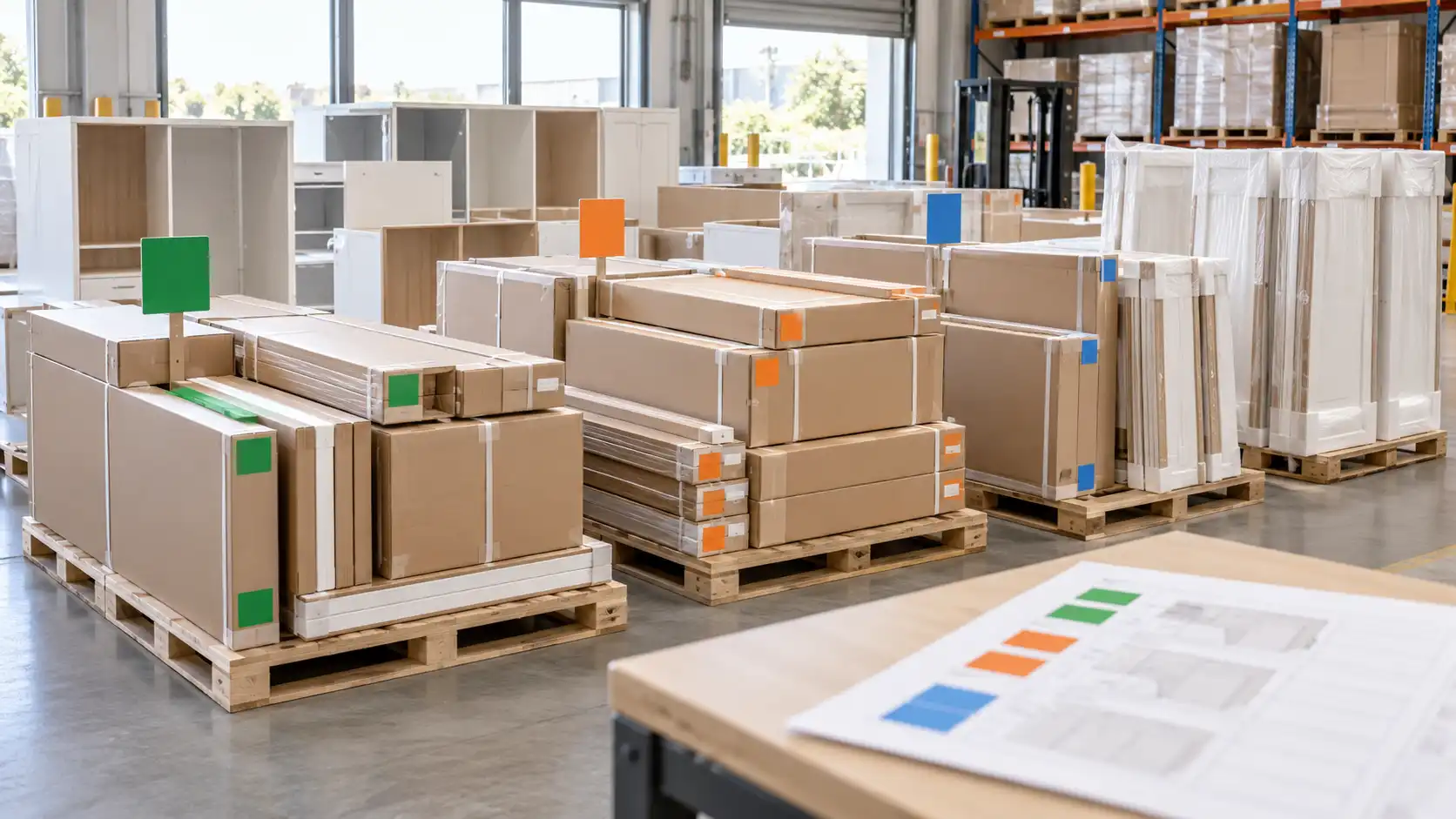
Flat-pack cabinets are prepared components—carcass panels, doors, fittings, connectors, and hardware kits—that are assembled at the destination. A professional flat-pack system is not a low-specification alternative. The factory can still machine every drilling point, seal designated edges, match finish batches, pre-drill hinge positions, and pack hardware by cabinet or room code.
Choose flat-pack first when the project has repeated units, restricted access, economical container utilisation, and an installation team able to follow drawings and identification codes. It is particularly useful for apartments where cartons can move through lifts before rooms are fully fitted out. It also supports component-level after-sales: a scratched door, missing hinge plate, or damaged side panel can be identified and replaced without shipping an entire cabinet box.
Flat-pack is a poor fit when there is no supervised assembly area, the installation crew has limited cabinet-adjustment skill, or the project programme leaves no time to check and correct repeated assembly errors. In those cases, the apparent freight saving can become a site-cost problem.
When Is an Assembled Module the Better Delivery Format?
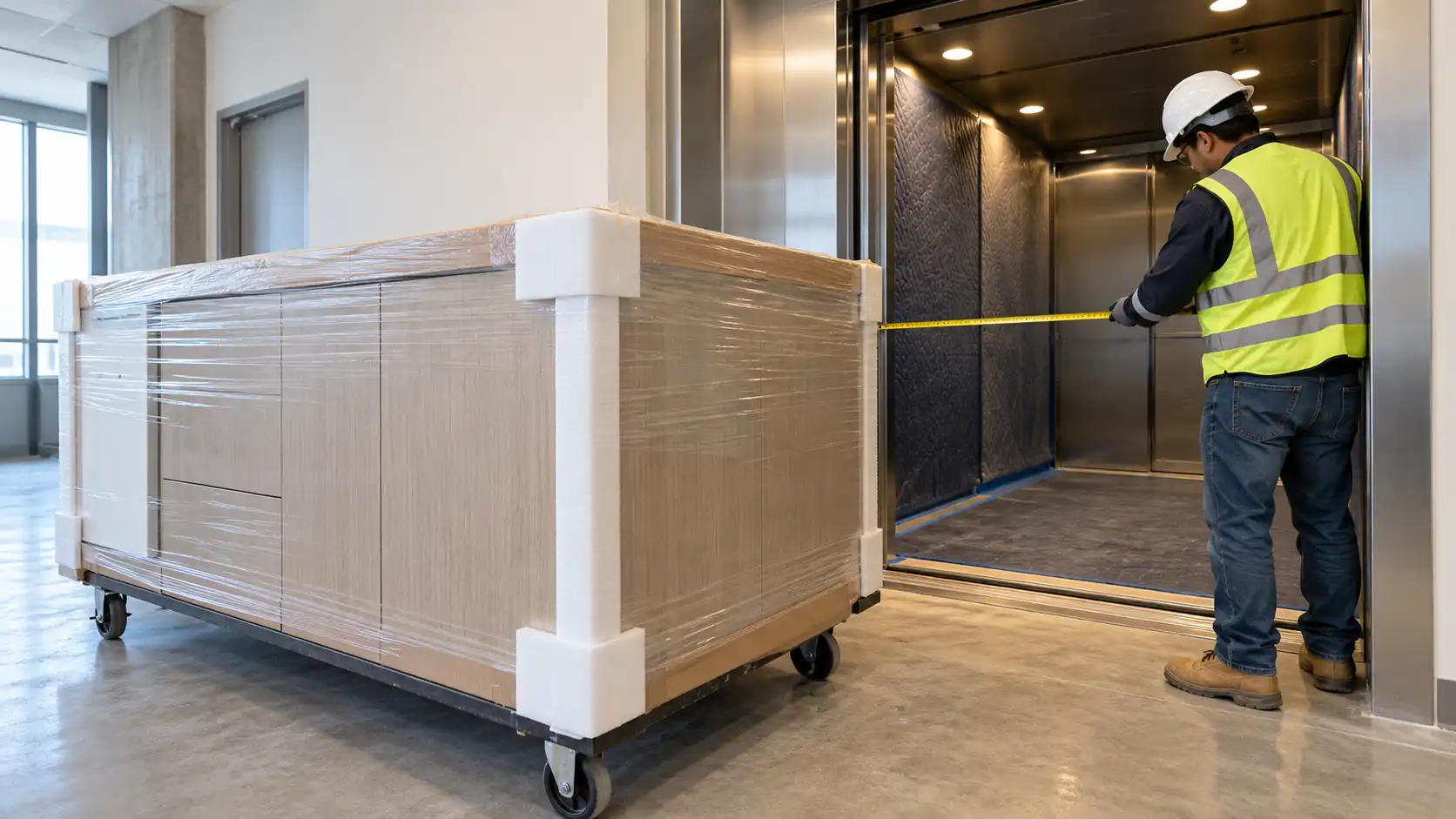
Assembled cabinets are factory-built carcasses or modules. Before packing, the factory can check box squareness, shelf positioning, drawer movement, drilling, and selected door or hardware alignment. Doors, glass, countertops, and long fillers may still travel separately to protect visible finishes and simplify lifting.
Assembled delivery is often useful for remote sites with limited skilled labour, rapid hotel renovations, complex display units, or feature-wall modules where factory pre-fit reduces risk. It still requires site setting-out, wall fixing, levelling, joining, door adjustment, service coordination, and final finishing. It does not eliminate installation—it shifts part of the work upstream.
Before choosing it, confirm the practical route: unloading equipment, loading-bay height, storage area, door widths, lift capacity and internal dimensions, corridor turns, stair landings, and the final room opening. A module that fits a container can still fail at a building entrance.
Which Option Fits Each Overseas Project Condition?
On mobile, swipe left or right to view all table columns.
| Project condition | Recommended starting format | Why | Confirm before production |
|---|---|---|---|
| Multi-unit apartments with repetitive kitchen and wardrobe layouts | Flat-pack | Efficient container use and room-coded distribution | Lift size, unit coding, assembly crew capacity, spare parts |
| Villa with skilled installers and complex feature units | Hybrid | Flat-pack handles standard cabinets; factory-built modules reduce risk on special units | Access route, finish protection, handling plan, site measurements |
| Hotel renovation with a short room-by-room programme | Assembled or hybrid | Can reduce carcass-assembly work during the installation window | Staging sequence, floor protection, module dimensions, labour schedule |
| Remote project with limited cabinet labour | Assembled | Shifts selected technical assembly to the factory | Unloading equipment, dry storage, module access, wall readiness |
| Dealer stock or repeat retail programme | Flat-pack | Supports warehousing, mixed container loading, and individual replenishment | Standard SKU codes, assembly support, replacement stock |
How Should Developers Compare the Real Landed Cost?
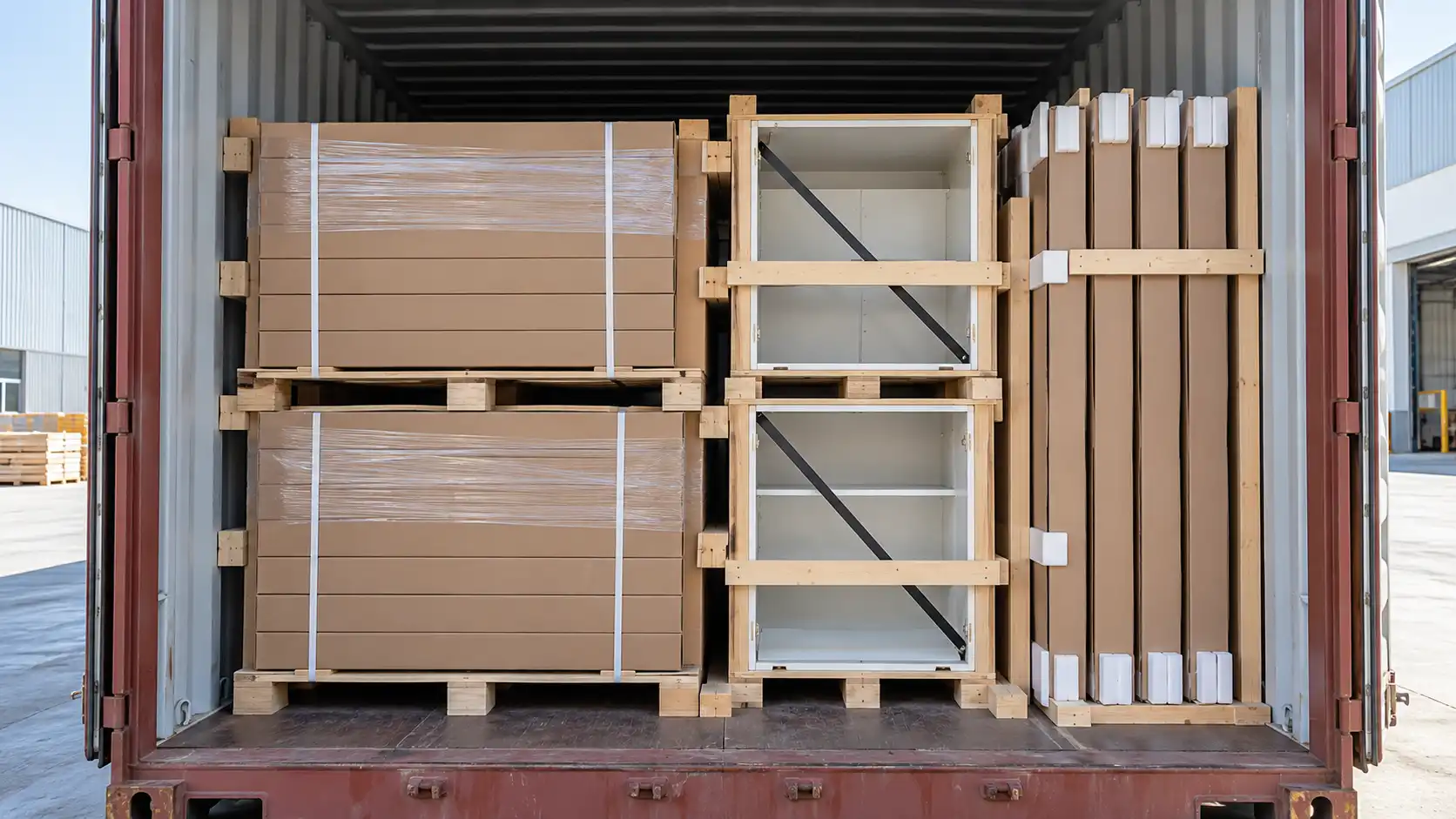
The useful comparison is not flat-pack price versus assembled price. It is the delivery cost of an installable, accepted cabinet package. Compare freight and final-mile handling, site assembly and supervision, building access and protected staging, damage-control records, and replacement support on the same room schedule and drawing revision.
- Freight and handling: container cubic volume, required containers, unloading equipment, and final-mile movement.
- Site labour: assembly hours, installation hours, supervision, adjustment, overtime, and rework exposure.
- Access and staging: temporary storage, movement through the building, floor protection, and room release sequence.
- Damage and replacement: packing method, labels, photo records, spare components, and claims procedure.
Ask the manufacturer to identify the packing format by cabinet code. A mixed quotation that only says “flat-pack” or “assembled” cannot be compared reliably.
Factory Insight: Choose the Format After the Drawing Review
At KEJIA, flat pack vs assembled overseas cabinets should be decided after project drawing review, not after production begins. The review identifies cabinet dimensions, appliance and service interfaces, surface-finish risk, hardware requirements, room codes, delivery sequence, and the route from unloading point to installation room.
For flat-packed cabinets, control points include connector positions, drilling logic, edge protection, door identification, and hardware allocation. For assembled modules, the factory should check squareness, drawer operation, door-gap adjustment, protective corner materials, and safe lifting points. Both formats need labels that match approved drawings and the packing list.
Where wood packaging, crating, or dunnage is used, confirm destination requirements with the freight partner and relevant authorities. The IPPC publishes adopted ISPM standards; the agreed ICC Incoterms rules should also clarify delivery responsibilities, costs, and risk boundaries.
Six Mistakes That Create Overseas Delivery Problems
1. Selecting flat-pack only to reduce freight
If the installer lacks an assembly lead, a clean sorting area, or time for checks, the cost shifts to site labour and rework. Confirm capability before choosing the lower-volume format.
2. Selecting assembled units without an access survey
Measure the smallest clear opening and all turns in the delivery path. The critical dimension is the real route, not the container door.
3. Treating all cabinet codes as one packing format
Standard carcasses, tall units, glass displays, and high-finish doors have different risks. A hybrid plan should identify the format and protection method by cabinet code.
4. Mixing hardware across rooms
A single unlabelled fittings carton can stop a room even when every large panel has arrived. Allocate hardware by cabinet or room and retain a controlled spare kit.
5. Ignoring destination storage conditions
Cabinets should not wait in a wet, unsecured, or unfinished area. Confirm dry, level storage and protection from ongoing wet trades before shipment.
6. Waiting until damage occurs to define the response
Agree the required photos, carton or module codes, reporting window, and replacement pathway before delivery. This makes after-sales decisions factual rather than descriptive.
Pre-Production Delivery Format Checklist
- Freeze the approved drawings, cabinet schedule, and revision code.
- Measure loading bay, door widths, lifts, corridors, stair landings, and turning points.
- Identify every cabinet code as flat-pack, assembled, door-only, or hybrid.
- Compare freight, unloading, site labour, and installation costs on the same scope.
- Approve finish-specific protection for doors, exposed panels, glass, and hardware.
- Require room, unit, cabinet, and carton/module identifiers that match the drawings.
- Confirm container loading, unloading equipment, dry storage, and the installation sequence.
- Agree receiving inspection, photo evidence, reporting window, spare parts, and after-sales contact.
Frequently Asked Questions
Are flat-pack cabinets less durable than assembled cabinets?
No. Durability depends on panel construction, edge treatment, connector design, hardware, assembly quality, wall fixing, and use conditions. Flat-pack cabinets can perform well when components are manufactured accurately and the site team assembles and adjusts them correctly. The project risk is uncontrolled site assembly, not flat-pack construction by itself.
Do assembled cabinets always cost more to ship?
They generally use more volume because cabinet boxes do not nest like flat panels. The total landed cost may still be worthwhile if assembled modules reduce expensive site labour, limit programme delay, or avoid assembly risk at a remote destination. Compare freight, handling, labour, and damage exposure together.
Can one project use both formats?
Yes. A hybrid delivery plan is often the most practical approach. Repetitive kitchen, wardrobe, and vanity carcasses can be flat-packed, while complex display units, unusual deep modules, or high-risk feature components can be factory assembled. The packing format should be listed by cabinet code.
Should cabinet doors travel separately?
Often, yes. Separate door packing can reduce stress on hinges and protect lacquer, veneer, PET, glass, and tall door faces during handling. The packing list must still link every door carton to the correct cabinet and room code so the installation sequence remains controlled.
What should contractors inspect when assembled modules arrive?
Inspect the module label, carton or crate condition, corners, visible finish, door and drawer movement where accessible, hardware packs, and quantity against the packing list. Photograph any exception before packaging is discarded or the module is moved. Keep the drawing and module code in the same damage report.
How should a developer request a delivery recommendation?
Share controlled drawings, room schedule, destination, delivery route, building-access dimensions, local labour plan, target installation date, and finish requirements. Ask the manufacturer to recommend flat-pack, assembled, or hybrid delivery by cabinet code and show freight, handling, packing, and spare-parts assumptions.
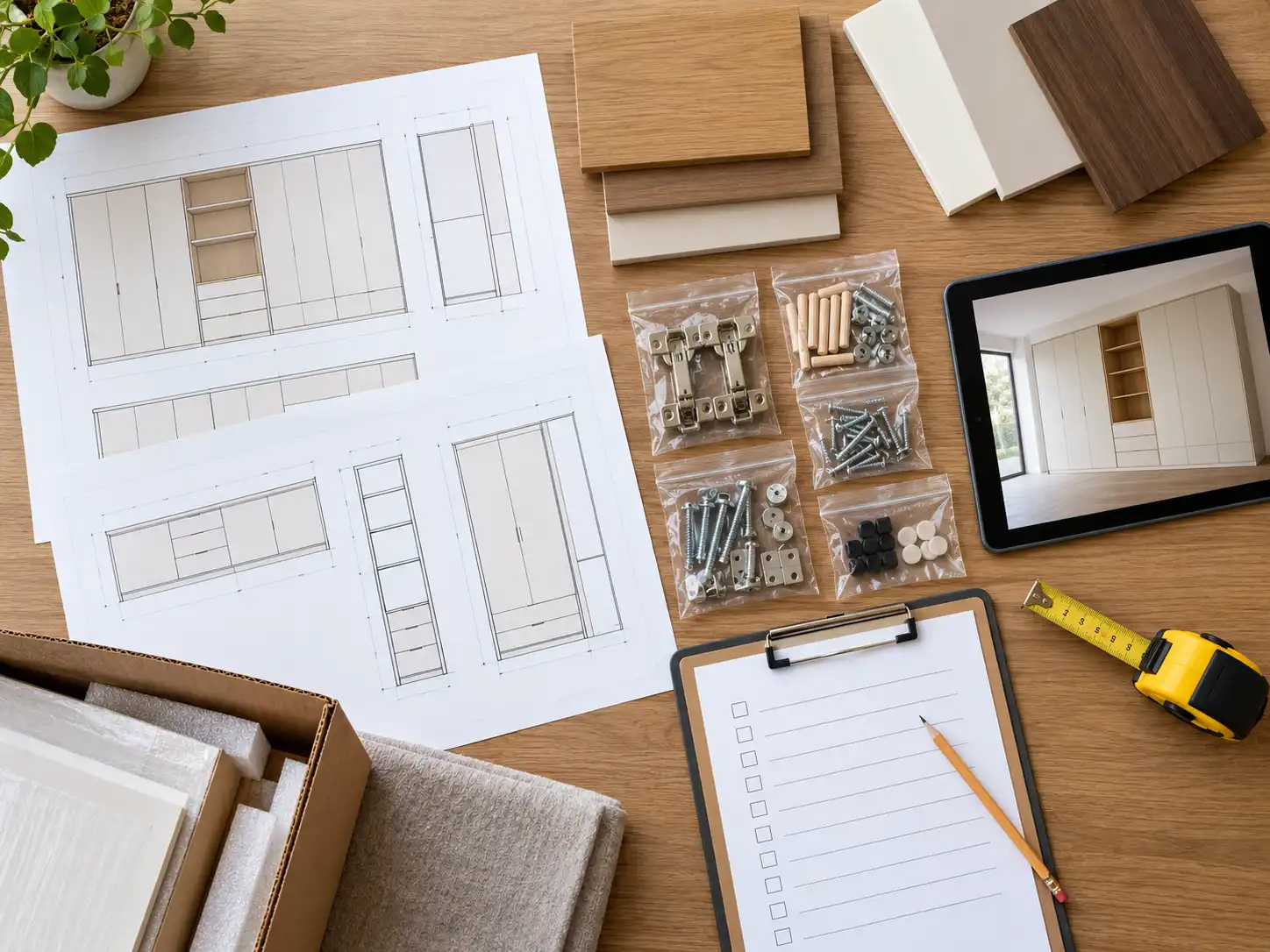
Request a Project Delivery Recommendation
Send KEJIA your drawings, destination country, project type, access constraints, installation programme, and target handover date. We can recommend a flat-pack, assembled, or hybrid plan with packing, room coding, QC, spare-parts, and delivery controls defined before production.