



A reliable custom kitchen cabinet manufacturer should do more than produce attractive cabinets. For overseas B2B projects, the manufacturer must review drawings, recommend suitable materials, control finish consistency, label packages clearly, protect cabinets for shipping, and support installation teams with accurate documentation. This guide is for designers, contractors, developers, dealers, showrooms, and project buyers who need fewer site problems and more predictable cabinet delivery. The best choice is usually not the cheapest quote, but the factory that can turn design intent into repeatable production quality.
Who This Guide Is For
- Interior designers specifying kitchen cabinets for villas, apartments, hotels, or showroom projects.
- Contractors and builders who need cabinets that arrive ready for efficient installation.
- Developers comparing cabinet suppliers for multi-unit residential projects.
- Dealers and showrooms planning private-label or OEM kitchen cabinet lines.
- Overseas B2B buyers preparing RFQs for a cabinet manufacturer in China.
Key Takeaways
- A custom kitchen cabinet manufacturer should review drawings before quoting, not only price from rough dimensions.
- Material selection must match project type, climate, budget, and expected usage.
- Edge banding, hardware, carcass strength, and finish consistency often matter more than surface appearance alone.
- Clear packing labels and installation documents reduce overseas project delays.
- A professional RFQ should include layout drawings, material requirements, finish references, hardware level, quantity, delivery terms, and quality expectations.
How Should B2B Buyers Compare Custom Kitchen Cabinet Manufacturers?
| Evaluation Point | What to Check | Why It Matters |
|---|---|---|
| Drawing review | Can the factory identify missing dimensions, appliance conflicts, and installation risks? | Prevents production mistakes before deposit and sampling. |
| Material options | Plywood, MDF, particle board, PET, melamine, lacquer, veneer, and countertop compatibility | Helps match durability, price, and market positioning. |
| Hardware system | Hinges, drawer slides, lift systems, pull-outs, and screw holding strength | Affects long-term performance and after-sales complaints. |
| Finish control | Color samples, batch approval, edge matching, gloss level, veneer direction | Keeps multi-room and multi-unit projects visually consistent. |
| QC process | Pre-production sample, in-line inspection, final assembly check, packing photo record | Reduces shipment disputes and rework. |
| Export packing | Flat-pack or assembled packing, corner protection, carton labels, pallet plan | Protects products and speeds site distribution. |
| Communication | English drawings, quotation breakdown, production schedule, issue response | Makes overseas coordination easier. |
What Makes a Custom Kitchen Cabinet Manufacturer Suitable for Overseas Projects?
A manufacturer suitable for overseas projects must understand both production and delivery risk. Kitchen cabinets are not simple loose furniture. They connect with walls, floors, appliances, plumbing, electrical points, countertops, and installation tolerances.
For overseas buyers, the manufacturer should provide:
- Shop drawing review before production.
- Clear cabinet module breakdown.
- Material and finish confirmation samples.
- Hardware and accessory specification.
- Countertop, sink, and appliance opening coordination.
- Packing list by room, unit, or project zone.
- Installation reference drawings.
- Replacement part support when needed.
At KEJIA, the factory-side focus is not only how the cabinet looks in a rendering, but whether the final cabinet can be manufactured, packed, shipped, installed, and maintained with fewer surprises.
Which Cabinet Materials Should You Specify?
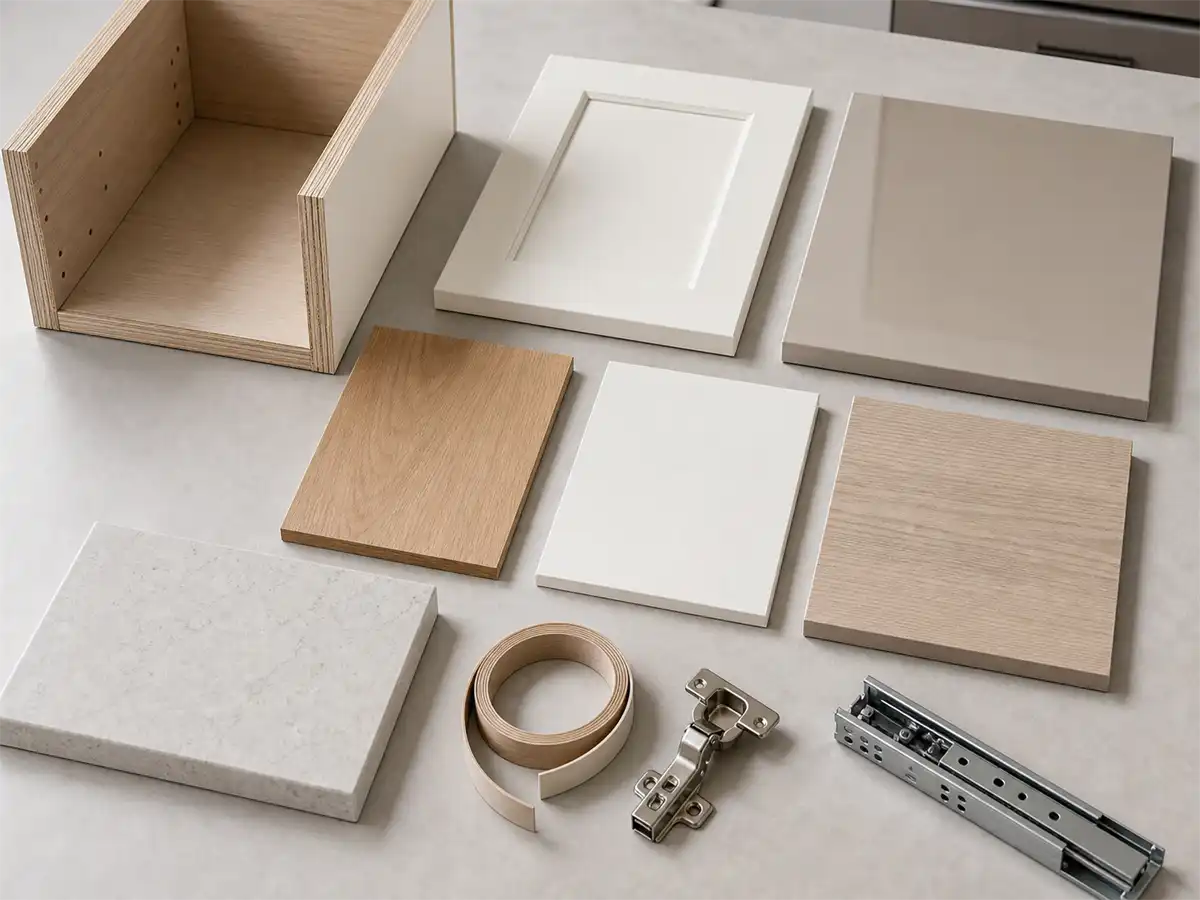
Material choice should follow the project environment and buyer positioning.
| Material | Best For | Watch Points |
|---|---|---|
| Plywood | Higher-moisture areas, premium projects, sink bases | Confirm veneer grade, bonding quality, and edge sealing. |
| MDF | Painted lacquer doors, routed profiles, smooth finishes | Not ideal for wet cabinet interiors unless protected. |
| Particle board | Budget to mid-range apartment projects | Requires good edge banding and moisture control. |
| Melamine board | Rental apartments, large-volume projects, practical interiors | Choose durable surface texture and reliable edge matching. |
| PET door panels | Modern kitchens, easy-clean surfaces, showroom displays | Confirm scratch resistance and color consistency. |
| Veneer doors | Premium villas and luxury interiors | Control veneer direction, tone variation, and humidity exposure. |
| Lacquer doors | High-end modern kitchens | Requires careful surface QC and protective packing. |
For sink cabinets and humid markets, buyers should ask for sealed exposed edges, suitable substrate, and moisture-resistant construction details. For high-volume apartment projects, repeatability and repairability are often more important than using the most expensive finish.
What Should Designers Specify Before Production?
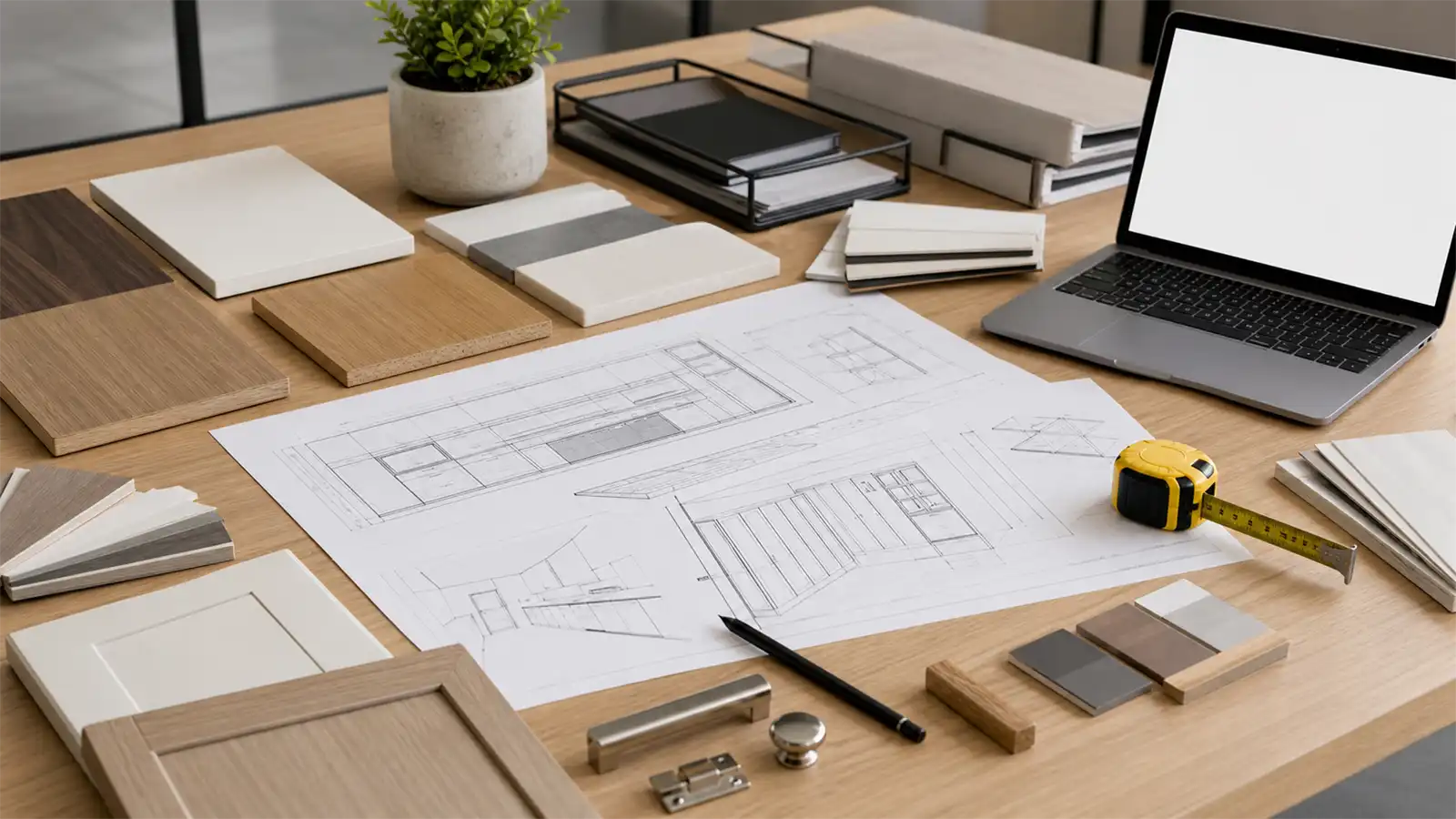
Designers should give the manufacturer more than inspiration images. A production-ready kitchen cabinet package should include accurate dimensions, layout elevations, appliance specifications, door style, material, finish, hardware level, and countertop requirements.
Before production, confirm:
- Ceiling height, wall length, and finished floor level.
- Plumbing, gas, socket, hood, and appliance positions.
- Base cabinet, wall cabinet, tall cabinet, and island dimensions.
- Door opening direction and drawer configuration.
- Handle style or handleless profile detail.
- Toe-kick height and filler requirements.
- Countertop thickness, edge profile, and cutout positions.
- Finish sample approval under natural and indoor lighting.
A good manufacturer will flag unclear points instead of silently producing from incomplete drawings.
What Should Contractors Check Before Installation?
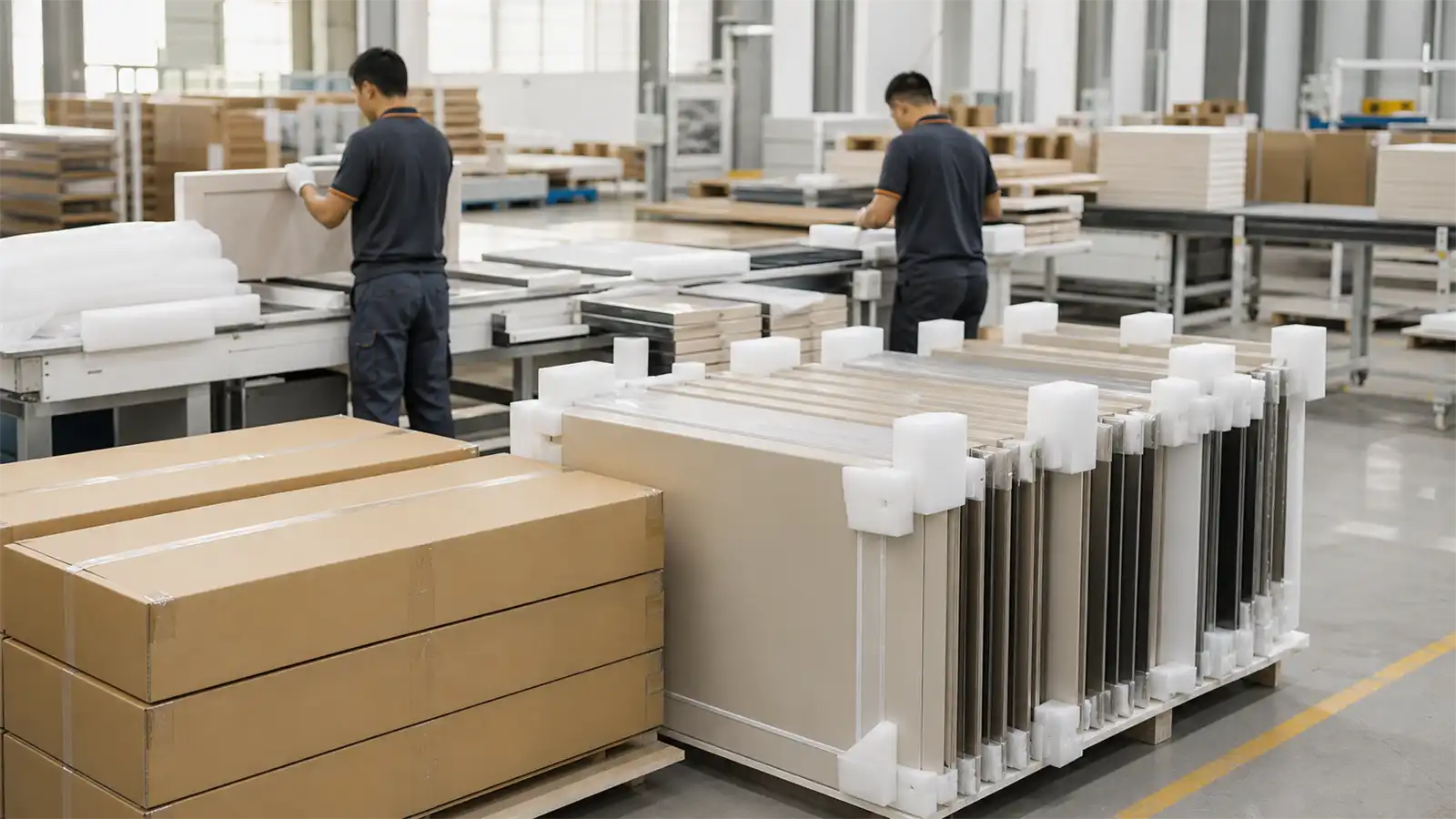
Contractors should check site readiness before cabinets are shipped or installed. Many cabinet problems are caused by site conditions, not factory production.
Important checks include:
- Wall straightness and corner angles.
- Finished floor level and tile thickness.
- Final appliance model dimensions.
- Plumbing and electrical positions.
- Access path for large panels or assembled cabinets.
- Ceiling height for tall units.
- Correct room labels on cartons.
- Hardware, screws, fillers, toe kicks, and panels included in the packing list.
For project cabinets, ask the manufacturer to label packages by building, floor, unit, room, and cabinet number. This small step can save hours during overseas installation.
Manufacturer Insight: Where Cabinet Quality Is Won or Lost
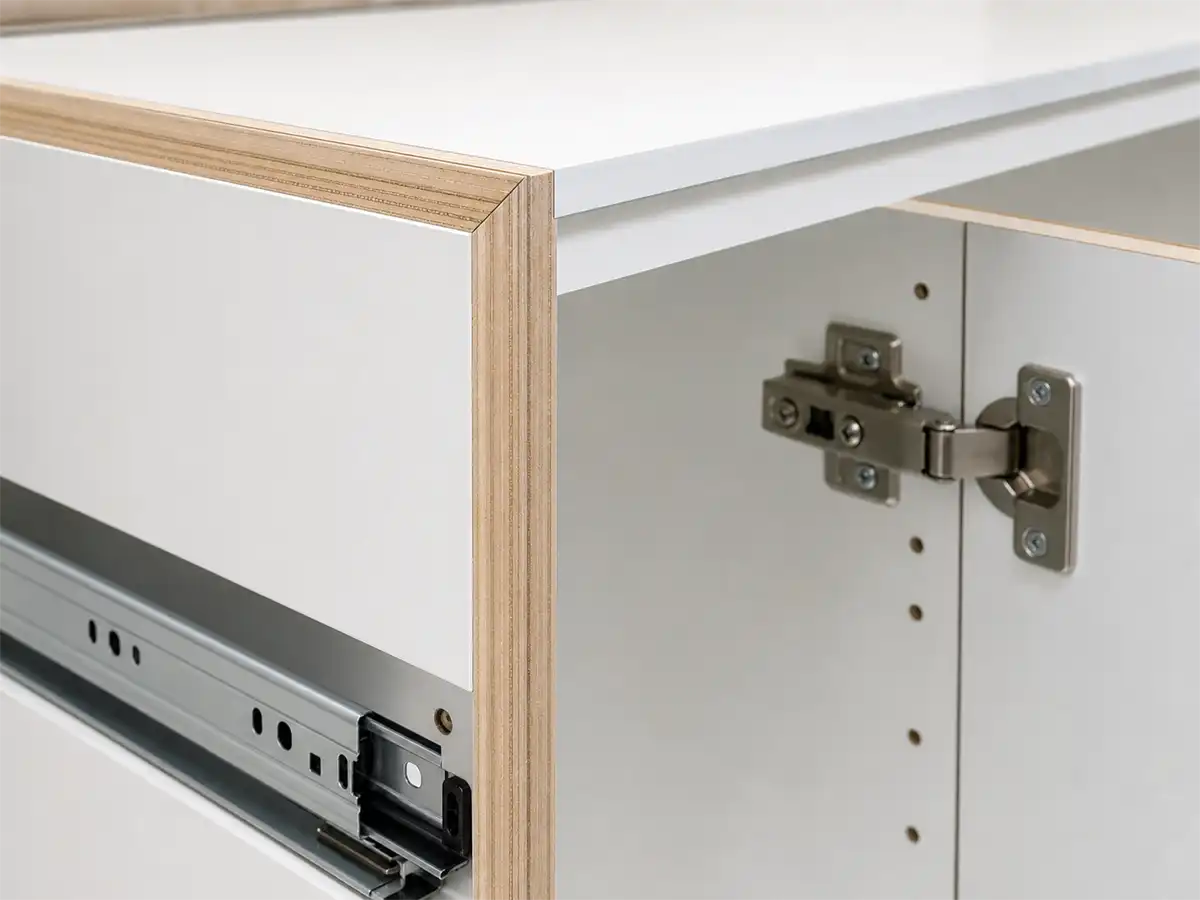
From a manufacturer’s perspective, cabinet quality is often decided in hidden details. Edge banding must be clean and firmly bonded. Screw holes must hold well after repeated opening and closing. Door panels must match across the same room. Lacquer and veneer finishes need careful batch control. Hardware must suit the cabinet size and door weight.
Packing is also part of quality. A beautiful cabinet that arrives scratched, mixed, or unlabeled creates cost for the buyer. For export orders, KEJIA recommends photo records before packing, reinforced corner protection, clear carton labels, and a packing list that matches the installation drawings.
Common Mistakes When Buying Custom Kitchen Cabinets
| Mistake | Why It Causes Problems | How to Prevent It |
|---|---|---|
| Asking only for the lowest price | Low quotes may hide weak hardware, thin panels, or poor packing | Compare the full specification, not only unit price. |
| Sending incomplete drawings | Missing dimensions lead to wrong cabinet sizes | Submit plan, elevation, appliance list, and site notes. |
| Ignoring climate | Humidity and temperature affect panels and finishes | Choose suitable substrate, sealing, and finish system. |
| Approving color from screen images only | Digital colors are unreliable | Request physical samples before batch production. |
| No packing label system | Installation teams waste time sorting cartons | Use room-by-room or unit-by-unit labeling. |
| No replacement part plan | Small damages delay handover | Ask how panels, doors, or hardware can be reordered. |
RFQ Checklist for a Custom Kitchen Cabinet Manufacturer
Use this checklist before requesting a quotation:
- Project type: villa, apartment, hotel, dealer showroom, retail line, or developer project.
- Quantity: number of kitchens, units, or cabinet sets.
- Drawings: floor plan, elevations, 3D views if available, and site dimensions.
- Materials: carcass board, door panel material, finish, countertop, and hardware grade.
- Accessories: pull-out baskets, trash bins, spice racks, lighting, tall pantry systems.
- Hardware: hinge brand level, drawer slide type, soft-close requirement.
- Packing: flat pack or assembled, export carton, pallet, labeling system.
- Delivery terms: destination port, Incoterms, expected schedule.
- Quality standard: sample approval, inspection photos, pre-shipment QC.
- Branding: OEM/ODM label, catalog, showroom display, or private-label support.
FAQ
What is the best material for custom kitchen cabinets?
There is no single best material for every project. Plywood is often preferred for higher-moisture or premium kitchens, MDF works well for painted doors, and melamine or particle board can be cost-effective for apartment projects. The best choice depends on budget, climate, finish style, and expected usage.
How do I know if a cabinet manufacturer is a real factory?
Ask for production process photos, material options, sample policy, QC workflow, packing examples, and project references. A real custom cabinet manufacturer should be able to discuss substrate, edge banding, hardware, finish control, drawing review, and export packing in practical detail.
Should I choose flat-pack or assembled kitchen cabinets?
Flat-pack cabinets are easier to ship and usually more efficient for overseas projects, but they require clear installation instructions and accurate labeling. Assembled cabinets reduce site assembly time but increase shipping volume and packing risk. The right choice depends on project scale, installation team skill, and freight budget.
What should be included in a kitchen cabinet quotation?
A professional quotation should include cabinet dimensions, materials, door finish, carcass specification, hardware, countertop if included, accessories, packing method, delivery terms, lead time, payment terms, and exclusions. For project orders, ask for a room or unit breakdown.
How long does custom kitchen cabinet production take?
Production time depends on order size, material availability, finish complexity, and sample approval. Painted lacquer, veneer matching, special hardware, or multi-unit projects usually need more coordination. Buyers should confirm the schedule after drawings and samples are approved, not only from the first inquiry date.
Can KEJIA support dealers and showrooms?
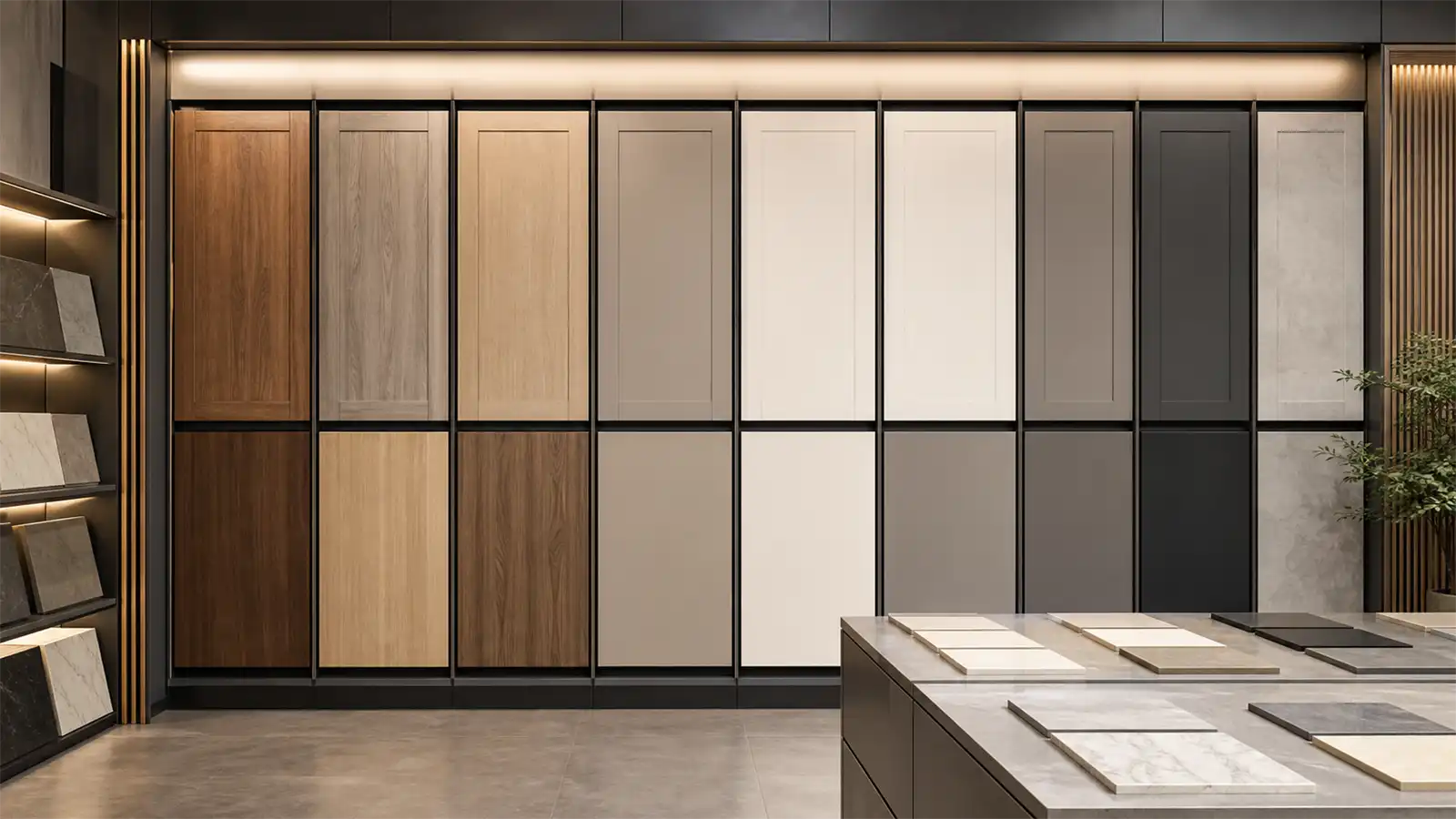
Yes. KEJIA can support dealers and showrooms with custom kitchen cabinet samples, material recommendations, OEM/ODM product planning, and whole-house cabinet solutions. Dealers should share target market positioning, preferred price range, showroom size, and main customer style preferences.
Conclusion
Choosing a custom kitchen cabinet manufacturer is a production and project-delivery decision, not only a style decision. B2B buyers should compare drawing review ability, material knowledge, finish control, hardware standards, QC process, packing system, and export communication. If you are preparing an overseas kitchen cabinet project, send your drawings, target market, material preference, and quantity to KEJIA for a factory quotation and specification review.