





Cabinet packaging for international shipping should protect the finish, prevent panel movement, preserve room-by-room traceability, and give the receiver enough information to inspect and install the shipment correctly. For developers, contractors, and importers, the key decision is not “flat pack or assembled?” alone. It is whether the packaging matches the product’s finish, size, hardware, route, container type, site-handling conditions, and installation sequence. A well-made cabinet can still become a project delay if door edges rub in transit, cartons lack room labels, hardware is mixed, or damage is recorded too late for a practical claim.
Who This Guide Is For
- Developers importing repeated cabinet packages for apartments, hotels, or villas.
- Contractors receiving cabinets before phased installation.
- Distributors and dealers who need reliable stock or project delivery.
- B2B buyers evaluating a custom cabinet manufacturer’s export readiness.
Key Takeaways
- Specify protection by component risk: faces, edges, corners, glass, stone, and hardware need different controls.
- Design cartons around safe handling and destination restrictions, not maximum possible weight alone.
- Use room, cabinet, and carton identifiers that match drawings and packing lists.
- Ask for packing photos and a final packing list before container sealing.
- Inspect shipment condition at handover and before installation; do not discard evidence or packaging too early.
Which Packing Format Is Right for Your Cabinet Project?
On mobile, swipe left or right to view all table columns.
| Packing format | Best use | Main benefit | Main risk to control | Buyer should specify |
|---|---|---|---|---|
| Flat-packed carcasses | Large projects and self-installation | Better container utilization and easier site handling | Edge damage and lost hardware | Board protection, hardware kits, room labels |
| Pre-assembled modules | Premium projects with limited site assembly | Faster alignment for selected units | Larger volume and handling damage | Module bracing, lift plan, carton dimensions |
| Door-only cartons | Doors supplied separately from carcasses | Protects visible faces and simplifies sequencing | Face-to-face abrasion | Foam separators, edge guards, finish group label |
| Crated fragile items | Glass doors, special panels, irregular components | Stronger protection | Cost and disposal at destination | Crate design, moisture barrier, unpacking sequence |
| Palletized mixed shipment | Dealer stock or consolidated orders | Easier warehouse movement | Mixed project components | Pallet map, stretch-wrap control, carton count |
What Does Good Export Cabinet Packaging Include?
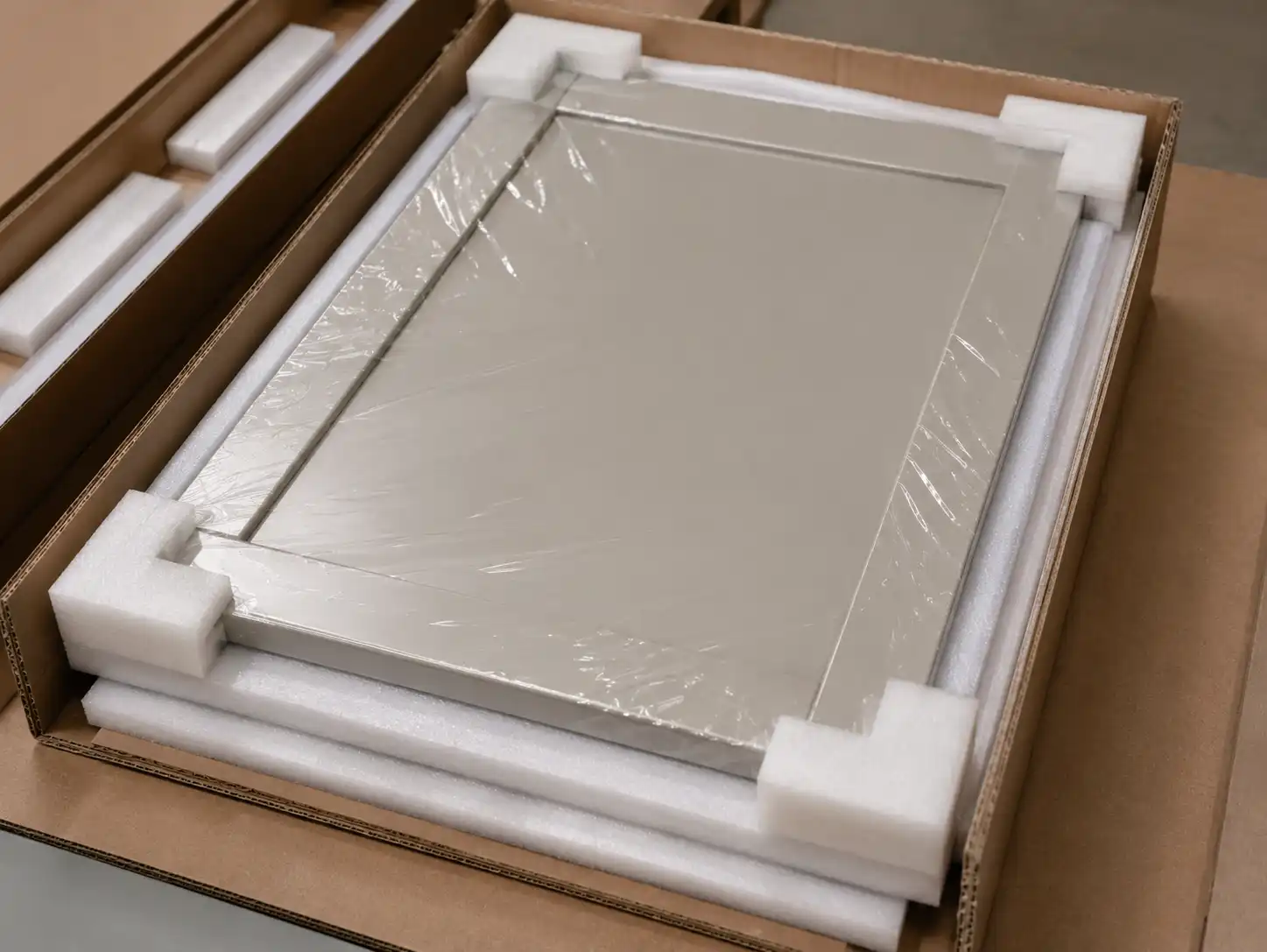
Surface, edge, and corner protection
Finished cabinet faces must not contact each other without a clean separating layer. Use protective film where appropriate to the finish, foam or non-abrasive interleaf between faces, and rigid corner protection where strapping or handling can crush an edge. A glossy PET or acrylic door can show rub marks that textured melamine may hide, while veneer corners can chip even if the face looks protected.
Moisture and contamination control
Ocean and cross-border shipments can involve changing humidity and storage conditions. Internal protection should keep cartons dry and clean without trapping moisture against a vulnerable surface. For plywood carcasses and exposed edges, material specification and edge sealing remain essential; packaging is not a substitute for moisture-appropriate construction.
Hardware and small-parts control
Each cabinet or room kit needs a clear connection between its hardware bag, packing-list line, and installation drawing. Hinges, rails, screws, brackets, feet, and adjustment tools should not become one untraceable “accessories carton.” A missing small part can stop a crew because installation cannot be completed or handed over.
How KEJIA Plans Packaging Before the Container Is Loaded
Start with the installation sequence, not the carton count
KEJIA reviews the room list, cabinet codes, access restrictions, container plan, and destination handling before final packing. For a phased site, cartons can be grouped by zone, floor, or room to reduce unnecessary opening and rehandling. This is valuable when kitchens, wardrobes, vanity units, and wall panels ship together but install at different stages.
Build a packing specification for each risk group
The packing plan identifies which components are flat-packed, which doors ship separately, where glass or fragile parts need a crate, and how countertop or oversized pieces are protected. It should establish carton weight limits that suit the receiver’s labor plan rather than treating a heavy carton as acceptable because it saves one box.
Verify before sealing
Final QC checks cabinet components, visible finish condition, hardware kits, carton count, and labels against the packing list. KEJIA records packing photographs of key stages and can provide container-loading images. These records help confirm the loading plan and give both sides a factual starting point if a transit issue occurs.
The Labels and Documents That Prevent Site Confusion

Each carton should have a durable external identifier with the project code, room or zone, cabinet code, carton number, total carton count for that set, gross weight, and handling symbols where relevant. The packing list should use exactly the same cabinet codes as the approved drawings. If a site team cannot connect a carton to a room and elevation, it will open more cartons, move more pieces, and increase damage risk.
On mobile, swipe left or right to view all table columns.
| Document or label | Why it matters | Common failure | Better practice |
|---|---|---|---|
| Cabinet code | Matches physical kit to drawing | Code differs from drawing revision | Freeze drawing revision before labels print |
| Room/zone label | Supports phased installation | Cartons grouped only by product type | Add floor, room, or zone to each carton |
| Carton sequence | Shows whether a set is complete | “Box 1” without total quantity | Use 1 of 4, 2 of 4, and so on |
| Hardware-kit label | Prevents missing fittings | One mixed accessories carton | Allocate hardware by cabinet or room kit |
| Packing list | Supports receiving and claims | Generic description only | Include codes, quantities, weights, and carton IDs |
Loading Decisions: How to Protect Cabinets Inside a Container
Container loading is part of packaging, not a separate freight-only activity. Heavier, more stable cartons go on the floor; fragile or high-finish cartons are protected from direct compression and uncontrolled movement. Keep cabinet faces upright or in the orientation recommended by the pack design, protect voids with appropriate blocking, and prevent straps from marking exposed cartons. Do not place sharp, loose, or wet goods against cabinet packaging.
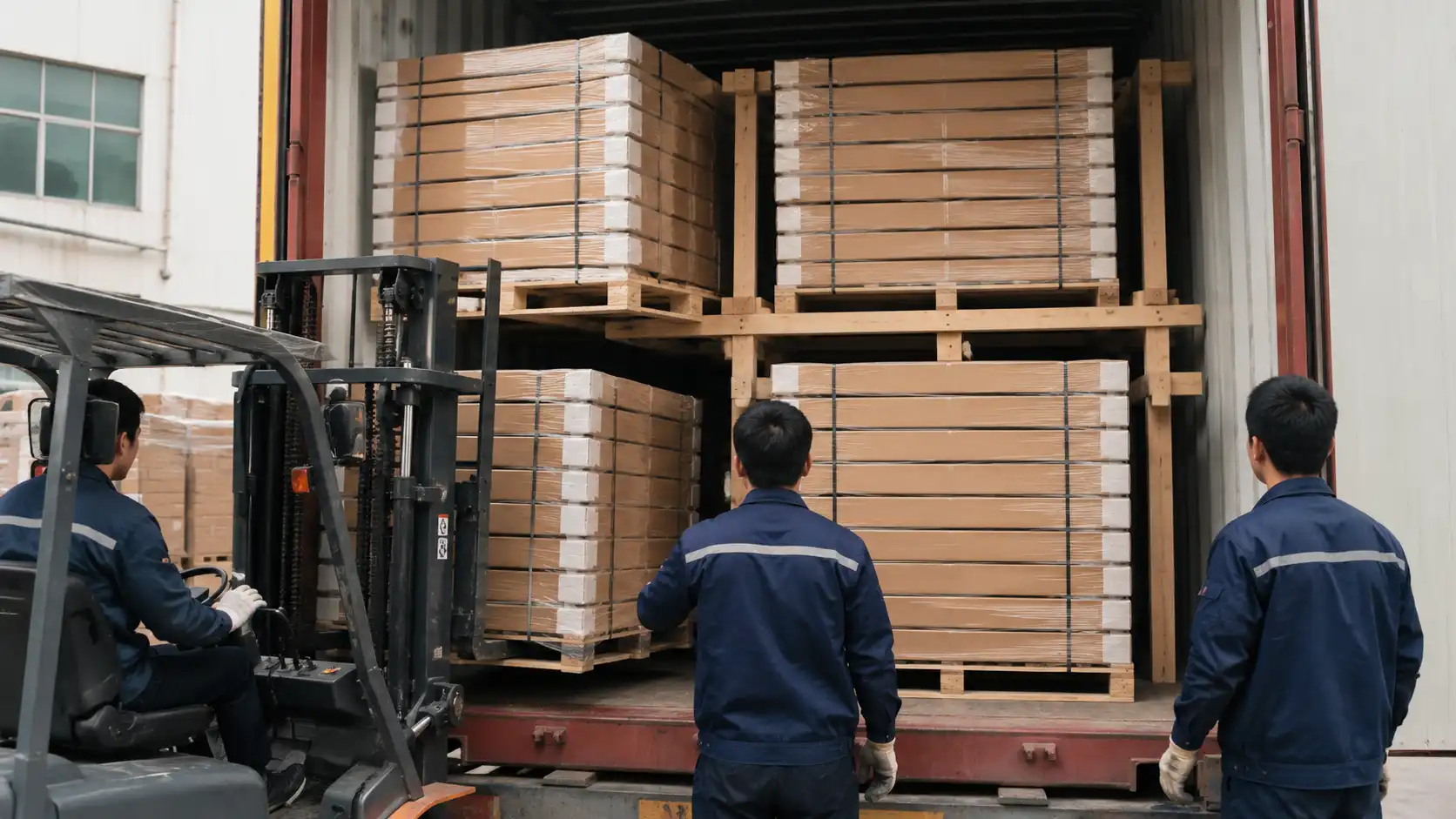
For routes with multiple handovers or a high damage history, ask the manufacturer and freight partner whether a route-appropriate package-performance test is warranted. ISTA publishes test-procedure information, including a simulation procedure for international direct-import shipments from Asia-Pacific manufacturing sites. This does not mean every cabinet order needs a formal laboratory test; it means testing and pack design should follow the actual transport risk rather than a generic carton assumption.
Manufacturer Insight: Packaging Is a Traceability System
The strongest packaging plan lets a warehouse receiver or installer answer four questions without calling the factory: What room is this for? Which drawing location does it match? Is the set complete? Was the carton already damaged when received? That is why KEJIA treats labels, packing lists, hardware allocation, and packing photos as one project-control system. It also protects after-sales work: a damaged part can be identified precisely instead of described as “one white panel from the kitchen.”
Common International Shipping Mistakes and How to Avoid Them
- Choosing packaging after production is complete. Review it during drawing and production planning.
- Using one carton design for every component. Match protection to each risk group.
- Overloading cartons. Set a destination-appropriate handling limit.
- Using generic labels. Use cabinet and room codes from drawings.
- Mixing hardware for many rooms. Allocate it by cabinet or room.
- Skipping final packing photos. Keep pre-shipment evidence.
- Inspecting only after installation begins. Inspect at receipt and before wider unpacking.
International Cabinet Shipping Checklist for Buyers

- Approved packing specification covers doors, carcasses, glass, hardware, and special panels.
- Carton dimensions and gross weights suit the destination handling plan.
- Each carton carries project, room/zone, cabinet, and sequence identifiers.
- Packing-list codes match the latest approved installation drawings.
- Hardware is separated by cabinet or room kit and counted.
- Finished faces have clean separators, edge protection, and appropriate corner guards.
- Factory provides pre-shipment packing and loading photographs.
- Receiver checks carton count and visible damage at handover, then retains evidence until inspection is complete.
FAQ: Cabinet Packaging for International Shipping
Should custom cabinets ship flat-packed or assembled?
Choose based on installation capability, container efficiency, module size, and finish risk. Flat pack is usually practical for large projects because it improves space use and handling. Pre-assembled modules can reduce site assembly for selected premium units, but need stronger handling and loading protection. Ask the manufacturer to evaluate both against your route and site conditions.
What information should be on every cabinet carton?
Show project code, room or zone, cabinet code, carton number and total, gross weight, and handling orientation where needed. The same cabinet code must appear on the packing list and installation drawing. For special finishes, add a finish or door-group reference that prevents mixing visible elevations.
How can we prevent door-panel scratches during transit?
Keep visible faces separated with clean, finish-compatible material; protect edges and corners; avoid movement within the carton; and keep strapping or hard parts from touching the face. Request packing photos for high-gloss, acrylic, PET, lacquer, or veneer doors. On site, retain protective film and separators until installation needs removal.
What should we do if cartons arrive damaged?
Photograph the container or delivery condition, seals if relevant, outer cartons, labels, and contents before moving or discarding anything. Note visible damage on the delivery record according to the carrier process, then compare against the packing list and factory photographs. Do not install a questionable component before the supplier has enough evidence to identify a replacement.
Are wooden crates necessary for all cabinet shipments?
No. Crates add cost, weight, and disposal work. Use them where shape, fragility, or handling risk warrants structural protection, such as glass doors, irregular panels, or vulnerable components. Standard doors and carcasses may be better protected by correct internal separators, edge guards, palletization, and a stable loading plan.
Why are packing photos important for B2B buyers?
They confirm that finish protection, carton labels, hardware allocation, and loading arrangement followed the agreed plan. If an issue is found at destination, photos establish shipment condition and traceability at dispatch. They are project records, not a replacement for receiving inspection.
Request a Project Packing Plan Before You Confirm the Order
Send KEJIA your drawings, destination country, preferred shipping method, site access limits, and installation sequence. We can prepare a cabinet quotation with a project packing plan, room-based labeling approach, and recommended protection for your materials and delivery route.