

In the modern residential landscape, the L-shaped kitchen is the gold standard for spatial efficiency. It is the layout that best facilitates the “Golden Triangle” of kitchen ergonomics. However, for many homeowners in North America and Europe, the L-shaped kitchen remodel cost can be a source of significant anxiety. With average professional renovations ranging from $30,000 to $80,000, the stakes are high.
As a manufacturer working directly with global contractors and developers, I see the “invoice shock” every day. However, I have also observed a recurring pattern: savvy clients achieve a $100,000 “luxury showroom” look for 40% less by knowing exactly where the engineering matters and where the brand markup is just fluff.
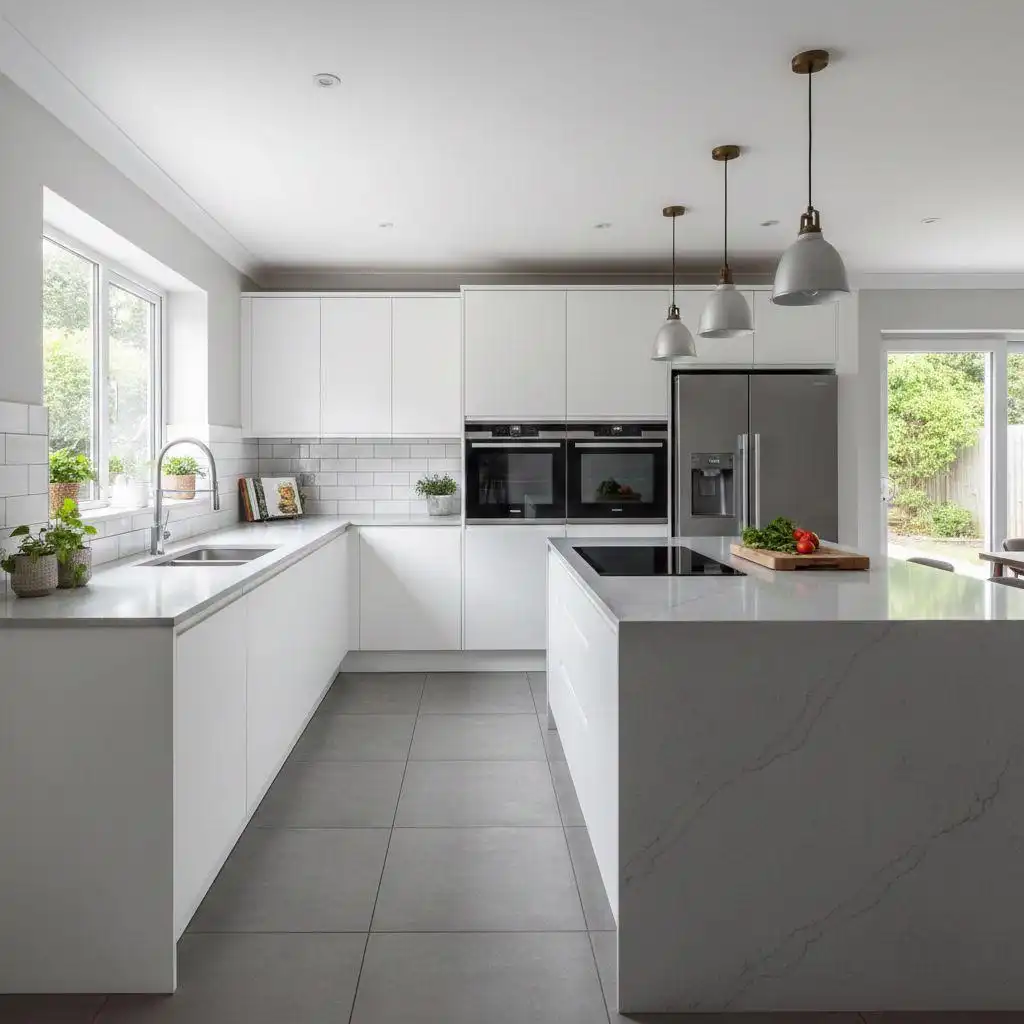
This L-shaped kitchen remodel cost masterclass breaks down the strategic “Splurge vs. Save” framework to help you build a kitchen that is both high-performance and high-value.
1. The “Splurge” Priority: High-Kinetic Hardware
If there is one absolute rule in this L-shaped kitchen remodel cost guide, it is this: Never skimp on what moves. * The Logic: A kitchen cabinet is essentially a box with a moving part. You will open your trash pull-out, spice rack, or heavy cutlery drawer over 10,000 times a year. Cheap slides will fail, sag, or lose their soft-close dampening within 24 months.
-
The Investment: Allocate 15-20% of your cabinetry budget to Blum, Hettich, or Grass hardware. Specifically, for L-shaped kitchens, splurge on a LeMans Corner Pull-out or a Magic Corner. These turn the “dead corner” into the most functional part of your kitchen. Replacing failed local-brand hardware later is three times more expensive than installing the best from day one.
2. The “Save” Strategy: The “Skeleton” (Carcass) Materials
Showrooms often try to upsell clients on “Solid Wood” cabinet boxes. In reality, for the internal structure of the cabinet, this is an unnecessary expense that inflates your L-shaped kitchen remodel cost with zero functional return.
-
The Logic: Solid wood is beautiful but organic; it can warp or crack with the humidity shifts common in a kitchen.
-
The Pro Move: Use Furniture-Grade Plywood or Moisture-Resistant (MR) MDF for the boxes. These engineered materials are more dimensionally stable and perfectly durable for the lifespan of the kitchen. As long as the edges are sealed with PUR Edge Banding, these boxes are virtually indestructible.
3. The “Splurge” Priority: Invisible Moisture Protection (PUR)
In an L-shaped layout, the sink and dishwasher are usually placed in the center of one run. This is a high-moisture, high-steam zone.
-
The Logic: Standard cabinetry uses EVA glue (hot melt). Over time, the steam from a dishwasher causes EVA glue to re-melt, leading to “peeling” or delamination of the edges.
-
The Splurge: Demand PUR (Polyurethane) Edge Banding. It creates a chemical, waterproof bond that is heat-resistant. It is a minor upfront premium in your L-shaped kitchen remodel cost that effectively doubles the lifespan of your door panels.
4. The “Save” Strategy: High-Performance PET vs. Lacquer
You don’t need 12-layer hand-painted Italian lacquers to get a luxury aesthetic.
-
The Logic: High-end lacquers are prone to chipping and are difficult to repair.
-
The Save: Consider Super-Matte PET Finishes. PET is the same material used in water bottles—it is incredibly stable, eco-friendly, and offers an anti-fingerprint surface that looks identical to high-end paint. Choosing PET over premium lacquer can reduce your door panel costs by 30% while offering better daily durability.
5. The “Splurge” Priority: Professional Engineering & Shop Drawings
One of the largest hidden factors in your L-shaped kitchen remodel cost is the price of “On-Site Fixes.” If the cabinets arrive and don’t fit because a wall wasn’t perfectly square, your contractor’s hourly labor bill will skyrocket.
-
The Splurge: Partner with a manufacturer that provides Detailed CAD Shop Drawings and conflict detection.
-
The Value: Professional engineering ensures that the dishwasher door doesn’t hit the oven handle and that there is enough “filler space” to accommodate crooked walls. Spending $500 on engineering can save $5,000 in emergency carpentry fees.
6. The “Save” Strategy: Integrated LED Lighting Channels
Lighting is the “jewelry” of the kitchen, but designer fixtures carry massive markups.
-
The Save: Instead of expensive external lighting kits, have your manufacturer pre-mill LED channels into the bottom of the upper cabinets.
-
The Impact: Recessed LED strips create a high-end “wash” over the backsplash, making even affordable tiles look like premium stone. By doing this at the factory level, you eliminate the need for expensive on-site electrical modification.
7. The “Splurge” Priority: Marine-Grade Sink Bases
The area under the sink is the most common failure point in any kitchen. A small leak can ruin an entire cabinet run.
-
The Splurge: Specifically request Marine-Grade Plywood or a Stainless Steel liner for the sink base cabinet only. It adds a negligible amount to the total L-shaped kitchen remodel cost but provides a vital insurance policy against water damage.
8. The “Save” Strategy: Quartz vs. Natural Marble
While marble is stunning, it is porous and high-maintenance.
-
The Save: Go with High-Quality Quartz. It is non-porous, scratch-resistant, and can perfectly mimic the veining of Calacatta marble. It is significantly cheaper to fabricate and install, and it won’t stain when you spill red wine.
9. The “Splurge” Priority: The Professional Installer
You can buy the most expensive cabinets in the world, but if they are installed poorly, the kitchen will look “cheap.”
-
The Splurge: Do not hire the cheapest labor. An expert installer knows how to “scribe” cabinets to the wall, how to level boxes on a sloped floor, and how to adjust hinges for that perfect, 2mm gap (reveal) between doors.
The “Direct-from-Manufacturer” Financial Logic
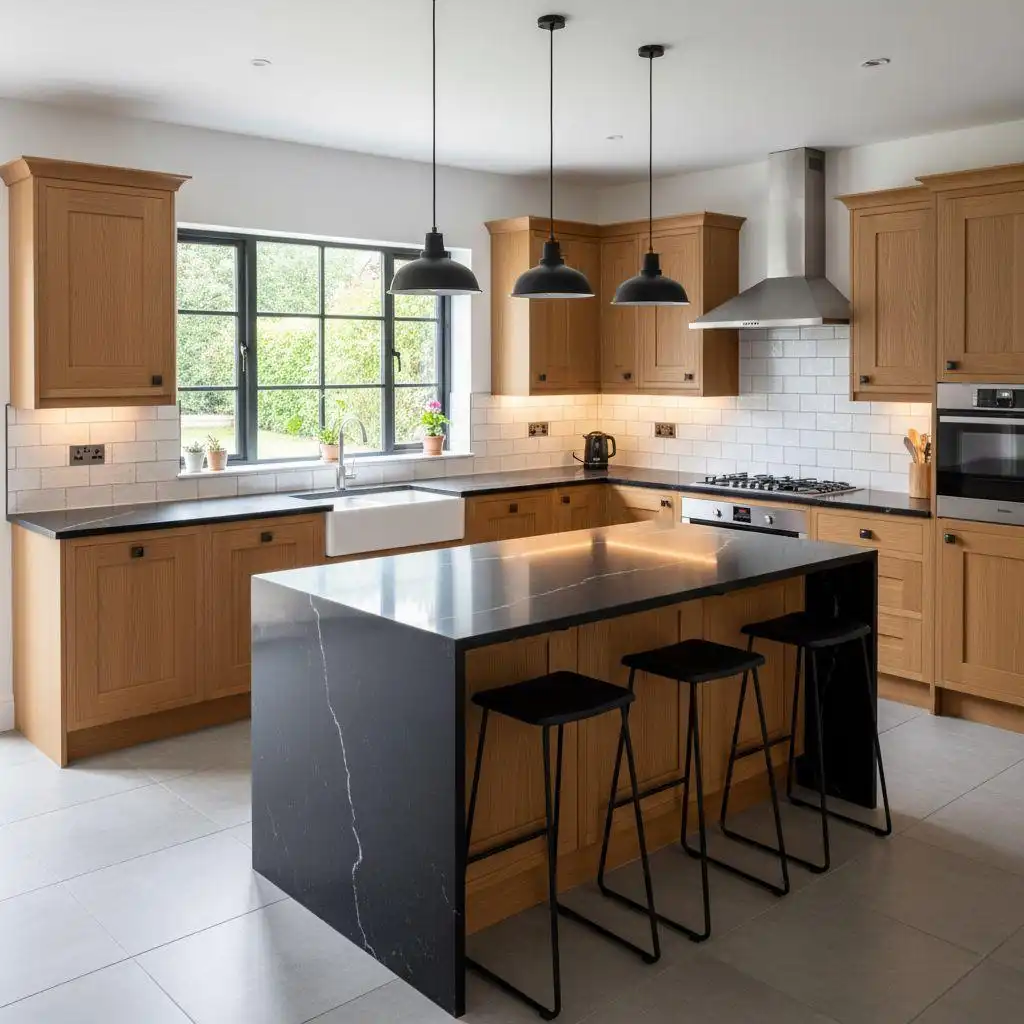
The most effective way to lower your L-shaped kitchen remodel cost is to remove the middleman. Traditional showrooms must cover expensive urban rents, sales commissions, and holding costs. When you buy direct, you are paying for the raw materials (The Blum hardware, the PUR glue, the HDF boards) rather than the showroom’s overhead.
Estimated Budget Allocation for an L-Shaped Remodel
| Category | Recommended Allocation | Strategy |
| Cabinetry (Boxes & Doors) | 35% | Save (Use PET/Plywood) |
| Hardware (Hinges/Slides) | 10% | Splurge (Use Blum/Hettich) |
| Countertops | 15% | Save (Engineered Quartz) |
| Installation Labor | 20% | Splurge (Hire a Specialist) |
| Appliances | 15% | Save (Choose Mid-Range Pro) |
| Backsplash & Misc. | 5% | Save (Focus on Lighting) |
Conclusion: Smart Luxury is Engineered
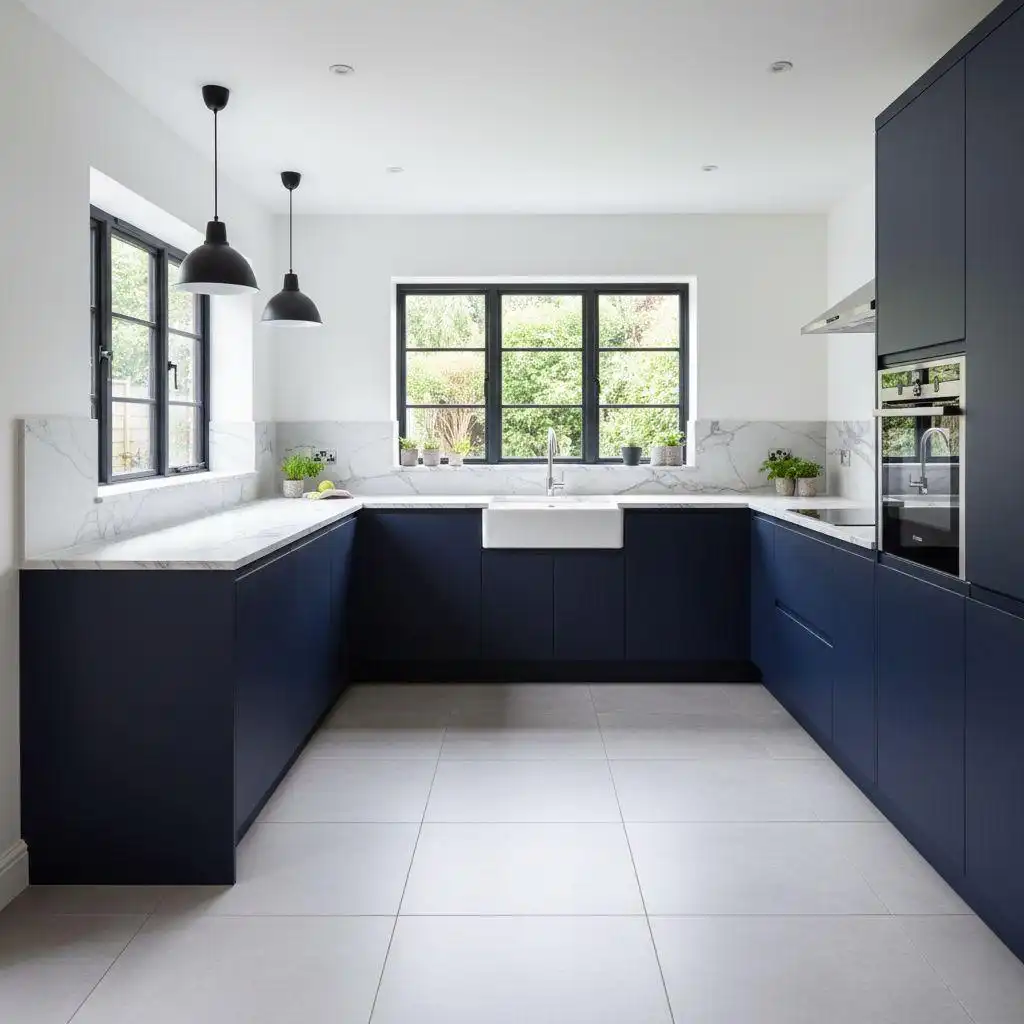
A successful kitchen remodel isn’t about spending the most money; it’s about spending money on the parts that matter. Focus your L-shaped kitchen remodel cost on the “moving parts” (hardware), the “water zones” (sink base), and the “technical precision” (shop drawings).
At KEJIA Kitchen, we guide our clients through these financial decisions. We provide the German-grade hardware and PUR technology found in $100k kitchens, but at a factory-direct price point that respects your budget.
Related Articles:
How to Measure Your L-Shaped Kitchen for Custom Cabinets: A Step-by-Step Guide
FAQ: Navigating Your L-Shaped Kitchen Remodel Cost
To help you finalize your budget, our engineering team has answered the most common questions regarding the financial and technical aspects of an L-shaped renovation.
1. What is the most expensive part of an L-shaped kitchen layout?
The corner cabinet is almost always the most expensive single unit. In an L-shaped layout, you have a “blind corner” that requires specialized hardware like a LeMans Pull-out or a Magic Corner. While these mechanisms can add $500–$1,000 to your L-shaped kitchen remodel cost, they are essential. Without them, about 20% of your lower cabinet storage becomes inaccessible.
2. How much can I really save by ordering custom cabinets direct from China?
Typically, our clients save between 30% and 50% compared to local high-end showrooms in the US or Europe. For an average L-shaped kitchen, this can mean a saving of $10,000 to $25,000. These savings come from eliminating middleman markups and showroom overheads, not by lowering material quality. In fact, we use the same Blum hardware and PUR edge banding found in premium European brands.
3. Should I choose Flat-Pack (RTA) or Pre-Assembled cabinets to save money?
This is a classic budget trade-off.
-
Flat-Pack (RTA): Lowers your shipping costs because the volume is smaller. However, your local labor costs will be higher because a carpenter must spend hours assembling boxes.
-
Pre-Assembled (Rigid): Shipping is more expensive, but you save significantly on installation. For a complex L-shaped layout, we usually recommend Pre-Assembled cabinets to ensure the boxes are perfectly square from the factory, reducing the risk of on-site errors.
4. What are the “hidden costs” people often forget in a kitchen budget?
The most common hidden costs are shipping insurance, local customs duties, and “filler strips.” In an L-shaped kitchen, walls are rarely a perfect 90-degree angle. You must budget for extra “filler” material that your installer can scribe to the wall. At KEJIA Kitchen, we include these fillers and detailed CAD shop drawings in our quotes to ensure there are no surprises during installation.
5. How long does a factory-direct L-shaped kitchen project take?
You should plan for a 12 to 16-week window. This includes 2 weeks for design and CAD finalization, 4–6 weeks for production, and 6–8 weeks for sea freight and customs clearance. While this is longer than buying “off-the-shelf” from a local big-box store, it is the only way to get a fully custom, high-end engineered product at a factory-direct price.
6. Will an L-shaped kitchen increase my home’s resale value?
Absolutely. Real estate data shows that a modern, functional kitchen provides one of the highest Returns on Investment (ROI), often recouping 60% to 80% of the L-shaped kitchen remodel cost at resale. Buyers prioritize the L-shaped layout because it feels open and facilitates a social, “open-concept” lifestyle.
Ready to Strategize Your Kitchen Budget?
-
Free Budget Audit: Send us your layout, and our engineers will provide a “Splurge vs. Save” breakdown for your specific space.
-
Download the 2026 Finish Comparison: See the price and durability difference between Lacquer, PET, and Wood Veneer.
-
Get a Precision Quote: Receive a hardware-spec analysis and a 3D render within 48 hours.