

For any homeowner or professional contractor, the durability of a kitchen is determined long before the first meal is cooked. It is decided on the factory floor, specifically during the selection of the core substrates. When evaluating kitchen cabinet materials, one must look beyond the laminate or the lacquer. The internal composition of the board dictates how the cabinet responds to humidity, structural loads, and daily wear over a 20-year lifecycle.
In this technical analysis, we will dissect the three primary kitchen cabinet materials—Plywood, MDF, and Particle Board—using industrial metrics such as internal bond strength, swelling thickness, and emission standards.
1. Plywood: The Engineering of Structural Integrity
Plywood remains the most requested of all kitchen cabinet materials for high-end custom projects. However, “plywood” is a broad term that covers various grades and constructions.
The Multi-Layer Advantage
Industrial-grade plywood is manufactured by gluing thin layers of wood veneers—called “plies”—together. The secret to its strength lies in cross-graining. By rotating the grain of each layer 90 degrees, we cancel out the wood’s natural tendency to expand and contract. For a durable kitchen cabinet, we utilize an 11-layer construction for 18mm boards. This high ply-count ensures that the board remains “dead flat” even when supporting heavy stone countertops.
Marine Grade vs. Standard Plywood
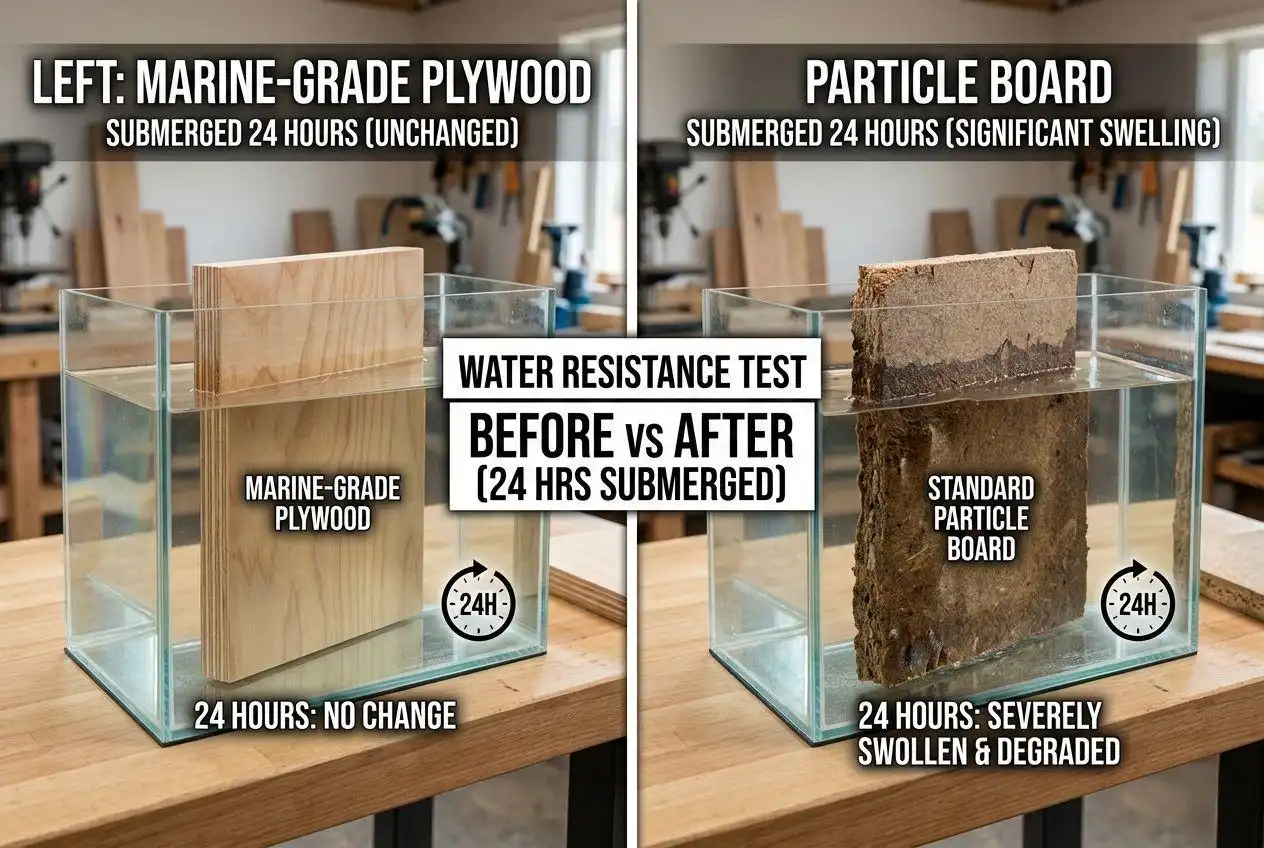
In a kitchen, moisture is the enemy. Standard plywood uses Urea-Formaldehyde (UF) glue, which can degrade in high humidity. In our factory, we recommend Marine-Grade Plywood or WBP (Water Boiled Proof) plywood for sink base cabinets. These boards use phenolic resins that can withstand 72 hours of boiling water without delaminating. This is the level of engineering required to survive a plumbing leak under a kitchen sink.
2. MDF and HDF: The Precision of Surface Aesthetics
Medium-Density Fiberboard (MDF) is often unfairly categorized as an inferior product. In reality, it is one of the most versatile kitchen cabinet materials when precision and finish are the priorities.
Why MDF is Essential for Painted Kitchens
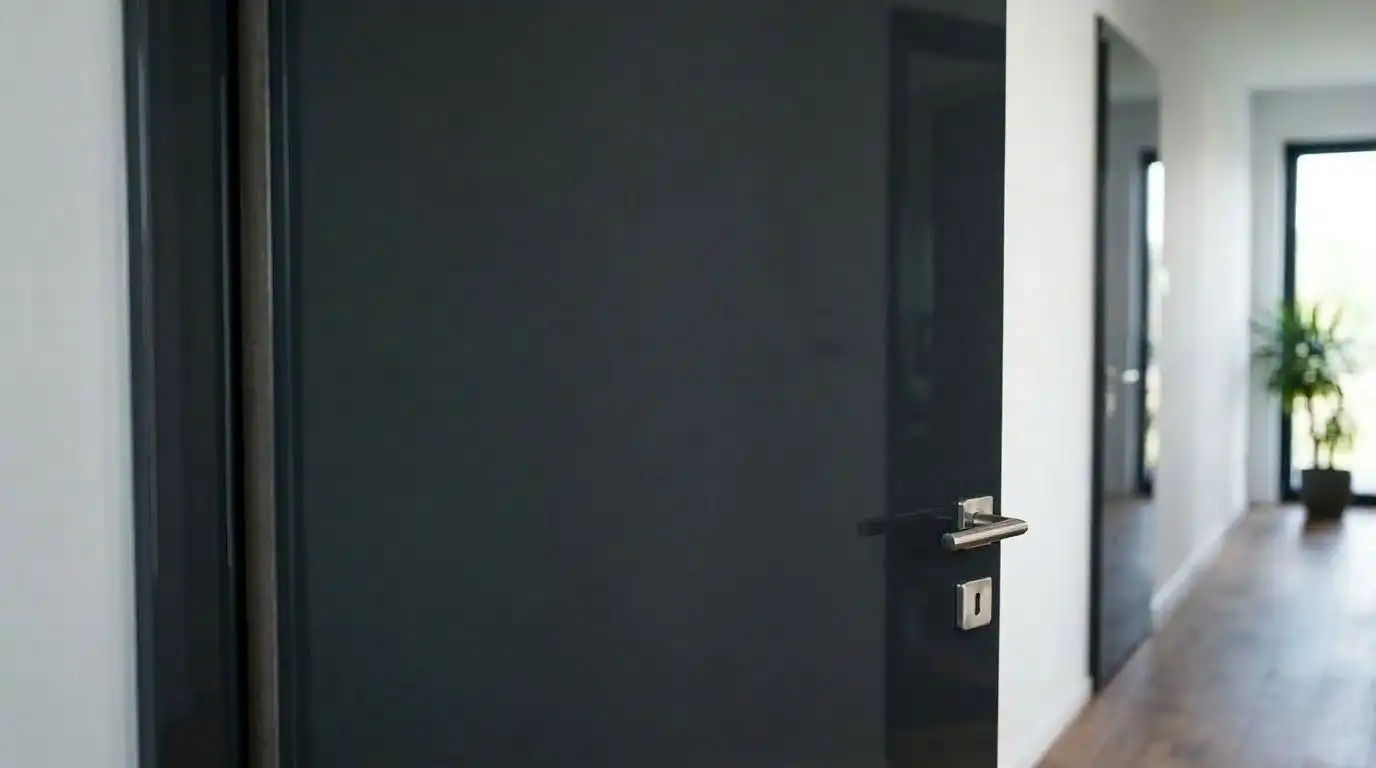
Solid wood and plywood have natural grain patterns that can “telegraph” through a paint finish, leading to a textured or uneven look. MDF is engineered from wood fibers combined with wax and a resin binder under high pressure. This creates a perfectly smooth, isotropic surface. If you are designing a seamless modern kitchen with a matte or high-gloss finish, MDF is the superior substrate for door panels because it does not have grain-directional movement.
High-Density Fiberboard (HDF) Standards
For clients demanding extreme durability, we transition from MDF to HDF. HDF has a density exceeding 800kg/m³. This increased density provides superior screw-holding power—a common failure point in cheaper cabinetry where hinges pull out of the wood. HDF is the “industrial-strength” version of fiberboard, offering a surface as hard as stone with the flexibility of wood.
3. Particle Board: Analyzing the Cost-to-Performance Ratio
Particle board (also known as chipboard) is the most controversial of kitchen cabinet materials. While it is the standard for European flat-pack furniture, its durability depends entirely on the quality of its “envelope.”
Density and Resin Content
Low-grade particle board is airy and prone to crumbling. However, Industrial Grade Particle Board is manufactured with high-density cores and low-emission resins. When fully sealed with high-pressure laminate and PUR edge banding, particle board is a stable and cost-effective choice for dry areas like pantry cabinets and wardrobes.
The Vulnerability Factor
The primary weakness of particle board is its hygroscopic nature—it loves to absorb water. Once the core is exposed to moisture, it swells and cannot be repaired. This is why we strictly advise against using particle board in areas adjacent to dishwashers or under-sink regions unless it is protected by high-performance sealing technology.
4. Formaldehyde Standards: The Health of the Home
When discussing kitchen cabinet materials, we must address indoor air quality. The resins used to bond wood fibers often contain formaldehyde.
-
E1 Standard: The baseline for European and international markets.
-
E0 Standard: A stricter standard with significantly lower emissions, suitable for high-end residential projects.
-
F4-Star (F**):** The Japanese standard, considered the strictest in the world. As a factory committed to global health standards, we prioritize F4-Star and NAF (No Added Formaldehyde) boards. These boards use MDI (Methylene Diphenyl Diisocyanate) binders, ensuring that your kitchen is safe for your family from the day of installation.
5. Physical Testing: How the Factory Verifies Quality
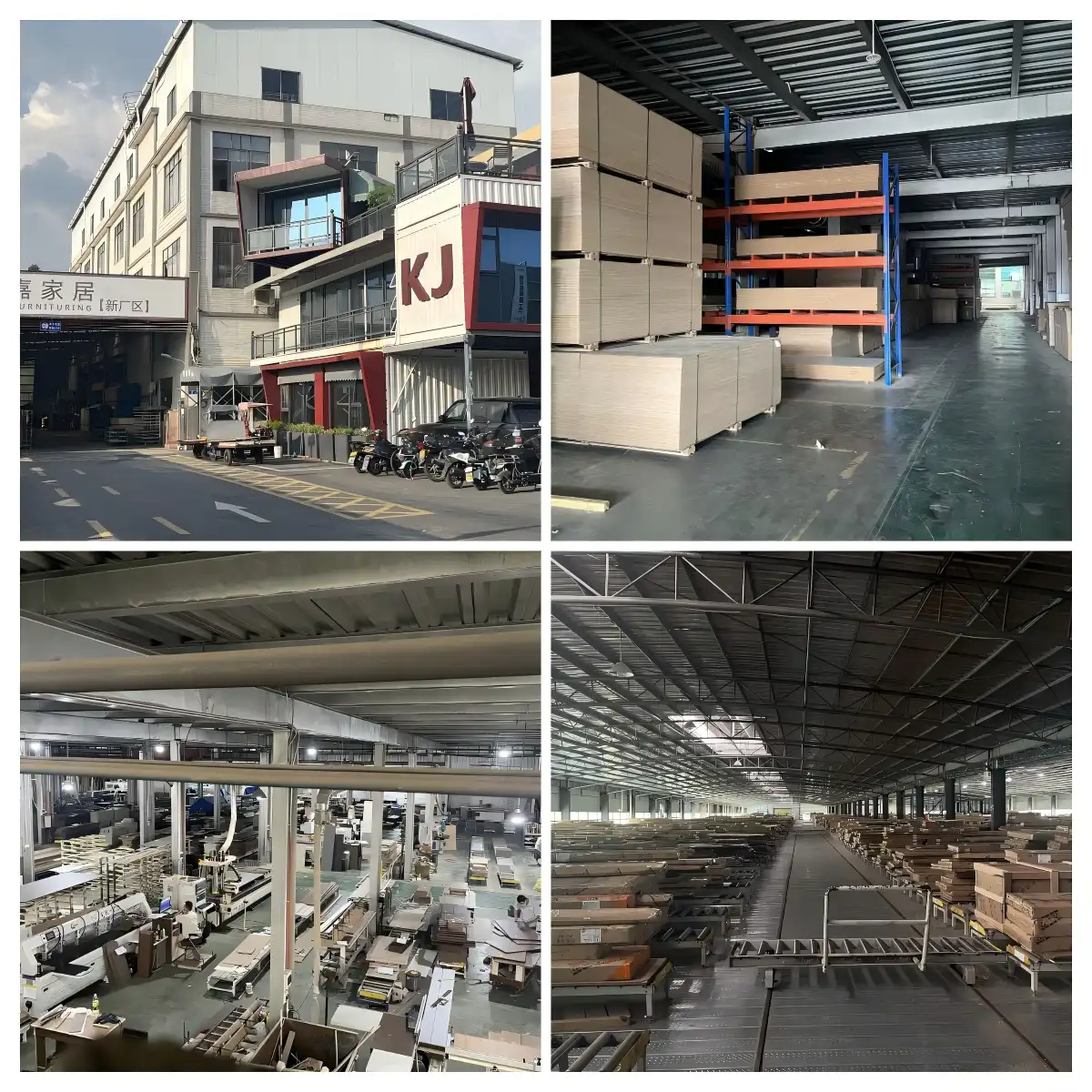
We do not simply trust the supplier’s labels. Our quality control team subjects our kitchen cabinet materials to rigorous physical testing:
-
Internal Bond (IB) Test: This measures the force required to pull the board apart. High IB scores mean the hinges will stay attached even with heavy daily use.
-
Modulus of Rupture (MOR): This tests the bending strength. This is critical for long shelves (such as those in a 900mm wide pantry) to ensure they do not sag under the weight of canned goods.
-
Thickness Swell Test: We submerge samples in water for 24 hours. A premium plywood sample should swell less than 5%, whereas low-grade particle board can swell up to 20%.
6. The Impact of Finish on Material Longevity
The core is the skeleton, but the finish is the skin. Even the best kitchen cabinet materials will fail if the finish is subpar.
-
UV-Cured Lacquer: This is a factory-exclusive process. By using ultraviolet light to instantly cure the paint, we create a surface that is significantly harder than air-dried paint. This protects the wood core from scratches and chemical spills.
-
High-Pressure Laminate (HPL): For commercial or heavy-use kitchens, HPL provides a “bulletproof” layer over the substrate. It is impact-resistant and heat-resistant, acting as armor for the board underneath.
7. Comparative Summary: Choosing the Right Substrate
To simplify the selection process, we use a scoring system for different zones of the kitchen:
| Material | Moisture Resistance | Structural Strength | Surface Smoothness | Best Use Case |
| 11-Layer Plywood | Excellent | Superior | Moderate | Sink Bases, Heavy Wall Units |
| HDF | Good | High | Superior | Modern Painted Door Panels |
| MDF | Moderate | Moderate | Superior | Decorative Panels, CNC Carving |
| Industrial Particle Board | Low | Moderate | High | Dry Pantries, Cost-Conscious Projects |
FAQ: Technical Inquiries from the Field
Q: Can I mix different kitchen cabinet materials in one project?
A: Absolutely. In fact, this is the most strategic way to build. We often design kitchens with Plywood boxes for moisture resistance and MDF/HDF doors for aesthetic perfection. This optimizes both the budget and the lifespan of the kitchen.
Q: Why does the weight of the board matter?
A: Weight is a proxy for density. A heavier board usually contains more wood fiber and less air, which translates to better screw retention and higher structural stability. If a cabinet feels “light” compared to a sample, it’s a red flag for low-density materials.
Q: Does “Eco-Friendly” board last as long as traditional board?
A: Yes. Modern NAF (No Added Formaldehyde) boards use advanced polymers that are often stronger than the old-fashioned urea-formaldehyde glues. You are getting a healthier product without sacrificing structural integrity.
Conclusion: The Technical Advantage of Factory Specification
Navigating the world of kitchen cabinet materials requires a shift from aesthetic thinking to engineering thinking. By understanding the density, the resin chemistry, and the structural limits of each substrate, you can specify a kitchen that not only looks exceptional but functions flawlessly for decades.
As a dedicated custom cabinetry factory, we provide our clients with full material transparency. We don’t hide behind marketing terms; we provide technical data sheets.
Are you ready to specify the materials for your next high-performance project?