


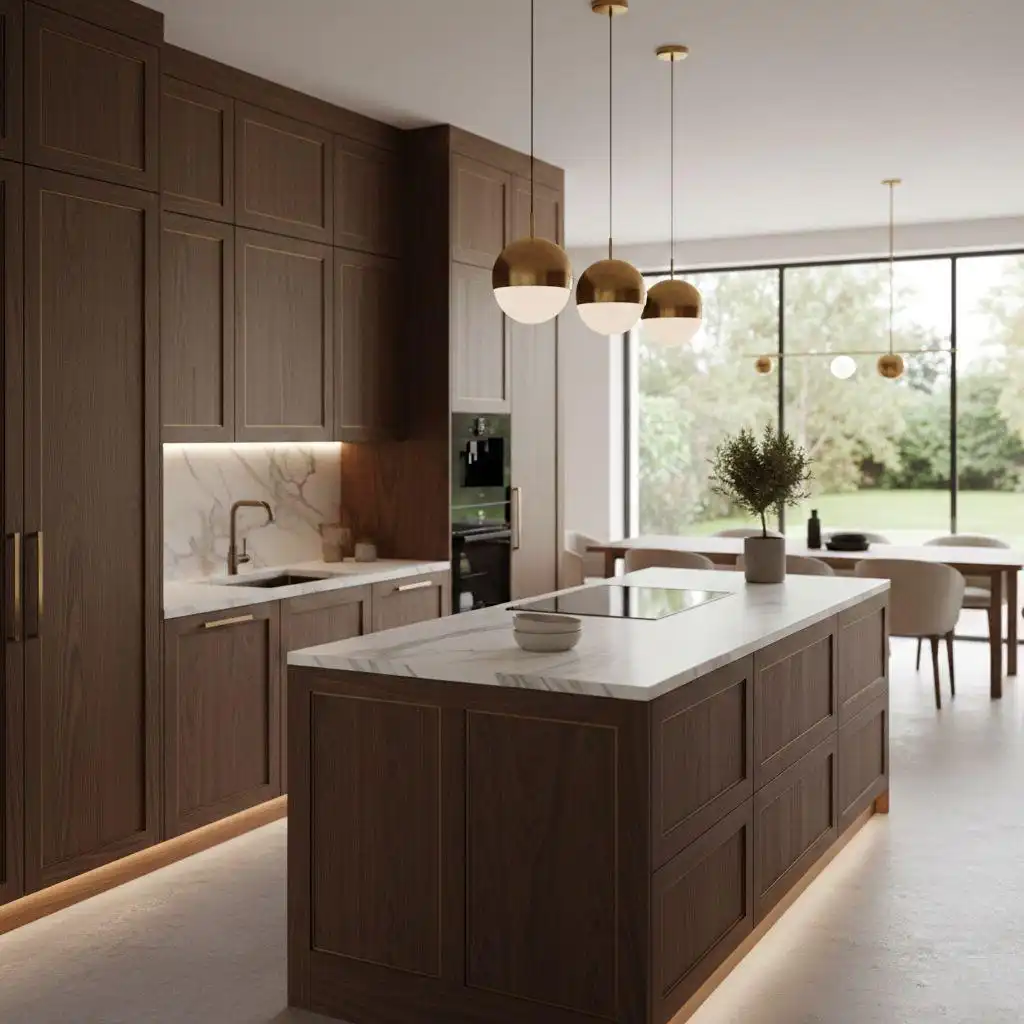
Most homeowners judge cabinets by what they can see: the trendy door style, the custom paint color, or those brushed brass handles. That’s understandable—but after twenty years of building and fixing kitchens, I can tell you this: The real difference between cheap cabinetry and true high-end kitchen cabinets is hidden behind the doors.
Two kitchens can look almost identical on the day of the photoshoot. Five years later, one still works quietly and smoothly. The other has sagging shelves, peeling finishes, and drawers that never close right again. If you want a kitchen that survives real life, you need to look at the “bones.”
Here is a contractor’s deep dive into what actually defines high-end kitchen cabinets and why the specs you don’t see matter most.
1. The Backbone: Furniture-Grade Box Construction
I’ve been called to fix “premium” kitchens that were only four years old. Why? Because the structure failed from the inside out. When we talk about high-end kitchen cabinets, the conversation starts with the box material.
-
Plywood vs. Particleboard: In the world of high-end kitchen cabinets, furniture-grade plywood is the gold standard. I look for 7-ply to 9-ply construction. Cheap cabinets use particleboard (compressed sawdust and glue) which swells the second a sink pipe develops a tiny leak.
-
The 3/4-Inch Rule: This is an easy “pro” check. High-end boxes use 3/4″ thick panels for the sides and bottom. Budget lines drop down to 1/2″ or even 3/8″. Thicker panels mean better screw-holding power, meaning your hinges won’t pull out over time.
2. Base vs. Wall Cabinets: Height, Depth & Clearance
You can’t have a functional luxury kitchen without precise geometry. In a professional installation of high-end kitchen cabinets, the relationship between base and wall units is calculated to the millimeter.
Base Cabinets: The Foundation
-
Standard Height: The industry standard is 34-1/2″, reaching 36″ with a standard 1-1/2″ countertop.
-
Custom Depth: While 24″ is the norm, many high-end kitchen cabinets are now spec’d at 27″ depth to accommodate professional-grade ranges and provide more workspace.
Wall Cabinets: The Eye-Level Detail
-
Standard Depth: Usually 12″, but for high-end kitchen cabinets, we often recommend 15″ depths. This allows you to fully enclose large dinner plates and provides a seamless look for integrated microwave inserts.
-
Critical Clearance: The “sweet spot” distance between the countertop and the bottom of the wall cabinets is 18″. Any lower, and your high-end espresso machine won’t fit; any higher, and the average person can’t reach the second shelf.
3. Joinery: How the Cabinet Is Held Together
This is where you separate professional cabinetry from “flat-pack” furniture.
-
Dovetail Joints: If the drawer box isn’t constructed with dovetail joints, it isn’t a high-end product. These interlocking teeth provide mechanical strength that staples simply can’t match.
-
Full-Height Back Panels: Most people ignore the back of the cabinet. High-end kitchen cabinets feature a solid 1/2″ or 3/4″ full-height back panel. Cheaper alternatives use a flimsy piece of hardboard or even plastic “hang rails.” If the back is weak, the whole cabinet will eventually sag under the weight of your heavy dishes.
4. Hardware: The “Engine” of Your Kitchen
A cabinet is only as good as its moving parts. You touch your drawer handles and hinges dozens of times a day; they should feel like a luxury car door.
-
Soft-Close Hinges: We only use 6-way adjustable, soft-close steel hinges (brands like Blum or Grass). They ensure that even if you slam a door, it glides to a silent stop.
-
Undermount Drawer Slides: True high-end kitchen cabinets utilize undermount slides. They are hidden beneath the drawer box, allowing for more storage width and a cleaner look. They should be rated for at least 100 lbs so your heavy cast-iron pans don’t cause a failure.
5. Finish Quality: The Chemical Barrier
A high-quality finish isn’t just about the “look”—it’s a protective shield.
The paint on high-end kitchen cabinets isn’t just standard house paint. It is typically a conversion varnish or a post-catalyzed lacquer applied in a dust-free environment. This creates a hard, durable surface that resists moisture, grease, and those “oops” moments with a cleaning sponge. If the inside of the cabinet feels rough to the touch, it’s a sign they cut corners on the finishing process.
6. Shelving: Preventing the “Quiet Fail”
Shelves fail slowly. At first, everything looks fine. Then one day you notice a slight curve. High-end kitchen cabinets use 3/4″ thick plywood shelves supported by metal pins. If you see 1/2″ shelves or plastic supports, you are looking at a cabinet that will eventually bow under the weight of your cookbooks or stoneware.
FAQ
1. Are custom cabinets the only way to get high-end quality?
Not necessarily. While many high-end kitchen cabinets are fully custom, some “semi-custom” manufacturers offer the same furniture-grade plywood and top-tier hardware. The key isn’t just the “custom” label—it’s the specifications of the box construction and the quality of the finish. Always check the specs before assuming custom means better.
2. Is plywood really that much better than MDF or Particleboard?
In a kitchen environment, yes. Kitchens are high-moisture areas. While MDF is great for paint stability on door panels, the cabinet boxes themselves should be plywood. Plywood handles moisture and holds heavy screws much better over time. For high-end kitchen cabinets, plywood is non-negotiable for the structural box.
3. How do I know if a “soft-close” hinge is high quality?
Look for a brand name stamped on the hinge, such as Blum, Grass, or Salice. High-end hardware is made of heavy-duty steel and offers 6-way adjustability (up/down, left/right, in/out). If the hardware feels light or lacks a brand name, it’s likely a generic knock-off that will lose its tension within a few years.
4. What is the standard clearance between the counter and wall cabinets?
The industry standard is 18 inches. This height is the “sweet spot” that allows enough room for most countertop appliances (like stand mixers or coffee makers) while keeping the first two shelves of your high-end kitchen cabinets within easy reach. If you are exceptionally tall or have very large appliances, you might consider 20 inches, but 18 is the standard for a reason.
5. Why are high-end cabinets so much more expensive?
You aren’t just paying for the look; you’re paying for longevity. High-end kitchen cabinets use expensive conversion varnishes that won’t yellow or peel, thicker wood panels that won’t sag, and precision-engineered hardware. When you spread the cost over 20+ years of use, high-end cabinetry often ends up being cheaper than replacing low-quality cabinets twice in the same timeframe.
6. Can I upgrade my existing cabinets to “high-end” status?
You can upgrade the “jewelry” (hinges and handles) and the “skin” (refacing the doors), but you cannot easily fix a weak cabinet box. If your current boxes are made of thin particleboard or are starting to pull away from the wall, a cosmetic upgrade is usually a waste of money. True high-end kitchen cabinets start with a structural foundation that can’t be faked.
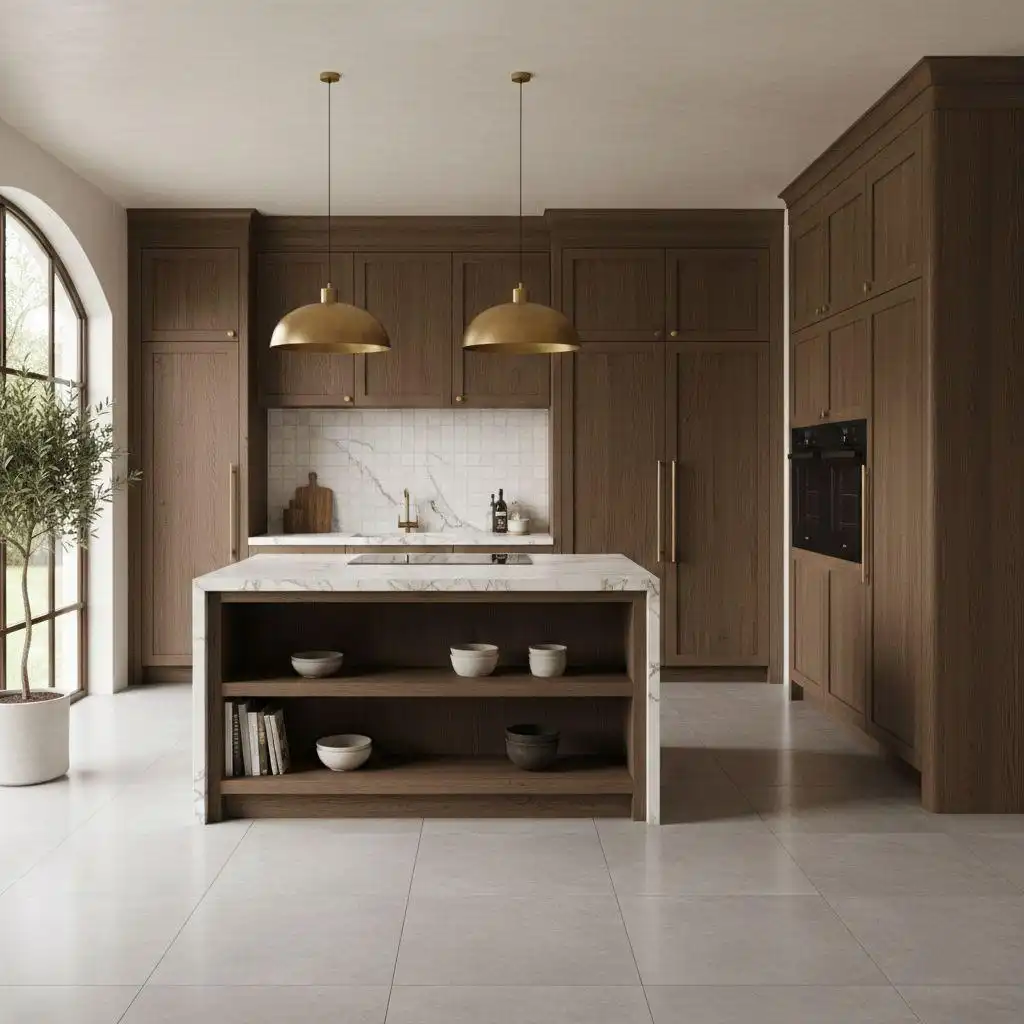
The Contractor’s Verdict
A high-end kitchen isn’t defined by how it looks on the day the contractor finishes. It’s defined by how it feels fifteen years later.
When you’re shopping for high-end kitchen cabinets, don’t just look at the door samples. Open the cabinet. Reach inside. Feel the weight of the shelf. Check the joints. If the salesperson can’t tell you the ply-count of the box or the weight rating of the glides, they aren’t selling you a premium product.
Investing in high-end kitchen cabinets is the single best way to ensure your home’s value and your daily sanity. If you are planning a remodel, make sure your cabinets are built for the long haul, not just for the “reveal” photos.
Ready to Build a Kitchen That Lasts?
Navigating the world of high-end kitchen cabinets can be overwhelming with so many brands claiming to be “the best.” As a contractor, I help my clients cut through the marketing fluff to find cabinets that offer genuine durability and craftsmanship.
Would you like a professional review of your kitchen floor plan or a consultation on cabinet material selection?