

When you’re gearing up for a kitchen renovation, the first thing I tell homeowners is to get clear on how different types of kitchen cabinets are categorized. After 15+ years of installing everything from budget-friendly stock units to million-dollar custom builds, I’ve learned these two classification systems—customization level and functional purpose—are your roadmap to making smart choices.
Customization Levels Explained
Stock Cabinets are your entry point—what I call the “quick fix” option. These come in standard 3-inch width increments with limited finishes, but they’re ready to go when you need a fast turnaround. I’ve installed hundreds of these from Home Depot and Lowe’s, and they’re perfect when clients need their kitchen back in 1-2 weeks. At $75-$150 per linear foot, they save budget, but I always warn homeowners: if your kitchen has odd angles or non-standard dimensions, you’ll end up with those annoying gaps that scream “cookie-cutter renovation.”
Semi-Custom Cabinets are where I see most homeowners land—they hit that sweet spot between personalization and affordability. Companies like KraftMaid and Schuler Cabinetry let you adjust shelves, go deeper (12-24 inches), and get better color options. In my experience, these take 3-6 weeks to deliver, costing $150-$300 per linear foot. Last month I installed these for a family in Arlington who wanted specific spice racks and pull-out bins—they got the tailored look without paying custom prices.
Custom Cabinets are the luxury option—when clients say “I want it exactly this way.” Specialized shops like Wood-Mode or Christopher Peacock build these to your kitchen’s exact measurements. I once built custom units around a 100-year-old brick chimney that jutted into the kitchen—you can’t do that with stock! Expect to pay $500-$1,200+ per linear foot and wait 8-12 weeks, but the payoff is cabinets that make your kitchen truly one-of-a-kind. Just last year, a client invested in custom cherry cabinets that increased their home value by more than the renovation cost.
Functional Cabinet Types
Base Cabinets are your workhorses—always 34.5 inches tall with that 1.5-inch countertop overhang we contractors stick to. Standard depth is 24 inches, but I drop to 18 inches for islands so you’re not stretching across. Drawer bases are worth the upgrade—clients always tell me they regret not getting more after living with door-only cabinets. Stock versions start around $100-$200 per linear foot, and I always recommend upgrading to soft-close hinges here—worth every penny when you’re slamming drawers shut at 6 AM.
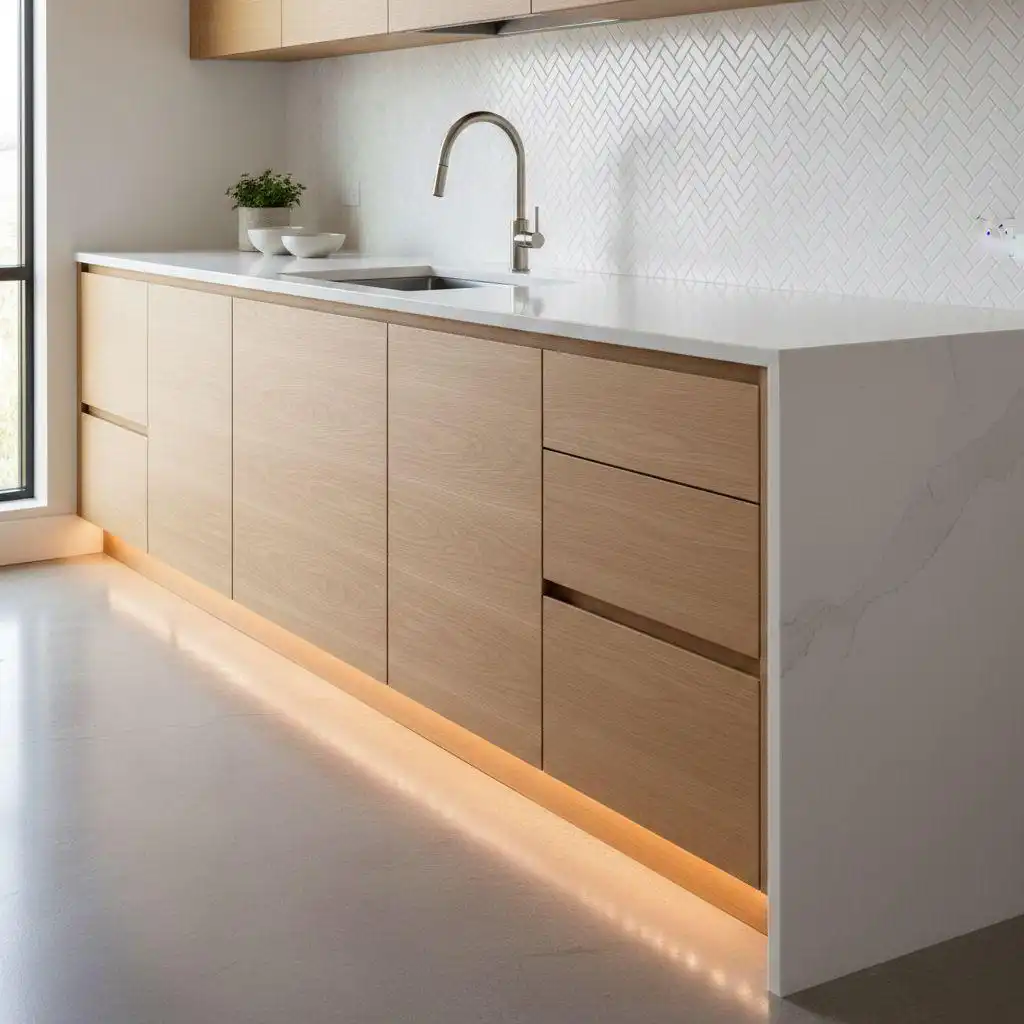
Wall Cabinets maximize your vertical space—mounted 18 inches above countertops, never higher unless you’ve got NBA players in the house. Heights come in 30, 36, or 42 inches, and I push for the full 42 inches whenever ceilings allow—you’d be surprised how much storage you gain. At $120-$250 per linear foot for semi-custom, glass fronts add about 20% but make small kitchens feel bigger. Just last week, I installed glass doors for a client in Alexandria—we added LED strips inside, and now they’re showing off their grandmother’s china instead of hiding it.
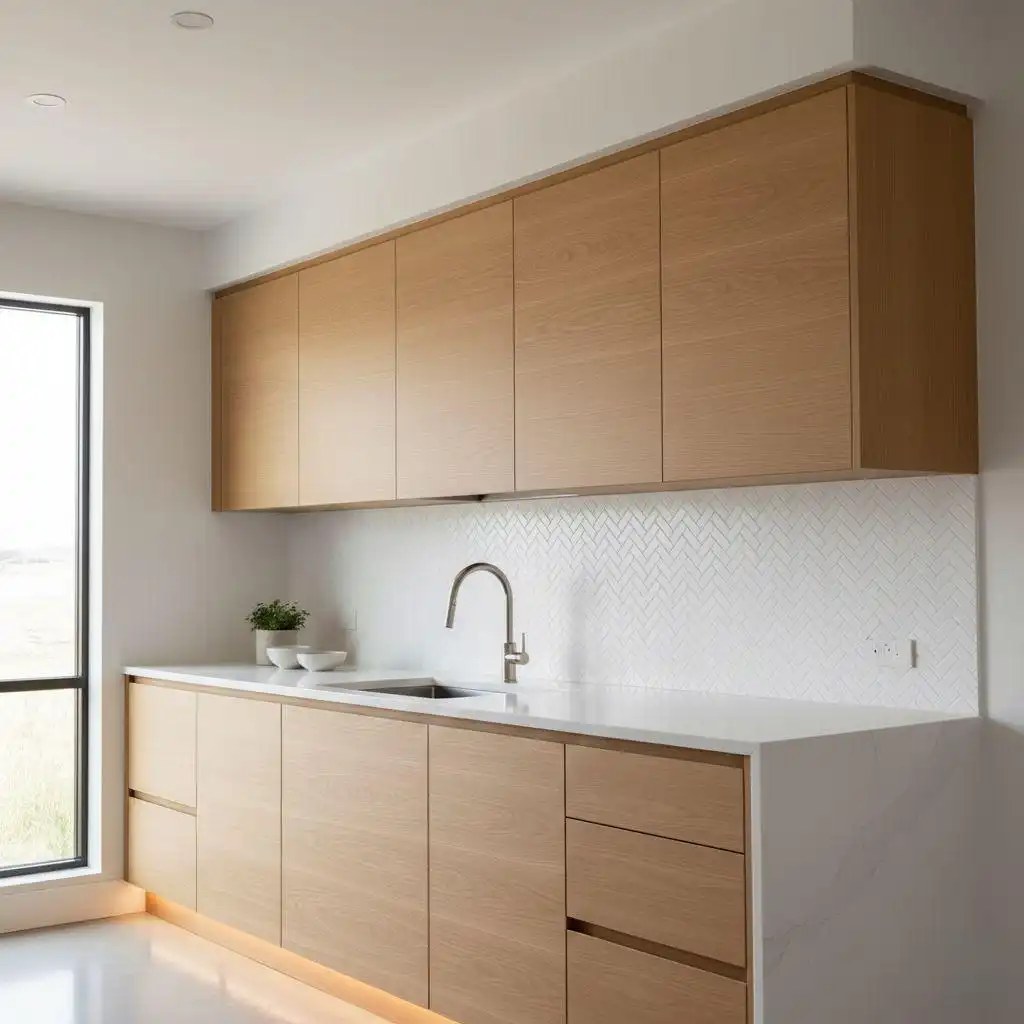
Tall Cabinets are what I call “pantry powerhouses”—floor-to-ceiling storage up to 96 inches tall. These are game-changers for clients who hate cluttered counters. I always recommend pull-out shelves here—no more kneeling on the floor to reach the back of the pantry. They need 15-24 inches of depth, so measure carefully! Last month a client insisted on squeezing one into a 12-inch space—now they can barely open the shelves. Trust the measurements on these.
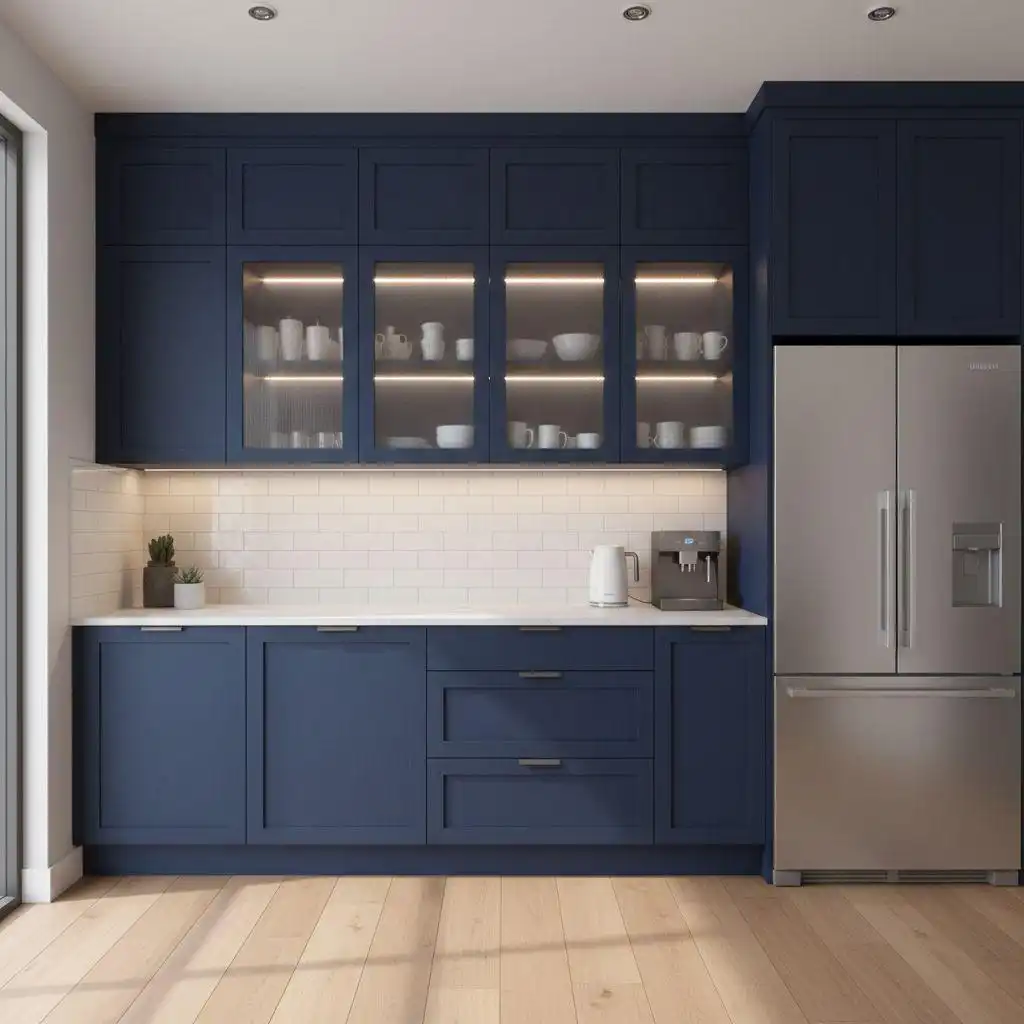
Corner Cabinets used to be the bane of my existence until better hardware came along. Contractors often recommend lazy Susans, but I’ve found blind corner pull-outs work better for most families—you don’t have to spin and reach. Diagonal corner cabinets look great but lose storage space. Expect to pay 20-30% more than standard bases because of the specialized hardware. Pro tip: If your kitchen layout allows, skip the corner cabinet entirely and install a “butler’s pantry” instead—clients love that upgrade.

Exploring Popular Styles of Different Types of Kitchen Cabinets
Your cabinet style sets the whole mood of the kitchen. I’ve seen clients get hung up on this, but it’s simple: pick something that matches your home’s character and how you actually live. These are the styles I install most often, with the real-world pros and cons I share with every client.
Shaker Style
Shaker cabinets are my most requested style—those five-piece doors with recessed centers work everywhere from farmhouses to modern homes. I installed these last week in a 1920s Craftsman and they looked original to the house, then did the same style in a brand-new townhome with quartz counters. At $200-$500 per linear foot for semi-custom, they’re not cheap, but they hold value. The one downside? That recessed panel collects dust like crazy. I always tell clients with allergies to opt for flat panels instead—easier to keep clean.
Flat-Panel Cabinets
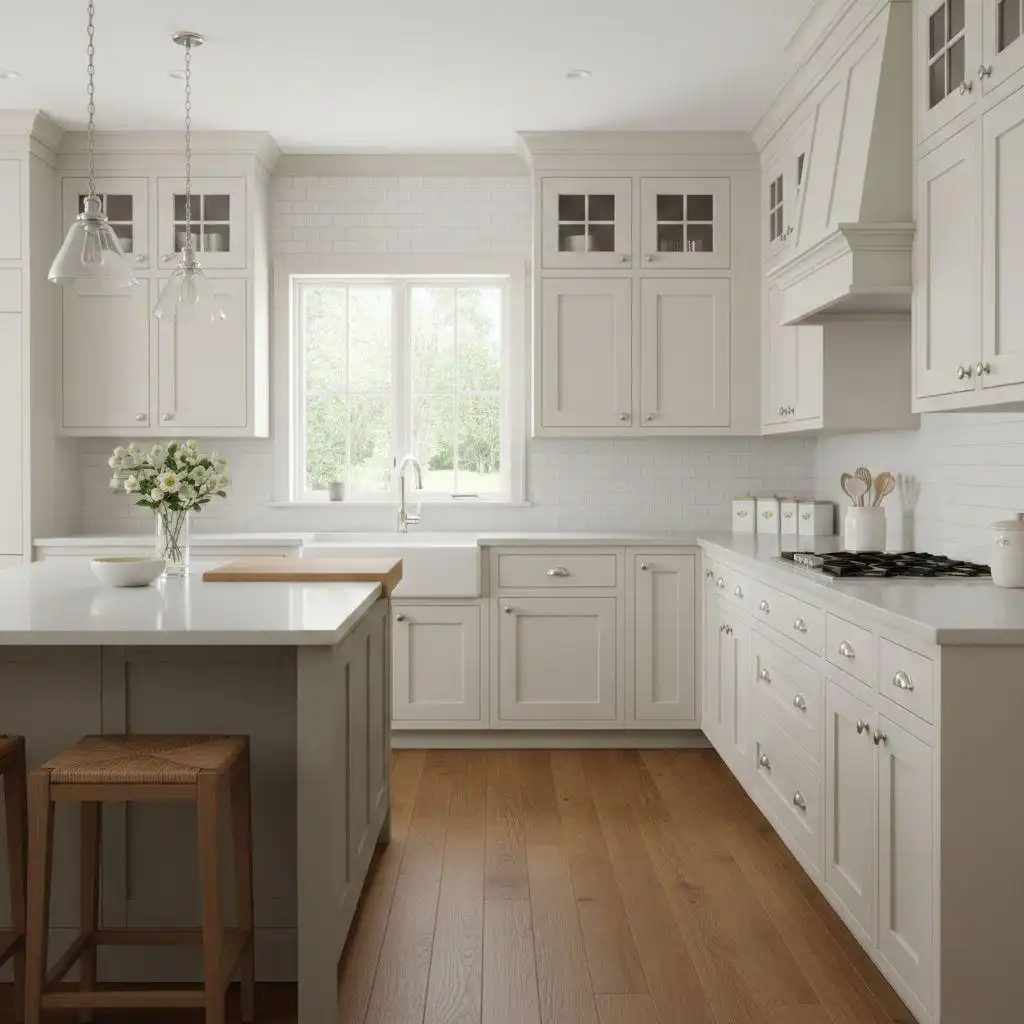
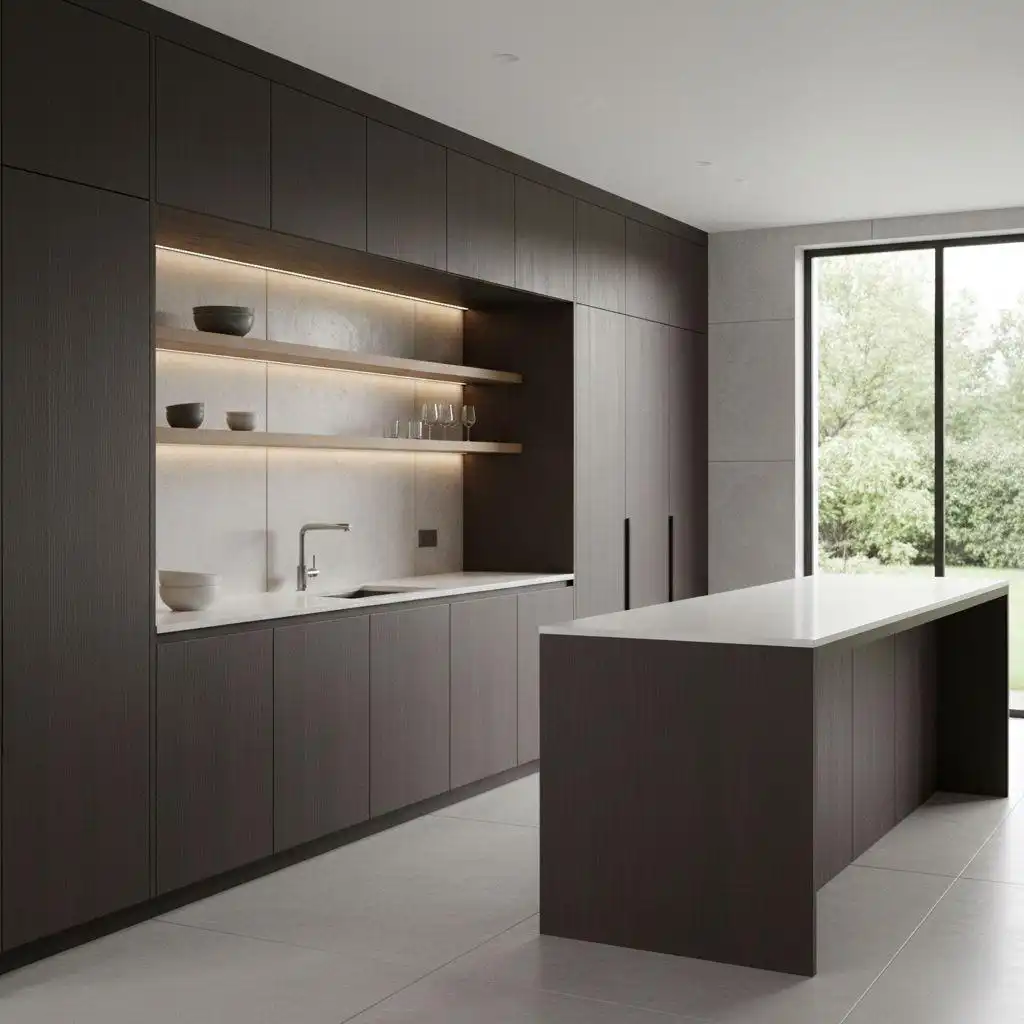
These slab-style doors are what I recommend for clients wanting that sleek, contemporary look. No edges, no profiles—just clean lines. I’ve been installing more and more handleless versions with touch latches—great for busy families with kids who always have their hands full. Stock versions start at $150 per linear foot, but splurge for the high-gloss acrylic if you can—they reflect light and make kitchens feel bigger. Warning though: fingerprints show everything. I had a client who insisted on black high-gloss—now they’re wiping cabinets three times a day. Matte finishes hide smudges better for real life.
Raised-Panel Cabinets
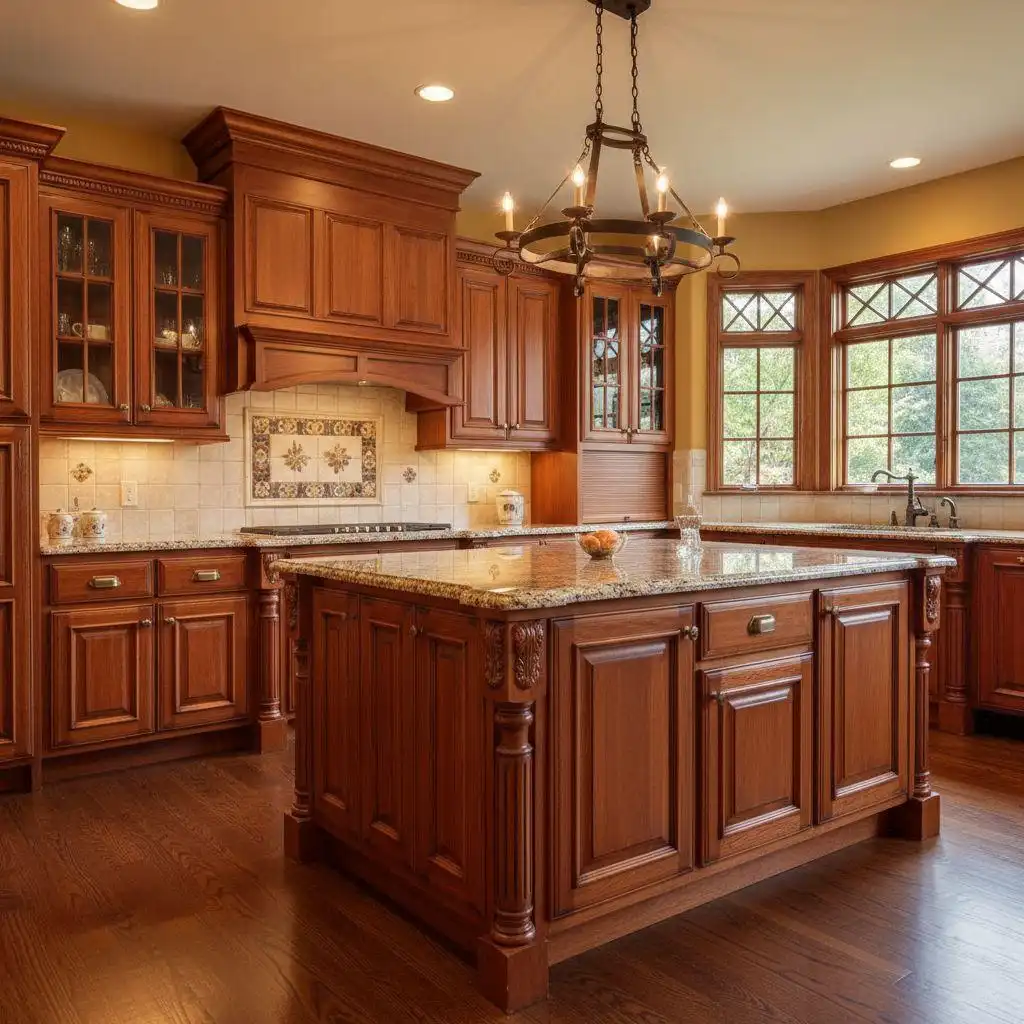
These are your traditional beauties—center panel elevated above the frame with decorative edges. I install these in older homes where we’re going for that colonial or transitional feel. Brass knobs and ornate moldings complement them perfectly. Custom versions run $250-$600 per linear foot, and they’re built like tanks—the detailed construction makes them super rigid. Just be careful in small kitchens: those 3D panels can make the space feel cramped. I had to talk a client out of these for their 8×10 kitchen last year—we went with Shakers instead, and the difference in perceived space was night and day.
Glass-Door Cabinets
Glass doors add elegance, but they’re high maintenance—plain and simple. I tell clients: “If you’re not the type to keep your dishes organized, skip these.” Clear, frosted, seeded, or leaded glass—each gives a different vibe. I always add interior lighting here; it makes the glass pop at night. They add 15-25% to your cabinet cost, but they’re worth it for displaying special pieces. Last month I did leaded glass inserts for a client who inherited her mother’s crystal—now those pieces are the focal point instead of collecting dust in a box.

Beadboard Cabinets
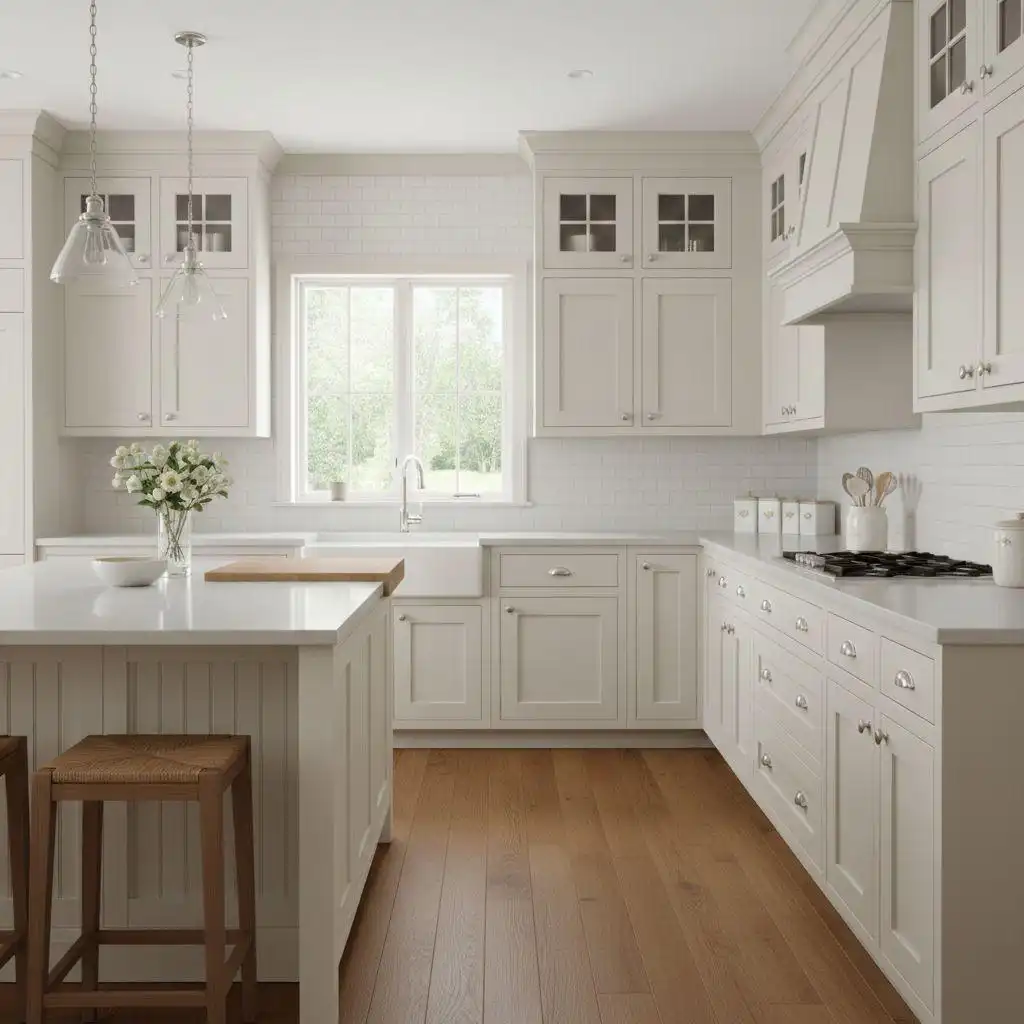
These vertical grooves (we call them “beads”) give that cottage or coastal feel clients love in Virginia and Maryland. I use pine or poplar for painted versions—they take color beautifully. At around $250 per linear foot for semi-custom, they add texture without overwhelming the space. The beads hide minor dents better than smooth doors, which is great for families with kids. But here’s the tradeoff: those grooves trap grease. I had a client with beadboard who never cleaned the grooves—after two years, they looked terrible. If you’re not into regular maintenance, stick with smooth doors.
Louvered Style
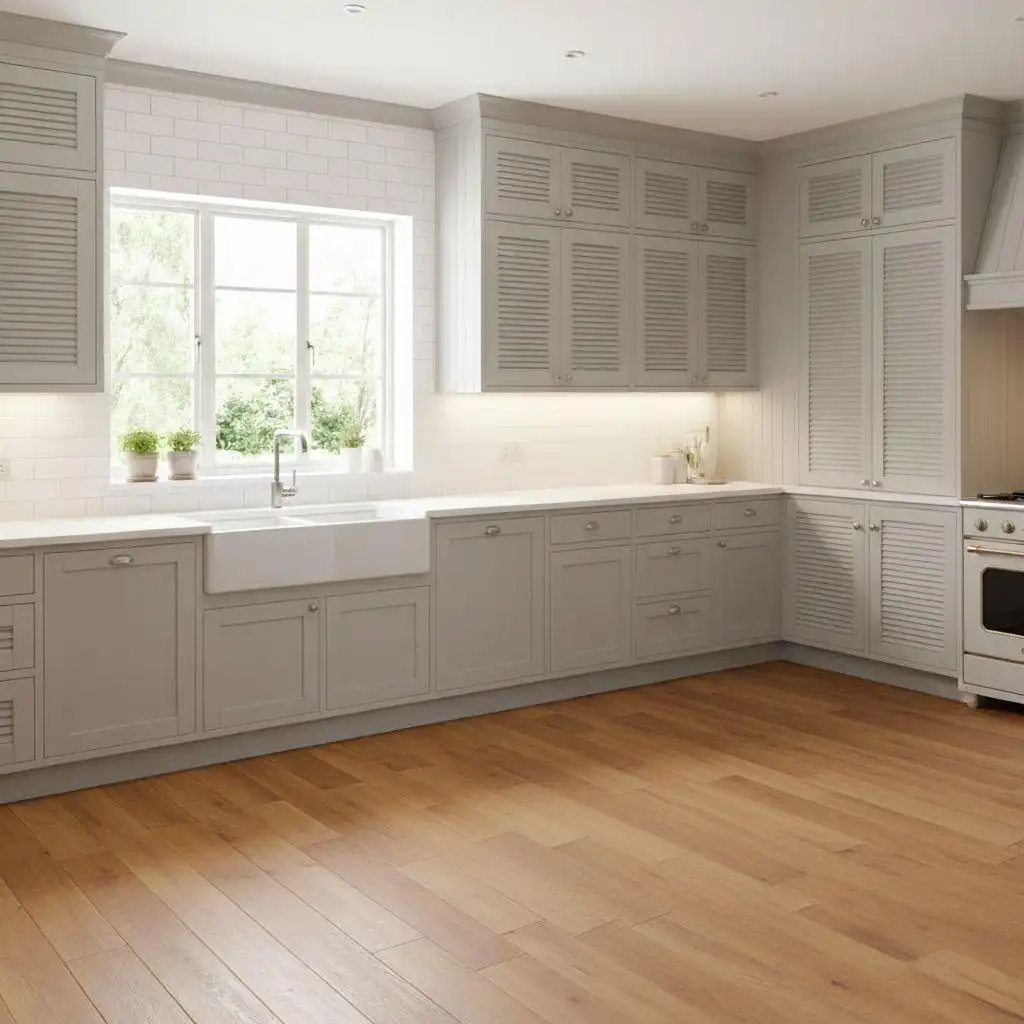
Horizontal slats with spacing for airflow—these started in tropical climates but work as accent pieces anywhere. I install these mainly as upper cabinets for clients who want architectural interest without going full traditional. Wood or composite materials, $300-$600 per linear foot. They’re great for storing small appliances that need ventilation, like coffee makers. But fair warning: those slats collect dust like crazy, and you lose about 30% storage space compared to solid doors. Last year a client wanted all upper cabinets louvered—I compromised by doing just two accent cabinets, and they still got the look without sacrificing function.
Comparing Materials for Different Types of Kitchen Cabinets
Material choice is where I see homeowners get most confused. After 15 years, I can tell you: the right material depends on your climate, budget, and how you actually use your kitchen. I’ve installed cabinets that looked beautiful but failed in our humid DC summers, and others that cost a fortune but held up for decades.
Solid Wood
Solid wood is the gold standard—oak, maple, cherry, walnut—each with its own personality. In my experience, oak works best for traditional kitchens with its prominent grain, while maple gives that smooth, uniform look modern clients love. At $300+ per linear foot for stock, it’s an investment, but I’ve seen 50-year-old solid wood cabinets that still look amazing. Here’s what suppliers won’t tell you: solid wood moves with humidity. In our DC area summers, I’ve had doors stick because the wood expanded. You need proper finishing and ventilation—don’t skimp on that. Last year I refinished solid cherry cabinets from the 1970s—after stripping and restaining, they looked brand new. You can’t do that with cheaper materials.
Plywood
Plywood is what I recommend for most clients—it’s the “workhorse material” in cabinet construction. Layers of veneer glued cross-grain make it super stable—no warping like solid wood. I always specify Baltic birch for drawer boxes; it has more layers and holds up to years of slamming. At $150-$350 per linear foot, it balances durability and value. Clients often ask if plywood looks cheap—nope! With the right veneer or paint, you can’t tell the difference from solid wood. Last month a client insisted on solid wood everywhere, but we used plywood for the cabinet boxes and solid maple for doors—saved them $5,000 and the boxes will outlast the doors anyway.
Medium-Density Fiberboard (MDF)
MDF is compressed wood fibers with resin—great for painted finishes because it’s perfectly smooth. I use this when clients want intricate door profiles or raised panels on a budget. At $100-$250 per linear foot, it’s affordable, but here’s the catch: it’s like a sponge with water. I never recommend MDF for clients with kids who splash water everywhere or in humid basements. Last year I replaced MDF cabinets for a client in Annapolis—they’d swollen around the sink from moisture. If you do MDF, make sure it’s properly sealed and avoid installing near sinks or dishwashers.
Particleboard
Wood chips pressed with resin—this is the budget basement option at $75-$150 per linear foot. I only recommend these for rental properties or flip houses, never for homeowners planning to stay long-term. The melamine overlay looks okay initially, but edges chip easily, and water destroys it instantly. Last month I did a rental renovation with particleboard cabinets—we’ll probably replace them in 5 years. If you’re on a tight budget, get better quality used cabinets instead—you’ll get more life out of them.
Thermofoil
Vinyl film heat-pressed onto MDF or particleboard—this is what I call the “rental special” upgrade. It resists stains and scratches better than paint, and costs $120-$250 per linear foot. But here’s what contractors know that homeowners don’t: thermofoil delaminates when it gets hot. I’ve seen doors peel near ovens and dishwashers after just a few years. You can’t repair it either—you have to replace the whole door. Last year a client saved $3,000 with thermofoil—now they’re replacing doors already. If you must go this route, avoid installing near heat sources.
Practical Selection Guidelines for Different Types of Kitchen Cabinets
Choosing different types of kitchen cabinets isn’t about picking what looks best in a magazine—it’s about what works for YOUR life. After 15 years of installing cabinets for all types of families, I’ve developed a system that helps clients avoid expensive mistakes. Here’s my step-by-step approach.
Budget Considerations
Start with the hard numbers: cabinets are 25-35% of your total kitchen renovation budget. I break it down like this: under $10k? Stick to stock with smart upgrades—soft-close hinges are non-negotiable in my book, even on a budget. $15k-$30k gets you semi-custom with better materials and storage features. Over $40k? You’re in custom territory with premium woods and smart features. Always hide 10-15% for surprises—I once had to rebuild a wall because the old cabinets were holding up the ceiling! Pro tip: Spend most on base cabinets—you use them every day. Save on uppers by mixing open shelving with closed cabinets.
Layout Optimization
Contractors live by the work triangle rule—sink, stove, fridge should form a triangle with 4-9 feet between each. I walk clients through their current kitchen first: “Where do you struggle most?” Last week a client mentioned carrying dishes across the kitchen—we rearranged cabinets to create a dishwashing zone right next to the dining area. Measure twice, install once! Note ceiling height, window locations, and those annoying pipes that always end up where you want a cabinet. For galley kitchens, I recommend pull-out shelves instead of doors—you gain 30% more usable space. And don’t forget toe-kick drawers—perfect for baking sheets and cutting boards.
Style Alignment
Your cabinets should match your home, not fight it. Traditional houses need traditional details—raised panels, crown molding. Modern homes shine with flat panels and minimal hardware. I always tell clients: “Look at your front door and trim work—that’s your style guide.” Last year a client wanted ultra-modern cabinets in their 1920s colonial—it looked like a spaceship landed in their kitchen. We compromised with Shaker doors and modern hardware, and it worked perfectly. Mixing styles? Stick to 80/20—80% one style, 20% accent. And remember: dark cabinets show dust, light cabinets show stains, white cabinets need constant cleaning. Pick based on your lifestyle, not just trends.
Functional Requirements
Take everything out of your current cabinets and lay it on the counter—that’s your inventory! I had a client who insisted on extra deep drawers, then realized they only owned four pots. Measure your largest items—those stand mixers and baking sheets determine your cabinet depths. Families with kids need drawer dividers and lower shelves. Avid cooks need spice pull-outs and deep pot drawers. Aging in place? Go with pull-out shelves and D-shaped handles that are easy to grip. A standard 10×10 kitchen needs about 14-18 linear feet of bases and 10-12 of walls, but adjust for your needs. And don’t forget: every cabinet needs at least one electrical outlet inside for small appliances.
At the end of the day, different types of kitchen cabinets should make your life easier, not more complicated. I’ve seen beautiful kitchens that failed because they didn’t fit the family’s needs, and “ugly” kitchens that worked perfectly for decades because they were designed around real life. By focusing on customization that matters, materials that work for your climate, and layout that flows with how you cook and live, you’ll end up with cabinets that feel like they were made just for you—because they should be.
As you embark on your kitchen cabinet journey, remember that the best choices always align with how your household actually lives—not just magazine trends. Start by evaluating your storage needs, setting a realistic budget that protects 10-15% for surprises, and choosing materials suited to your climate and maintenance preferences. Whether you opt for budget-friendly stock cabinets or invest in custom craftsmanship, prioritize the features that will make your daily routine smoother: soft-close hinges, pull-out shelves, and organized drawer systems.
With the insights from this guide, you’re now equipped to transform your kitchen into both a functional workspace and a reflection of your unique style. Ready to begin? Take measurements this weekend, visit showrooms with your family, and start visualizing how your dream cabinets will bring new life to the heart of your home.👉Contact us!