
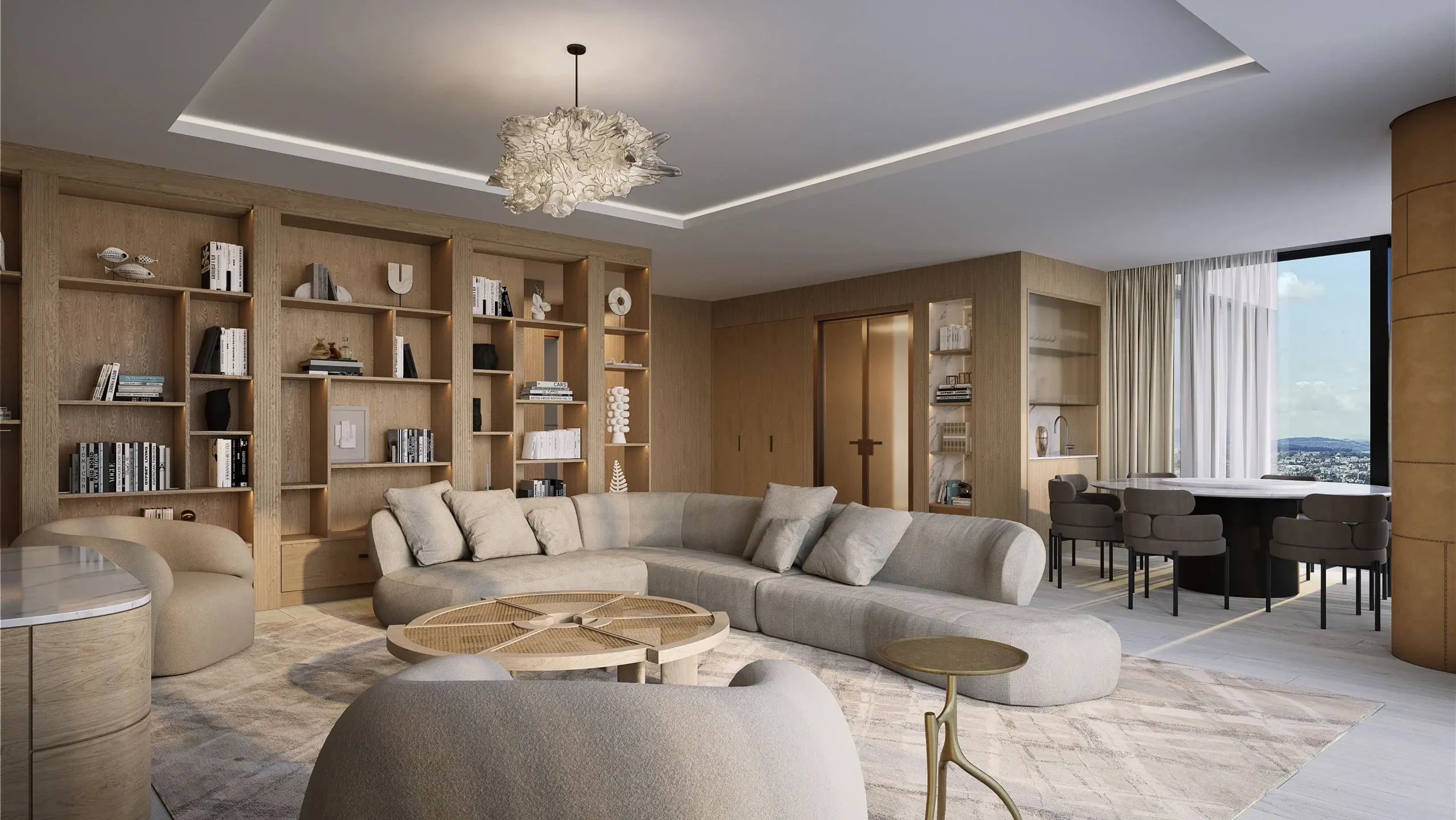
In the hierarchy of modern home luxuries, the dedicated coffee station has ascended from a “nice-to-have” corner to a primary architectural feature. In 2026, a high-end kitchen remodel is considered incomplete without a professional-grade beverage center. However, the difference between a cluttered countertop and a true “Barista-grade” home cafe lies in one critical, often overlooked factor: the engineering of your coffee bar cabinet layout.
As a contractor with over two decades of experience, I’ve seen homeowners invest $10,000 in professional espresso machines—units capable of producing cafe-quality micro-foam and precision extraction—only to have the experience ruined by poor spatial planning. They realize too late that they have no space to knock out coffee grounds, no water line for consistent brewing, and a cabinet finish that is being slowly destroyed by steam.
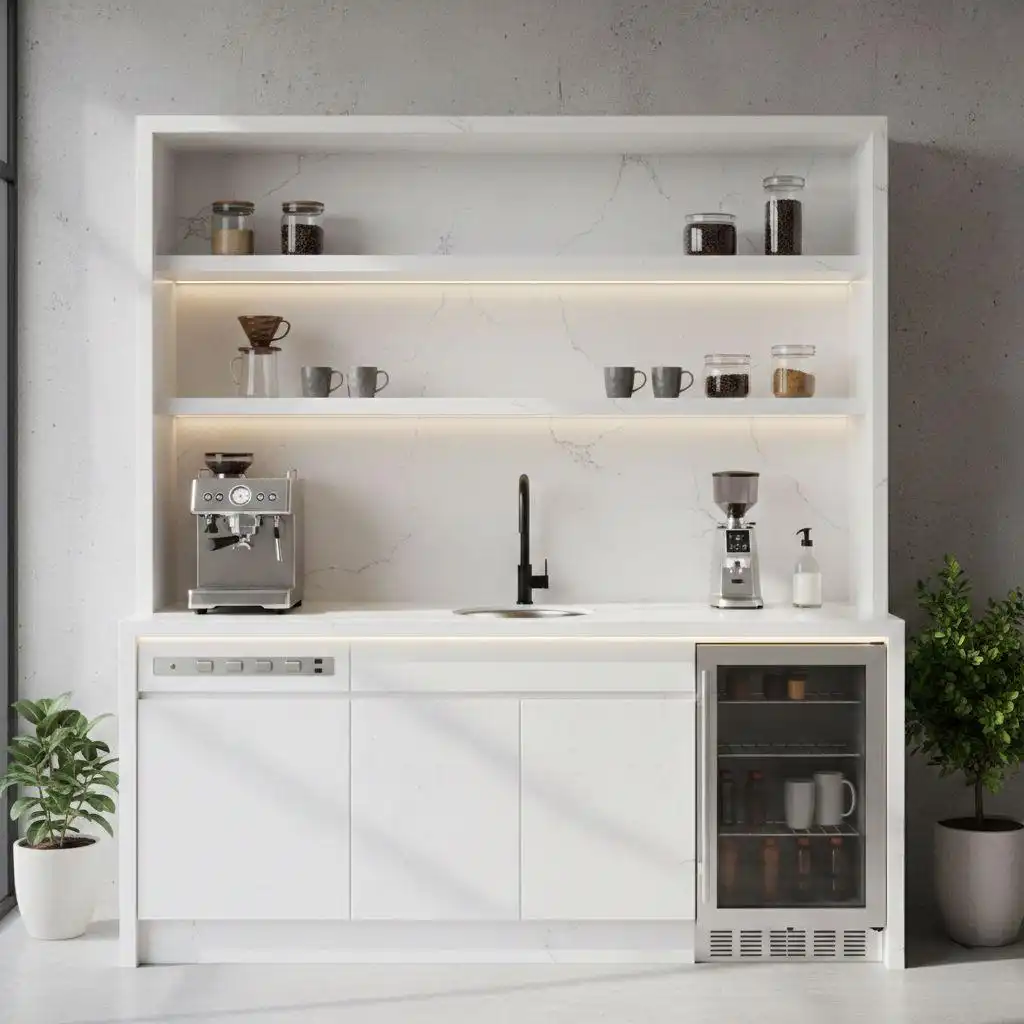
A truly functional station requires a deep understanding of ergonomics, fluid dynamics, and cabinetry load-bearing. If you don’t prioritize your coffee bar cabinet layout during the structural design phase, you’re not building a luxury feature; you’re building a future renovation headache.
1. The “Barista Flow”: Ergonomic Work-Zones
In professional environments, “flow” is everything. When we design a coffee bar cabinet layout, we divide the space into three distinct zones based on the “Barista Motion Path”:
-
The Wet Zone (Preparation): This is where the espresso machine sits. Ideally, this section of the coffee bar cabinet layout features a non-porous surface like quartz or sintered stone to handle spills.
-
The Dry Zone (Grinding & Tamping): This area requires a lower height or a specialized reinforced shelf to handle the physical pressure of “tamping” the coffee grounds (up to 30 lbs of pressure).
-
The Service Zone (Additives & Cleaning): This is where your syrups, spoons, and napkins live. In a smart coffee bar cabinet layout, this is located to the right of the machine for right-handed users to ensure a seamless motion from brewing to serving.
By mapping these zones into your coffee bar cabinet layout, you eliminate the “cross-over” clutter that makes small stations feel chaotic.
2. The Infrastructure: Plumbing and Electrical Secrets
A professional coffee bar cabinet layout is only as good as what’s behind the walls.
The Water Logic
For 2026, the trend is “direct-plumbed” machines. This requires a dedicated 1/4-inch water line. But you can’t just plug in tap water; the minerals will destroy your machine’s boiler. A sophisticated coffee bar cabinet layout must include a “Technical Cabinet” below the counter to house a professional BWT or Reverse Osmosis filtration system. We design these cabinets with easy-access pull-out trays so you can change filters without crawling on the floor.
The Power Grid
An espresso machine, a high-end burr grinder, and a milk frother can easily pull 20-25 amps of power. If you share a circuit with your toaster, you’ll be tripping breakers every morning. We recommend a dedicated 20-amp circuit for the coffee bar cabinet layout. Additionally, we integrate “bus-bar” style power strips hidden under the upper cabinets to keep cords off the counter, maintaining that “Instagram-perfect” look.
3. High-Performance Cabinetry Hardware
The “Shocking Truth” about coffee bars is that they are hostile environments for wood. Steam, heat, and moisture are constant.
Pocket Doors and “The disappearing Bar”
If your coffee bar cabinet layout is part of an open-concept living room, you might want to hide it when not in use. We use “HAWA” or “Accuride” pocket door systems. These allow the doors to rotate 90 degrees and slide back into a slim pocket on the side of the cabinet. This is the ultimate coffee bar cabinet layout solution for maintaining a sleek, minimalist home aesthetic.
Heavy-Duty Drawer Slides
Don’t underestimate the weight of a professional machine. A La Marzocco Linea Mini weighs 71 lbs. Your coffee bar cabinet layout must utilize under-mount, full-extension slides rated for at least 100 lbs. If you use cheap hardware, the drawer will begin to sag and seize within six months of daily use.
4. Material Science: Protecting Your Investment
Steam is the silent killer of cabinetry. When you froth milk, the steam rises directly into the bottom of your upper cabinets.
In a premium coffee bar cabinet layout, we take two preventative measures:
-
Steam Shields: We install ultra-thin stainless steel or heat-resistant polymer shields on the underside of the upper cabinets.
-
Distance Engineering: We increase the “clearance” between the counter and the upper cabinets to 20 or 22 inches (instead of the standard 18 inches) in the coffee bar cabinet layout. This allows heat to dissipate more effectively before hitting the cabinet finish.
5. Specialized Storage: The Barista’s Tool Chest
A standard cabinet is too deep for coffee accessories. You’ll end up with “forgotten” bags of beans in the dark back corners.
An optimized coffee bar cabinet layout should incorporate:
-
Syrup Pull-Outs: A 6-inch wide slim pull-out cabinet that brings all your flavoring bottles to you.
-
Integrated Knock Boxes: We can cut a hole directly into the countertop with a “chute” leading to a hidden trash bin inside the coffee bar cabinet layout. This keeps your counter clean and your workflow professional.
-
LED Task Lighting: We use 3000K (Warm White) CRI 95+ LED strips. This lighting temperature ensures the coffee looks as rich as it tastes, which is a vital part of the sensory experience.
FAQ: Mastering Your Coffee Bar Design
Can I put a coffee bar inside a walk-in pantry?
Yes, the “Hidden Cafe” is a massive trend. However, ventilation is key. A coffee bar cabinet layout inside a pantry must include an active exhaust fan (similar to a bathroom fan) to remove moisture and prevent mold growth on your dry goods.
What is the best countertop material for coffee?
Avoid marble—coffee is acidic and will etch the stone instantly. For a high-performance coffee bar cabinet layout, we recommend Sintered Stone (like Dekton) or Quartz. These materials are non-porous and can withstand the heat of a portafilter without cracking.
How do I hide the ugly cords?
We use “Grommet Holes” with brass or matching wood finishes. In a custom coffee bar cabinet layout, we can also build a “false back” in the cabinet, allowing all the messy wiring to live in a 2-inch gap behind the actual storage area.
Is a coffee bar a good investment for resale?
Absolutely. Real estate data for 2026 shows that homes with dedicated “lifestyle zones”—like a built-in coffee station or a wine room—sell 15% faster than those with standard kitchen layouts. A well-executed coffee bar cabinet layout is a high-yield investment.
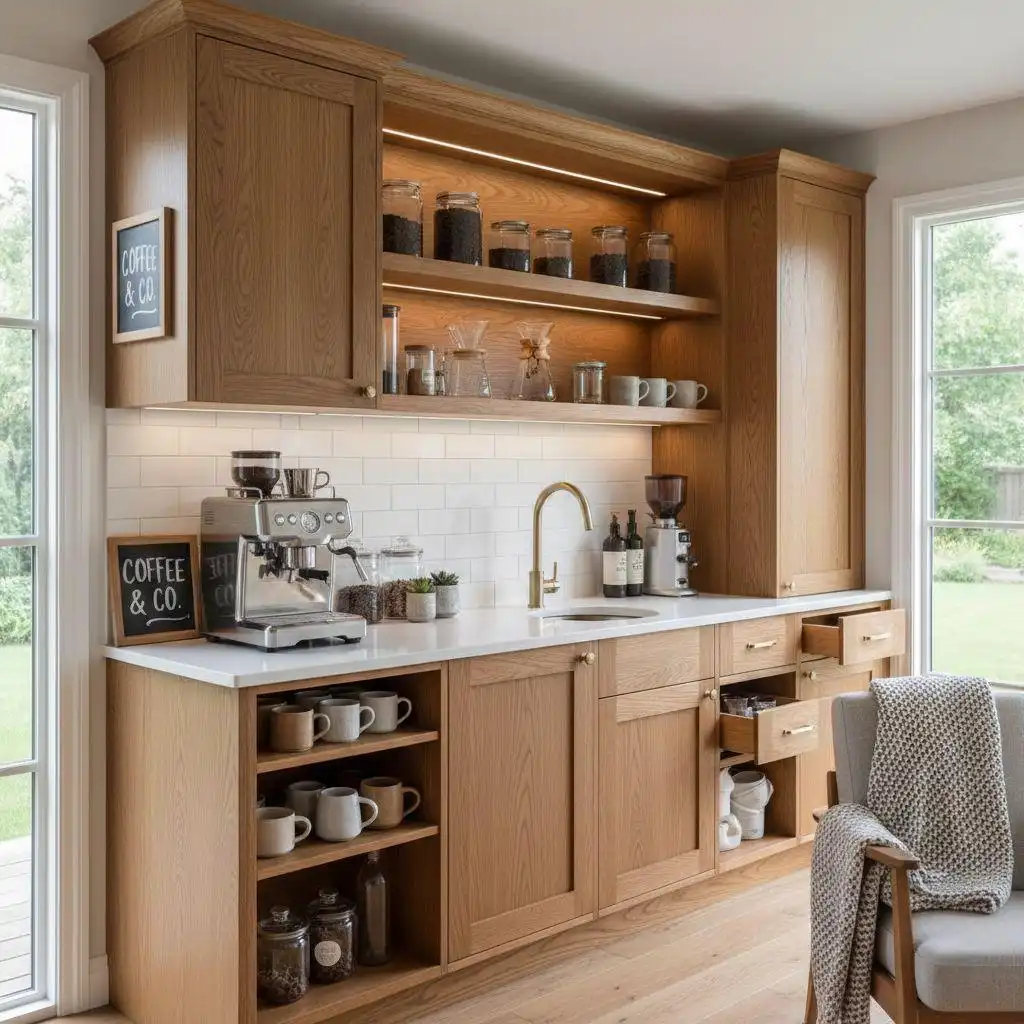
Conclusion: Engineering the Perfect Morning
Your morning coffee isn’t just a caffeine delivery system; it’s a moment of peace before the day begins. By investing in a professional coffee bar cabinet layout, you are removing the friction from that ritual. You are ensuring that every tool has a home, every wire is hidden, and every cup is brewed in a space designed specifically for excellence.
Stop fighting with your countertop clutter. Let’s design a station that reflects your passion for the perfect brew. Contact our design team today to see how a custom coffee bar cabinet layout can transform your kitchen into a luxury retreat.