




Formaldehyde and Panel Emissions: 7 Proven Buyer Checks
Formaldehyde and panel emissions should be checked against the destination market, the panel used inside the cabinet, and the evidence that follows that panel into the finished product. A generic claim such as “E0 board” or “low formaldehyde cabinet” is not enough for a project file.
For developers and procurement teams, the useful question is simpler: which cabinet parts contain regulated composite wood, what market rule applies, and which current documents prove the material and finished goods are within scope? If the supplier cannot answer those three questions clearly, the quotation is not ready for approval.
Who should use this guide
This guide is for:
- Developers buying cabinetry for apartments, hotels, offices, or mixed-use projects.
- Procurement teams comparing suppliers in different countries.
- Designers writing panel and finish specifications.
- Importers who need cabinet documentation before shipment.
- Contractors who need material records before installation or handover.
Start with the market, not the board name
A cabinet may contain MDF, particleboard, hardwood plywood, veneer-core plywood, laminated panels, edge banding, lacquer, hardware, and stone or compact-laminate worktops. The words used to describe the board do not tell you whether the finished cabinet meets the rules in your sales market.
If the RFQ says only “E0 cabinet board,” stop there and ask for more detail. E0 is commonly used in commercial conversations, but it does not by itself identify the applicable regulation, test method, test date, lab, panel producer, or finished-goods scope.
The destination market should be written into the enquiry from the beginning. A cabinet for the United States, California, and the European Union may need different evidence even when the visible cabinet design is identical.
Formaldehyde and panel emissions: market verification table
| Destination market | What buyers should verify | Useful evidence | A common mistake |
|---|---|---|---|
| United States | Whether regulated composite wood panels and finished goods fall within TSCA Title VI requirements | Panel-source details, compliance statement, finished-good label information, importer records | Treating a panel test report as the complete finished-goods file |
| California | Whether finished goods use compliant regulated composite wood and carry suitable labeling | TSCA Title VI or applicable CARB compliance label details, panel traceability, supplier records | Asking only for a “CARB certificate” without identifying the actual panels |
| European Union | Whether furniture and wood-based articles meet the formaldehyde restriction and specified test conditions | Relevant report, test method, article scope, sample configuration, date, and legal-market confirmation | Substituting a U.S. panel document for EU article-level evidence |
| Other markets | Local rules, project specification, retailer policy, or certification requirement | Written market requirement, approved test basis, material schedule | Copying the paperwork used for another country without checking scope |
This table is a procurement starting point, not legal advice. Regulations change, and project specifications can add requirements beyond national rules.
A panel certificate is not a cabinet compliance file
This is where many buyers lose time.
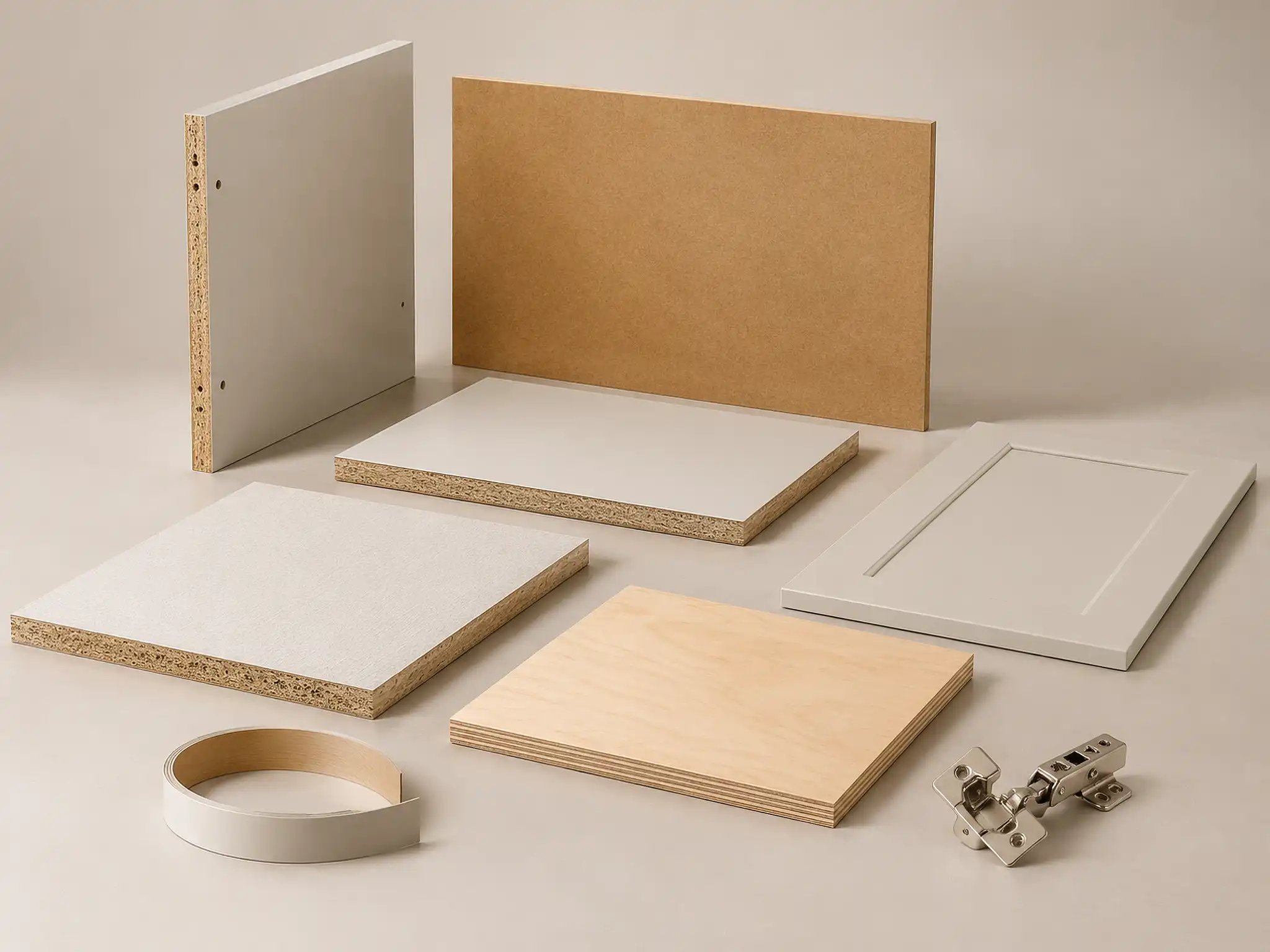
A panel producer may hold certification or testing for a particular MDF, particleboard, or hardwood plywood product. That matters. It does not automatically answer every question about a finished cabinet assembled from several panel types, door styles, laminated parts, and purchased components.
Ask the supplier to map the cabinet bill of materials in plain language:
- Carcass material and panel producer
- Door and drawer-front substrate
- Back panel and shelf material
- Decorative panels, fillers, and end panels
- Countertop substrate, if wood-based
- Panel thickness and finish
- Market destination
- Cabinet or room code
The list does not need to be complicated. It does need to match what will be manufactured.
For a repeated apartment or hotel project, one document that says “compliant cabinets” is weak evidence if it cannot be connected to specific cabinet codes and panel sources. A buyer should be able to trace the drawing, cabinet schedule, and material documents back to the same project order.
What U.S. cabinet buyers should ask for
For regulated composite wood products entering the United States, the EPA’s TSCA Title VI requirements cover hardwood plywood, particleboard, MDF, thin MDF, component parts, and finished goods containing those materials in relevant circumstances. Import documentation and finished-good labeling are part of the compliance picture. EPA guidance for regulated stakeholders
For a cabinet project, ask the supplier for:
- The regulated composite wood panel types used in the order.
- The panel producer and third-party-certifier details where applicable.
- A written compliance statement connected to the materials supplied.
- The intended finished-goods label format or carton-label format.
- Production date or traceable production reference.
- Supplier and material records that can be linked to the shipment.
EPA guidance explains that a finished-good label may be applied to the item, box, or bundle and includes the fabricator’s name, production date, and a TSCA Title VI compliance statement, subject to applicable exceptions. Do not assume a logo, sales brochure, or a generic laboratory page is a substitute for the project record.
California projects require the same discipline
California’s composite wood products rules apply to specified composite wood products and finished goods that contain them, including cabinets. CARB accepts finished goods labeled as TSCA Title VI compliant, but buyers should still make sure the paperwork relates to the actual cabinet materials and shipment. CARB’s labeling FAQ
A sensible California project file includes the finished-goods label information, supplier statement, panel-source record, and a cabinet schedule. If the supplier says “CARB Phase 2 compliant,” ask which panel producer supplied the relevant MDF, particleboard, or hardwood plywood and how the finished goods will be identified.
The point is not to collect a thicker folder. It is to avoid a folder containing documents for materials that were never used in the order.
EU furniture projects need article-level attention
For furniture and wood-based articles placed on the EU market after 6 August 2026, Regulation (EU) 2023/1464 restricts formaldehyde released from those articles to 0.062 mg/m³ under the test conditions specified in its Appendix 14, subject to the regulation’s scope and exceptions. The official EU text is the source to check, not a sales claim copied from a catalogue.
For an EU cabinet order, ask these questions early:
- Does the supplier understand that the requirement concerns furniture and wood-based articles placed on the EU market?
- What exact article or representative construction does the report cover?
- Which test method and conditions were used?
- Does the report relate to the same panel combination, adhesive system, finish, and intended product category?
- Is there a documented reason to rely on that evidence for this project?
A report on an unfinished panel is still useful. It may not answer the same question as an article-level report for a finished cabinet. Do not treat the two as interchangeable.
The factory needs a material map before production
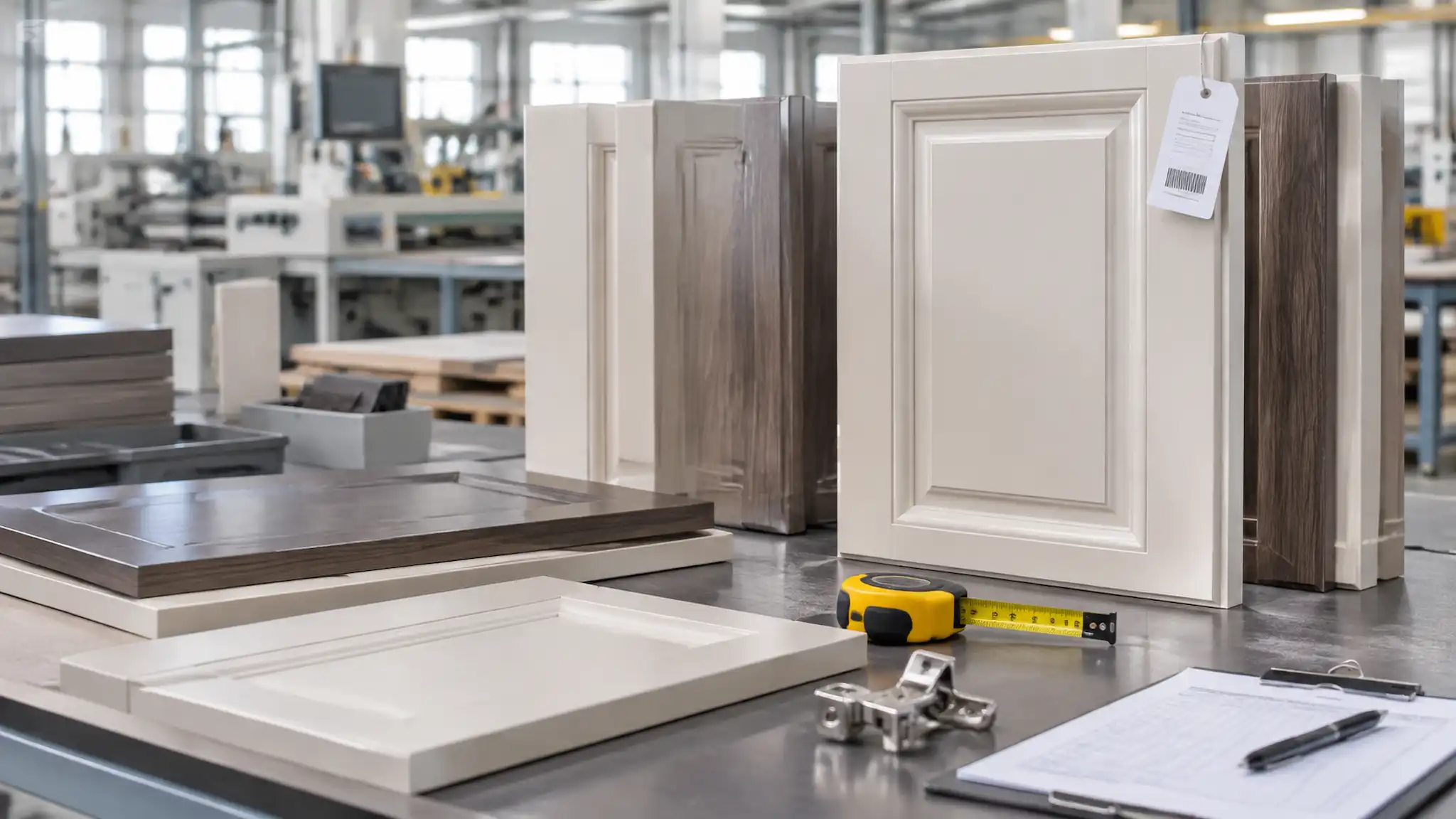
At KEJIA, a compliance request should arrive before the production schedule is locked. The factory needs the destination market, the required document type, and the cabinet material schedule. If these details appear after sample approval, the order may need a panel change, another document review, or a revised lead time.
For each cabinet code, the production file can identify the carcass, door substrate, visible finish, panel thickness, edge treatment, and panel source. That is useful for more than compliance. It also helps when a client later asks for a matching replacement door or needs to verify a specific project batch.
Packing labels should also carry a practical project reference, such as room code, cabinet code, or purchase-order reference. A compliance document has little value if nobody can connect it to the cartons and cabinets arriving on site.
What buyers often get wrong
They ask for a certificate before naming the market
A U.S. document may be useful for a U.S. shipment and irrelevant for an EU tender. Name the destination country and customer requirement first.
They request an “E0 certificate” with no test basis
The phrase is too broad. Ask for the regulation, standard, test method, product scope, sample date, and issuing body.
They treat every wood-based part as the same panel
Cabinet backs, shelves, doors, carcasses, fillers, and decorative panels may come from different panel sources. The material map should show this.
They ignore what happens after a design change
Changing from melamine-faced particleboard to painted MDF, adding a wood-based end panel, or revising a door construction can change the evidence needed. Update the material schedule when the design changes.
They keep a report but lose the traceability
A valid report cannot rescue an order if the purchaser cannot show which materials were used in the shipped cabinets. Keep the report with the purchase order, cabinet schedule, supplier declaration, and shipment record.

Compliance-document checklist for cabinet RFQs
- Destination country and intended sales market
- Client, retailer, or tender-specific compliance requirements
- Cabinet schedule and room or unit codes
- Material schedule for carcasses, doors, backs, shelves, and fillers
- Panel producer and panel type for each regulated board
- Required rule, standard, or project specification
- Test report scope, method, issue date, and sample description
- Third-party-certifier information where relevant
- Finished-goods or carton-label requirement
- Supplier declaration linked to the project order
- Record-retention responsibility for importer and supplier
- Change-control process when panels or finishes are substituted
For related project controls, see the cabinet production readiness checklist and the moisture-resistant cabinet materials guide.
Frequently asked questions
Does “E0” prove that a cabinet is compliant?
No. It may describe a commercial material category or a supplier claim, but it does not by itself identify the target-market rule, test method, product scope, laboratory, or cabinet configuration. Buyers should request evidence that matches the intended market and actual project materials.
Is a panel test report enough for finished cabinets?
Sometimes it is useful supporting evidence, but it may not be enough on its own. The answer depends on the market rule and the report scope. Finished goods can contain multiple panel types, finishes, and components. Ask how the supplied report relates to the cabinets being sold.
What should a U.S. cabinet importer retain?
EPA guidance says importers should take reasonable precautions and retain relevant supplier compliance statements and shipment records for regulated composite wood products, component parts, and finished goods. The exact obligations depend on the importer’s role and the product scope. EPA import guidance
Is TSCA Title VI labeling accepted in California?
CARB states that it accepts composite wood products and finished goods labeled as TSCA Title VI compliant because the relevant federal and California emission standards are identical. The buyer should still verify that the label and material records relate to the actual finished goods being supplied. CARB labeling guidance
Do EU furniture projects need new checks after August 2026?
For furniture and wood-based articles within scope, the EU formaldehyde restriction that applies after 6 August 2026 needs to be considered. Buyers should review the official regulation, project specification, test conditions, and article scope with the responsible compliance professional. EU Regulation 2023/1464
What happens if a cabinet material changes after approval?
Treat it as a controlled change. Update the material schedule, review the market requirement, assess whether existing evidence still applies, and obtain any required revised documentation before releasing production.

Request Cabinet Compliance Documents
Send KEJIA the destination market, cabinet schedule, material direction, required standard or tender clause, and target shipment date. We can review which panel documents, declarations, labels, and project references should be prepared before production.