


I’ve swung a sledgehammer in high-end North American neighborhoods for a decade. Do you know what I see most often when tearing out a master bedroom? It isn’t outdated paint colors. It’s two-year-old walk-in closets where the shelves have been crushed into a “U” shape by the sheer weight of heavy winter parkas.
When villa owners sit in a showroom discussing custom wardrobe design, they usually get blinded by fancy drawer pulls and velvet jewelry inserts. But as a contractor, I have to hit you with the brutal physics: winter gear is incredibly heavy. A grown adult’s wool coat or heavy-duty down parka weighs several pounds. Hang thirty of those on cheap particleboard, and a collapse is just a matter of time.
If you live in a region with long, harsh winters, your closet can’t just look pretty—it needs to be built like a load-bearing wall. Here are 9 hardcore, non-negotiable rules I follow when engineering a heavy-duty custom wardrobe design.
1. Ban the “Smiling Shelves”: The 3/4-Inch Rule
Ninety percent of mass-produced closets use 1/2-inch or 5/8-inch low-density particleboard. Once a shelf spans more than 30 inches and you load it up with a dozen winter coats, the center sags. In the trades, we call these “smiling shelves.”
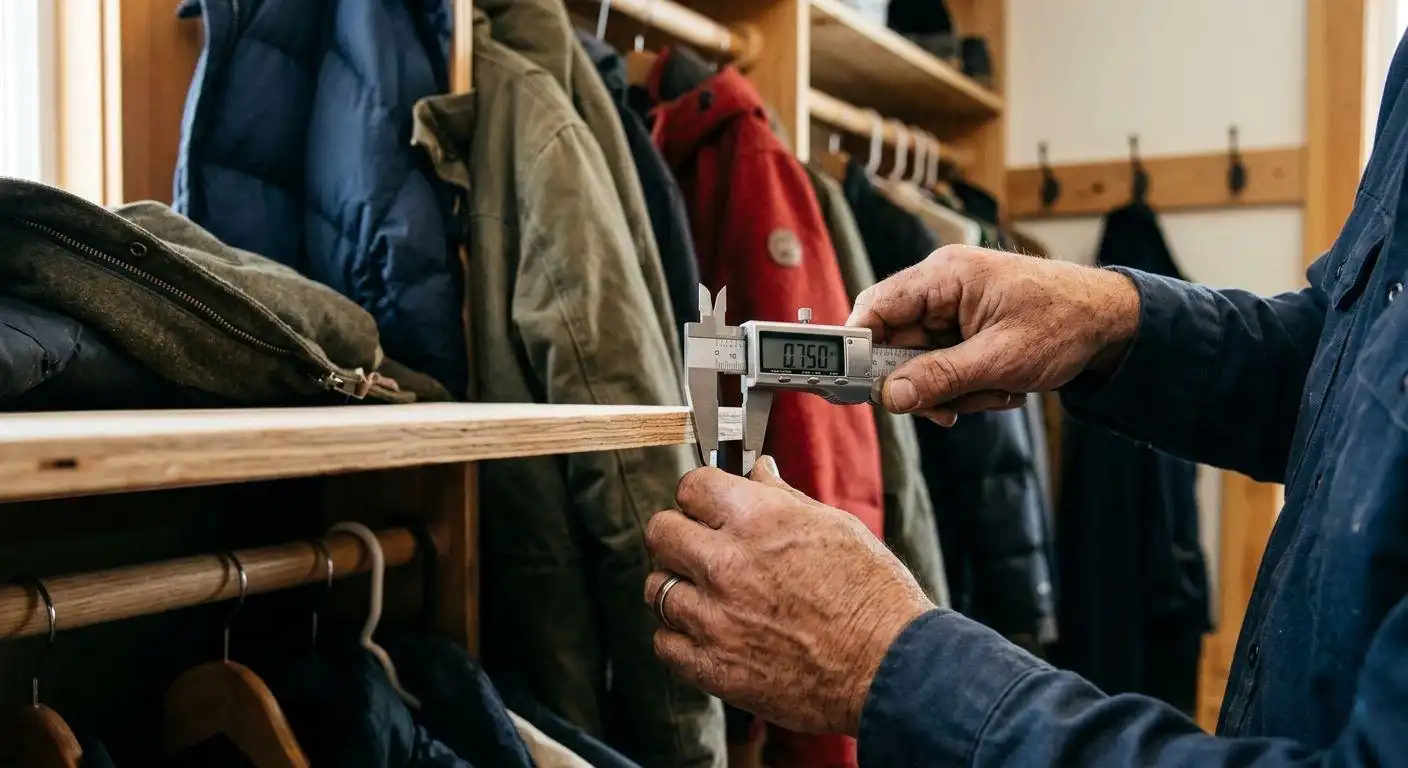
For any custom wardrobe design project I take on, any span meant to hold heavy winter gear must be built with high-density plywood that is at least 3/4-inch (or even 1-inch) thick. The cross-grain structure of plywood gives it massive bending strength. Your closet shelves should be able to hold the weight of a grown man, not buckle under a few coats.
2. The Physics of Oval Steel Closet Rods
Do not let a designer install those flimsy, shiny, round aluminum closet rods. They will bow under heavy pressure. A true heavy-duty custom wardrobe design comes standard with thick-walled, oval steel rods. The oval geometry naturally provides exponentially more bending resistance on the vertical axis. Furthermore, the rod flanges must be anchored directly into the plywood core with thick screws, not just held up by short, cheap wood screws.
3. The Ultimate Weapon Against Snow: PUR Seamless Edge Banding
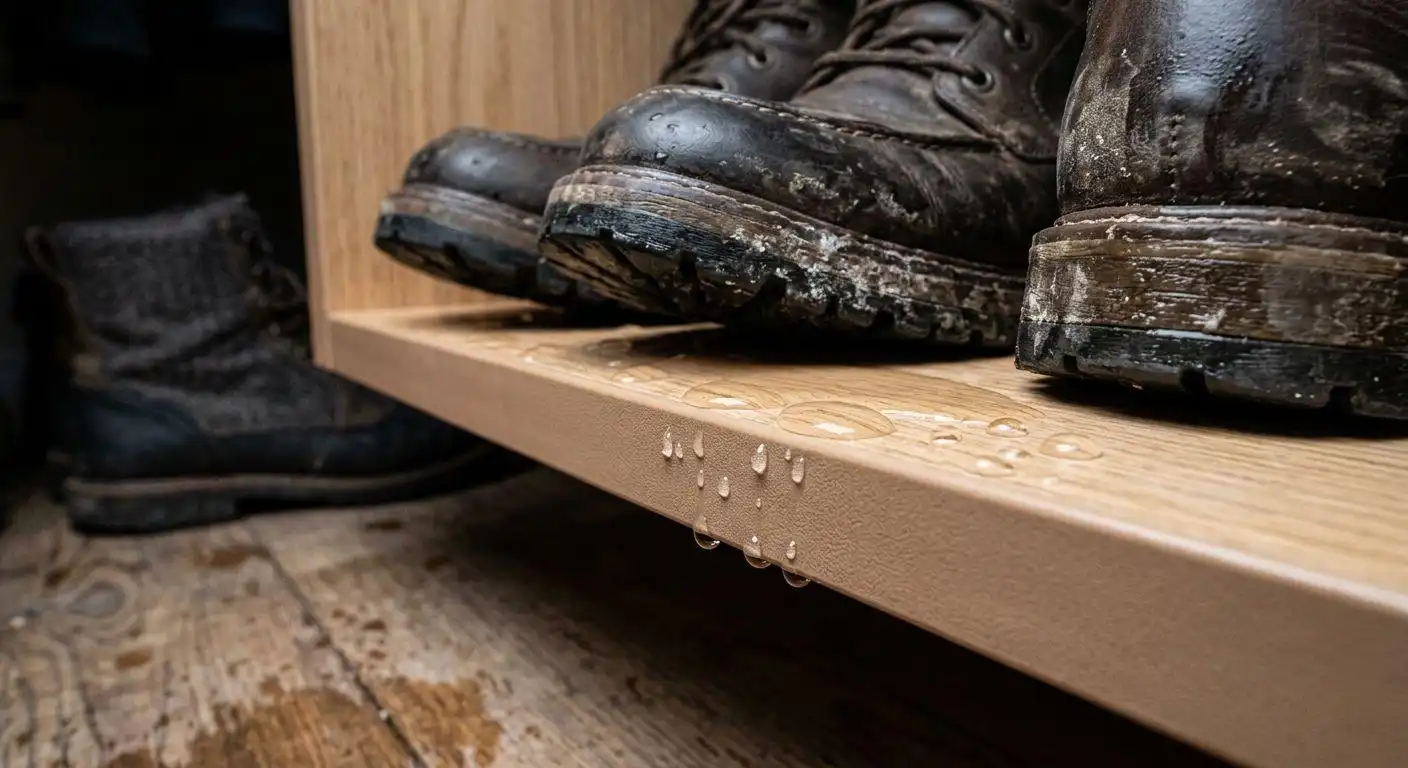
A winter walk-in closet doesn’t just deal with weight; it deals with moisture. The nightmare begins the moment you toss a pair of slush-covered boots onto the bottom shelf, or hang a ski jacket that hasn’t fully dried.
Standard EVA hot-melt edge banding cracks when exposed to moisture, causing the wood core to swell up like a sponge. This is when I show my clients the real difference: I take a piece of wood sealed with PUR (Polyurethane) seamless edge banding and throw it into a bucket of melting snow overnight. The next day, I wipe it off, and the edges are rock solid. When planning the bottom shoe storage zone, premium boards with PUR edge banding are the only choice for a bulletproof custom wardrobe design.
4. The “Keys and Belt Buckle” Island Test
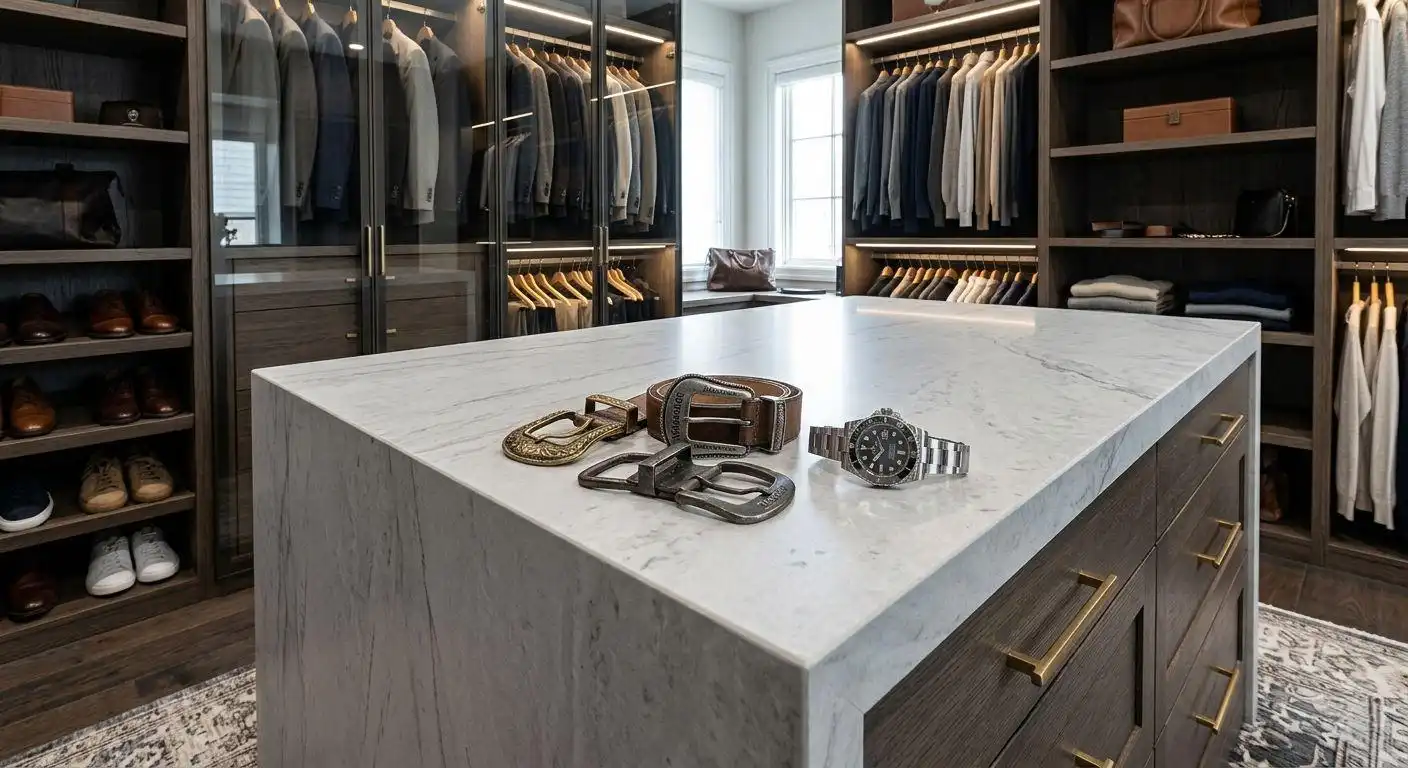
The centerpiece of a massive walk-in closet is usually an island packed with drawers. Every morning, the husband drops a heavy metal belt buckle onto it, and the wife tosses down jewelry boxes with sharp metal clasps. Standard wood or lacquered tops will be covered in scratches within months.
In high-end custom wardrobe design, we are almost exclusively using Sintered Stone for island countertops. Sintered stone is fired at extreme temperatures, making it so hard you could literally chop vegetables on it with a chef’s knife. It provides a sleek, minimalist luxury look (superior to natural marble) while offering zero porosity and maximum scratch resistance.
5. Heavy-Duty Undermount Slides for Boots and Sweaters
Chunky winter knits and knee-high boots take up massive amounts of volume. This means you need oversized drawers—often exceeding 36 inches in width. A 36-inch drawer stuffed with heavy wool sweaters will quickly destroy the weight limits of standard side-mount drawer slides.
A superior custom wardrobe design spends the budget where you can’t see it. We exclusively use German or Austrian concealed undermount soft-close slides rated for a 40kg (88 lbs) dynamic load. No matter how much winter gear you cram in there, you can still push the drawer shut smoothly with a single finger.
6. Floor-to-Ceiling Anchoring and Dust Prevention
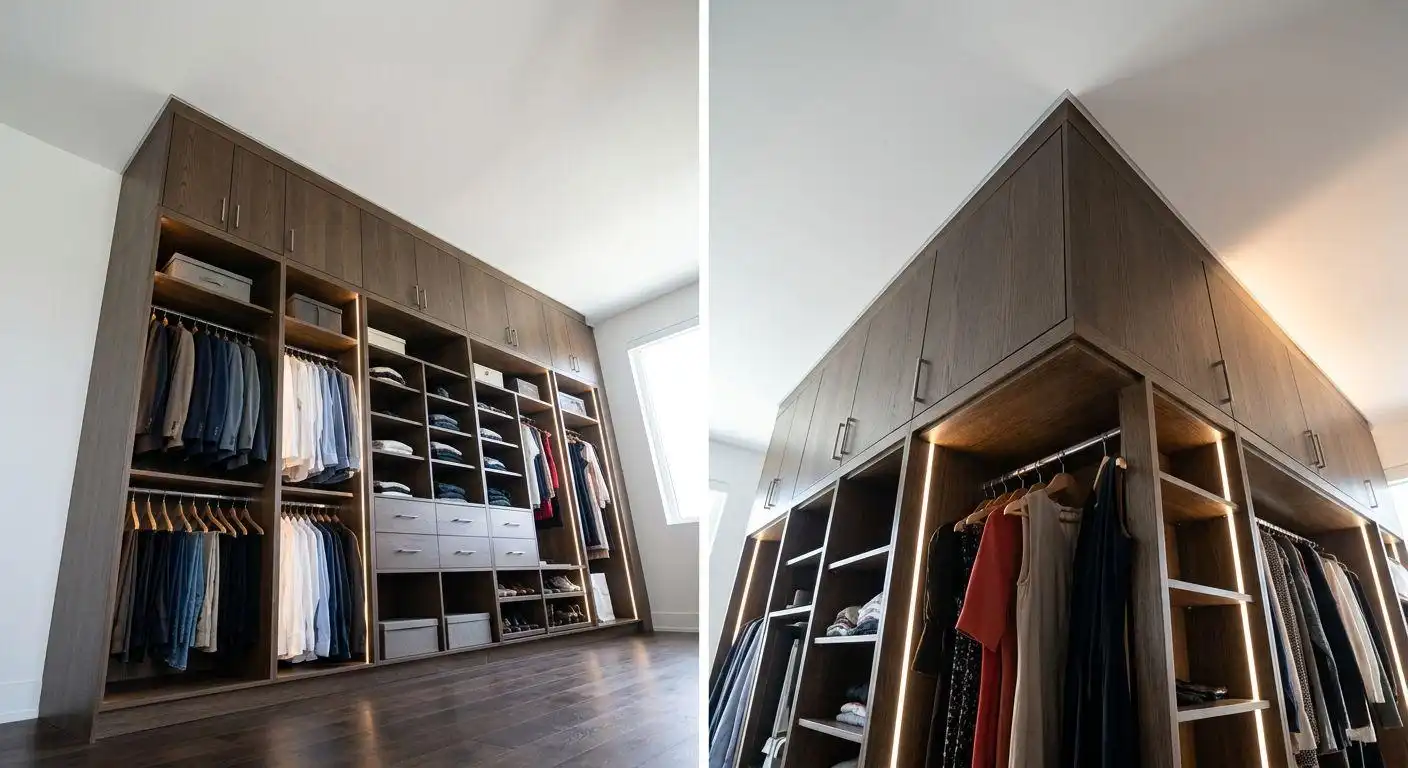
Stop leaving a useless 10-inch gap between the top of your closet cabinets and the ceiling. It does nothing but collect dust that is impossible to clean. Heavy-duty closets must be floor-to-ceiling. This isn’t just about a grand, monolithic visual aesthetic. More importantly, a floor-to-ceiling layout allows us to anchor the entire cabinet structure directly into the home’s wooden ceiling joists and wall studs through the top flanges, completely eliminating the risk of a heavy-load tip-over.
7. The Corner Blind Spot Eliminators
Winter clothing is incredibly bulky; wasting any space is a crime. The 90-degree corners in a standard closet are usually dark, inaccessible abysses. A professional custom wardrobe design activates these dead zones using heavy-duty 360-degree spinning carousels or custom deep pull-out systems, allowing you to easily retrieve even your thickest ski gear.
8. Climate-Controlled Lighting: Ditch Cheap LED Heat
Never use cheap, stick-on LED tape lighting inside a high-end closet. Winter clothes—especially natural wool, cashmere, and fur—are highly sensitive to temperature. The heat radiating from cheap LEDs left on for hours will break down clothing fibers. We embed cool-running LEDs inside aluminum heat-sink channels directly under the shelves, finished with frosted diffusers. This perfectly illuminates every black overcoat without creating any localized, damaging heat buildup.
9. Baseboard Armor for Heavy Boots
When you are stomping around your walk-in closet in heavy winter boots, your steel-toe boots are eventually going to kick the bottom of the cabinets. If your toe kick is just a cheap piece of foil-wrapped particleboard, it will chip and shatter instantly. We reinforce the base framing and often integrate metal toe kick plates to make the bottom of the entire custom wardrobe design virtually indestructible.
Frequently Asked Questions (FAQ)
Q: How deep should my closet be to hang heavy winter coats? A: Standard closet depth is usually 24 inches, but that is simply not enough for wide, bulky North American men’s parkas. The sleeves will constantly get crushed against the doors. For a custom wardrobe design intended to hold heavy winter gear, I highly recommend increasing the interior net depth to 26 or even 28 inches.
Q: Does drawer bottom thickness really matter? A: Absolutely! This is the #1 place mass-market closets cut corners. They often use flimsy 1/8-inch cardboard-like backing for drawer bottoms. The moment you drop three pairs of heavy winter boots in there, the bottom falls out. Insist that your drawer bottoms are at least 3/8-inch or 1/2-inch thick plywood.
Q: Do walk-in closets actually need doors? A: It depends entirely on your dust environment and UV exposure. If your master suite has large windows, direct sunlight will fade your expensive winter coats fast. In this scenario, I advise integrating grey or bronze-tinted glass doors with UV-protective coatings into your custom wardrobe design. It blocks dust and UV rays while maintaining an open, airy feel.
Conclusion: A Closet is a Garage for Heavy Gear, Not a Fragile Showroom
If you just need to store summer t-shirts, any cheap closet will do the job. But if you have to manage dozens of expensive, incredibly heavy North American winter coats, you need an architectural-grade storage system.
The true value of a long-lasting custom wardrobe design isn’t found in a pretty wood veneer. It is found in the things you don’t immediately see: the 3/4-inch high-density plywood cores, the PUR waterproof edge banding, and the heavy-duty load-bearing hardware. Don’t risk hanging thousands of dollars of premium gear on a “smiling shelf” that is ready to snap.
Ready to upgrade your walk-in closet? Stop settling for flimsy, mass-produced furniture. Contact our manufacturing team and send us your dimensions. We will engineer a hardcore, custom closet that delivers minimalist luxury while easily supporting your heaviest winter gear.
[Click here to Request Your Free Material Sample Pack and Engineering Quote]