





Quick answer: A useful cabinet quotation comparison does not start with the lowest total. It starts by making every supplier price the same cabinet scope: the same drawings, quantities, dimensions, construction, door and finish specification, hardware, countertop or accessory scope, packing, delivery term, and exclusions. Procurement teams should build one comparison sheet, mark every missing or substituted item, and ask suppliers to revise unclear lines before ranking price. A quote that looks cheaper can become more expensive when it omits finished end panels, upgraded runners, site-ready packing, installation accessories, or the freight and risk obligations attached to a different Incoterm.
Who this guide is for
- Procurement teams comparing several custom cabinet manufacturers for one project.
- Importers and dealers who need to protect a target margin without approving a vague specification.
- Developers and contractors who need cabinet pricing that matches drawings, site conditions, and installation responsibility.
- B2B buyers reviewing a first quote before a sample, production release, or supplier shortlist.
Key takeaways
- Compare the priced scope before comparing the grand total; a line marked “included” without a specification is not a reliable comparison point.
- Use one controlled drawing revision, room schedule, and quantity list for every supplier.
- Separate product price, optional upgrades, packing, freight, duties or destination costs, and service items.
- Record material, finish, hardware, and construction substitutions in writing; similar names do not prove equal performance.
- Treat Incoterms, lead time, payment milestones, warranty, and replacement-part procedure as commercial comparison items, not fine print.
- Ask for a revised like-for-like quote whenever a line is missing, bundled, provisional, or based on a different assumption.
What makes two cabinet quotations comparable?
Two quotations are comparable only when they describe the same deliverable and the same commercial boundary. For a cabinet project, that means more than cabinet width and a price per unit. The buyer should be able to see which rooms and cabinet types are covered, what material system is used, how each visible surface is finished, which hardware is fitted, what accessories are included, how units are packed, and where the supplier’s responsibility ends.
Ask every supplier to quote from the same issue package: drawing revision, room list, elevation or cabinet schedule, finish schedule, hardware requirement, quantity basis, and delivery destination or named Incoterm. If the information is incomplete, invite alternatives, but place them in a separate option column. Do not mix a supplier’s proposed substitute into the base comparison without marking it.
Start with a like-for-like cabinet quotation comparison sheet
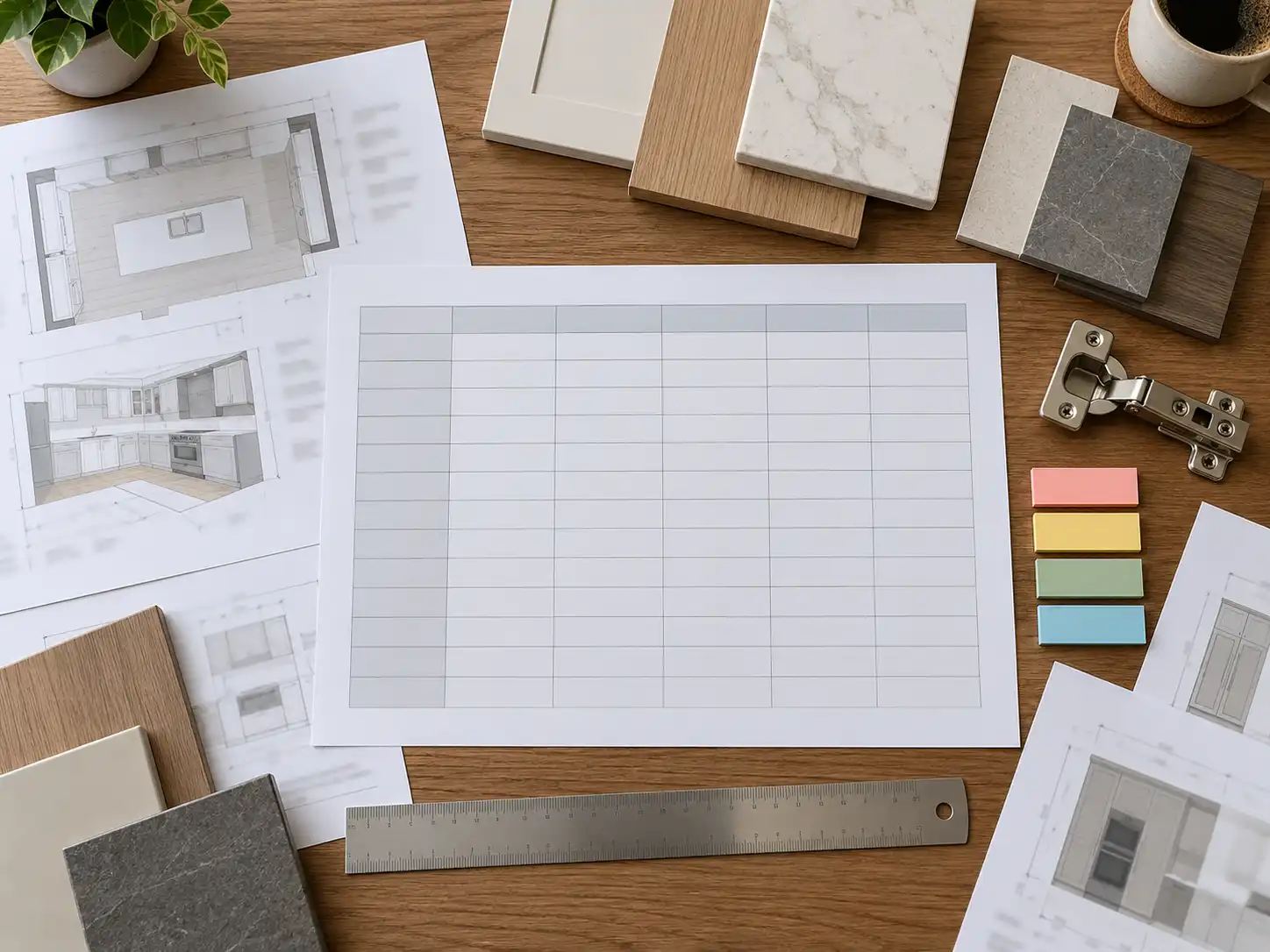
Before requesting revisions, make one master sheet. Each row should be a decision that can change cost, appearance, installation, or risk. Copy the supplier’s exact wording rather than translating “standard hardware” or “high-quality board” into an assumption.
On mobile, swipe left or right to view all table columns.
| Comparison item | Base requirement for every supplier | What to capture from each quote | Why it changes the decision |
|---|---|---|---|
| Drawing and quantity basis | Same latest drawings, room schedule, cabinet dimensions, and quantities. | Drawing revision, rooms included, unit count, and measurement assumptions. | A low total may simply cover fewer units or an earlier revision. |
| Carcass construction | Agreed panel type, thickness, back construction, shelf/support details, and exposed-edge treatment. | Exact board, thickness, back panel, fixing method, and moisture-area treatment. | Construction affects durability, screw holding, installation, and price. |
| Doors, finishes, and visible panels | Defined door style, substrate, finish, sheen or texture, edge treatment, and end-panel scope. | Finish system, colour reference, door profile, grain direction, and included visible panels. | The visual result and repaint or replacement risk depend on this scope. |
| Hardware and accessories | Named hinges, runners, lift systems, handles, pull-outs, and internal accessories where required. | Brand or series, model, quantity, soft-close option, and any substitute. | Hardware affects fit, drawer width, serviceability, and project cost. |
| Countertops and special items | Clear inclusion or exclusion for tops, sinks, glass, lighting, appliances, and installation accessories. | Material, thickness, cut-outs, fabrication, and who supplies each item. | These lines are often bundled, excluded, or priced to a different assumption. |
| Packing and documents | Agreed protection, accessory separation, cabinet/room coding, and export documentation. | Packing method, carton or pallet scope, photo record, labels, and spare parts. | Damage and missing parts can create cost after the cabinet price is paid. |
| Commercial terms | Same currency, tax basis, Incoterm, destination, lead-time trigger, payment schedule, and warranty basis. | What the price includes, excluded charges, production lead time, and validity. | A price cannot be compared fairly across different delivery and risk boundaries. |
Which quote differences should be normalized before you compare price?
Drawings, quantities, and measurement assumptions
First, confirm that all suppliers priced the same revision. A cabinet quote can change when a tall unit is split, an island gains finished panels, a wall cabinet height changes, or appliance clearances are added. Suppliers may also price from nominal room dimensions while another supplier prices cabinet-by-cabinet from a detailed schedule.
Create a room-by-room count and ask each supplier to identify omissions and assumptions. If site measurement, appliance confirmation, or shop-drawing approval is pending, keep those items visible as a qualification. Do not accept “as per drawing” when the attached drawing is not named or dated.
Carcass, doors, and finish scope
Terms such as plywood, melamine, lacquer, PET, veneer, and MDF are not complete specifications by themselves. A buyer still needs the panel application, thickness where relevant, visible edge treatment, door substrate, finish reference, and what happens at cut-outs or moisture-prone locations. A lacquered display door does not tell you how the sink base, interior shelf, or back panel is constructed.
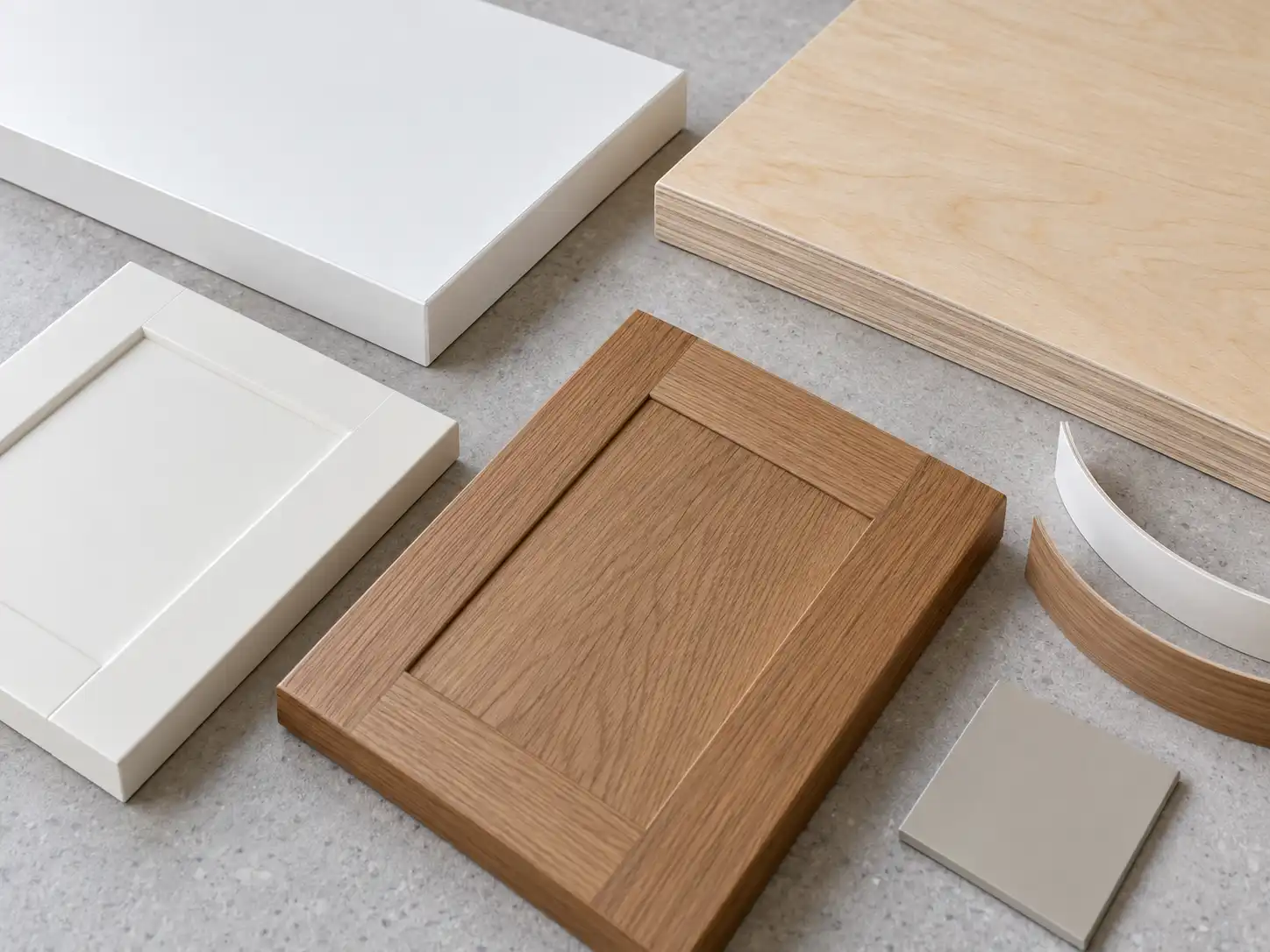
For a fair cabinet quotation comparison, ask suppliers to separate carcass, doors, visible end panels, fillers, toe kicks, wall panels, and special profiles. That makes it easier to see whether a low price excludes elements that are necessary for a finished installation. Review the product range against the relevant KEJIA custom cabinet products so that the quotation follows the intended cabinet type rather than a generic box price.
Hardware, internal fittings, and service parts
“Soft-close” is a feature description, not a hardware schedule. Ask which hinge, runner, lift, pull-out, and adjustment plate is included, along with the quantity per cabinet and whether handles, internal organizers, and fixing parts are priced. A drawer runner choice can affect usable drawer width, load expectation, drilling, and later replacement.
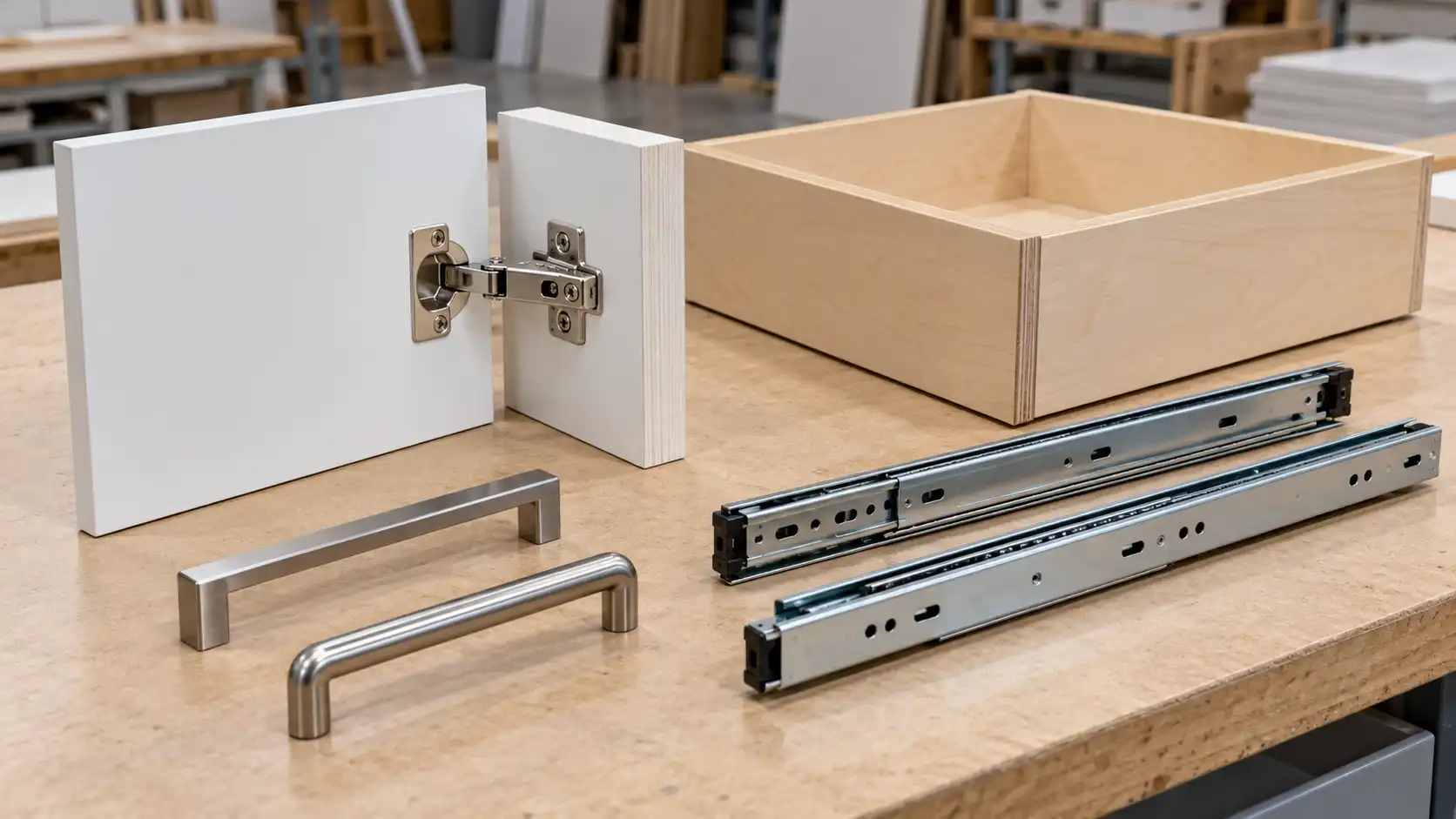
Where a supplier proposes an alternative series, compare it as an option rather than silently treating it as equal. The same approach applies to glass doors, aluminium frames, lighting, appliance mechanisms, and special fittings. If hardware is nominated by the project, the quote should state whether it is supplied by the factory, supplied by the buyer, or excluded.
Packing, delivery terms, and destination cost
Cabinet prices often appear different because the delivery boundary is different. One supplier may quote EXW, another FOB, and another may include freight under a separate term. Those are not interchangeable. Compare the named place, currency, freight scope, packing scope, insurance responsibility where relevant, and the point at which risk transfers. The ICC Incoterms rules overview is useful when the wording in a quote is unclear.
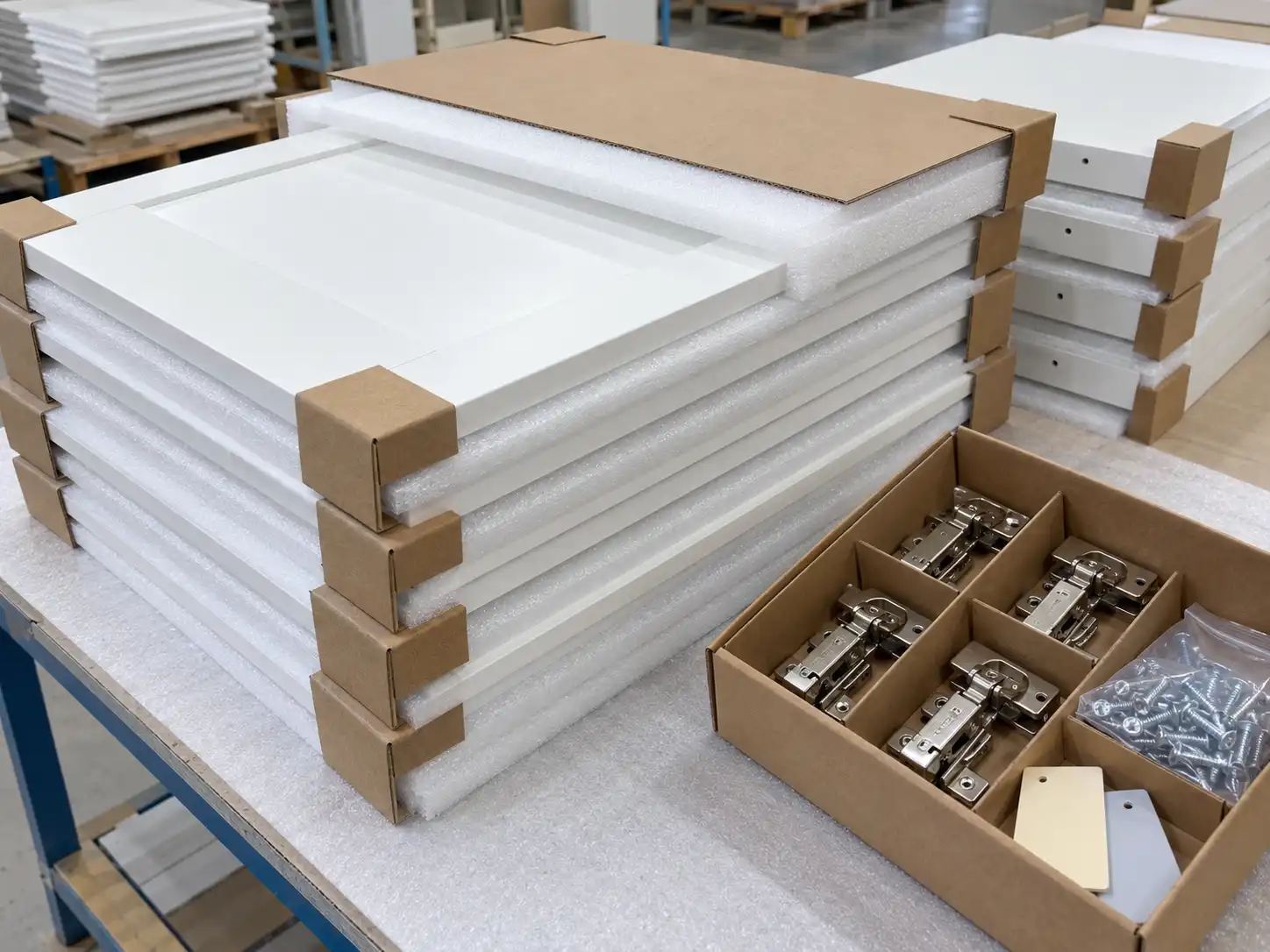
Ask whether the price includes export-grade packing, corner protection, accessory boxes, labels, loading photographs, and packing lists. A project quote should also make clear whether customs duties, destination handling, local delivery, unloading, installation, or site measurements are excluded. These are not reasons to reject a supplier; they are reasons to stop comparing incomplete totals.
Use this decision matrix after the scope is normalized
Once suppliers have answered the same questions, score the result against the project rather than choosing the smallest number. Weight the categories according to your job. A dealer may put more weight on finish consistency and replacement support; a contractor may place more weight on drawings, packing, and installation readiness.
On mobile, swipe left or right to view all table columns.
| Decision area | Questions to ask | Strong evidence | Warning sign | Procurement action |
|---|---|---|---|---|
| Scope completeness | Does the quote cover every room, cabinet type, visible panel, and accessory? | Cabinet schedule, room totals, clear inclusions and exclusions. | Bundled “kitchen package” with no room detail. | Issue a revised scope sheet before price ranking. |
| Material and finish | Are board, door substrate, finish, edge treatment, and visible surfaces stated? | Material/finish schedule and approved sample reference. | Generic terms such as “quality plywood” or “standard paint.” | Request a named specification or a priced alternative. |
| الأجهزة | Is the exact series and quantity clear? | Hardware schedule, model references, sample or data sheet. | “Soft-close included” with no series or quantity. | Separate base and upgrade hardware pricing. |
| Commercial basis | Are currency, tax basis, Incoterm, price validity, and payment milestones aligned? | One stated commercial summary. | Different delivery terms hidden in quote notes. | Normalize to one commercial basis or show costs separately. |
| Delivery readiness | Are lead time, drawings, approvals, packing, and delivery documents explained? | Milestone plan and packing description. | Lead time starts from an undefined point. | Define the release event and request documentation list. |
| Service exposure | Are warranty conditions, spare parts, and damage claims addressed? | Written process for replacements and claims. | No response beyond a general warranty sentence. | Include service procedure in the purchase terms. |
How should procurement teams compare cabinet pricing without hiding risk?
Keep the supplier’s original total, but add normalized columns. For example, show the quoted product value, confirmed upgrades, packing, freight or logistics allowance, destination charges where known, and exclusions that must be purchased elsewhere. The goal is not to force every supplier into the same commercial offer. It is to make the differences visible before a purchase order is issued.
Do not convert every uncertainty into a guessed number. If a supplier cannot price a component because drawings are incomplete, mark it as provisional and identify the release condition. A transparent provisional line is safer than a low fixed total built on an assumption that later becomes a variation order.
For multi-room projects, compare both the total and the unit logic. A lower wardrobe total may result from fewer shelves, a different back construction, no lighting preparation, or omitted visible panels. A lower kitchen total may omit installation accessories, appliance fillers, or the protective packing needed for a long shipping route. Ask the supplier to show option prices separately so the base scope remains readable.
Factory insight: a quote should be traceable to production information
From a custom cabinet manufacturer’s side, the cleanest projects are those where the quotation, shop drawings, approved samples, hardware schedule, and packing requirements use the same naming system. The factory does not need a long legal document to work accurately, but it does need a controlled reference for each approved decision.
At KEJIA, a practical quotation review normally separates the selling description from the production details. The selling description explains the cabinet range and price structure. The production detail records the panel and finish direction, visible panels, hardware, appliance or site interfaces, packing method, and open questions that must be resolved before release. That separation helps the buyer compare suppliers fairly while giving the factory a usable path from quotation to shop drawings and final QC.
Six mistakes that make cabinet quotations look comparable when they are not
1. Selecting a total before checking the room schedule
An attractive total is meaningless if one supplier omitted a pantry, island end panel, vanity mirror cabinet, or appliance filler. Compare the cabinet count and room coverage first.
2. Treating a material name as a full construction specification
Plywood, MDF, lacquer, or melamine does not state where the material is used, how visible edges are finished, or how the cabinet is built. Ask for the construction relevant to the cabinet type.
3. Accepting “soft-close” as a hardware answer
Check the hinge and runner series, quantity, and any included pull-outs or lift systems. Hardware substitutions should be identified and priced, not discovered after approval.
4. Comparing EXW, FOB, and delivered pricing in one column
Different Incoterms and named places shift cost, risk, and responsibility. Keep them separate until they are normalized to a commercial basis you can evaluate.
5. Ignoring packing and site identification
Cabinet damage and missing fittings can consume the margin saved by a low product price. Ask how panels, glass, accessories, and room-coded components will be protected and identified.
6. Leaving exclusions in email rather than in the quote record
If an appliance, countertop cut-out, installation bracket, local delivery, or replacement part is excluded, record it in the same comparison sheet. Procurement decisions should not depend on a scattered message thread.
Cabinet quotation comparison checklist
- Confirm that every supplier priced the same drawing revision, room list, quantity schedule, and dimensions.
- List every cabinet type, end panel, filler, toe kick, wall panel, and special item by room.
- Match carcass material, thickness where relevant, back construction, visible-edge treatment, and moisture-area requirements.
- Match door substrate, profile, finish reference, sheen or texture, grain direction, and visible-panel scope.
- Check each hinge, runner, lift, pull-out, handle, lighting item, and installation accessory against the hardware schedule.
- Separate base product value from options, packing, freight, duties or destination costs, and excluded site work.
- Compare currency, tax basis, named Incoterm, delivery location, price validity, payment milestones, and lead-time trigger.
- Ask for the packing method, accessory control, cabinet or room coding, documents, and damage-claim procedure.
- Record samples, substitutions, assumptions, and unresolved questions before asking for a revised final quote.
- Select the supplier only after scope, commercial terms, production readiness, and service exposure are visible on one sheet.
Frequently asked questions
Should I choose the lowest cabinet quotation if the drawings are the same?
Not until the scope is normalized. The same drawings can be priced with different carcass details, finishes, hardware, visible panels, packing, and delivery terms. Ask each supplier to state those items clearly, then compare the total alongside confirmed upgrades and exclusions. The lowest number can still be the right choice, but only after you know what it covers.
What is the most important item to compare in a cabinet quote?
The most important item is the scope basis: the exact drawing revision, rooms, quantities, and cabinet components included. After that, focus on the material and finish schedule, hardware, packing, and delivery terms. A precise scope makes every other price discussion more meaningful.
How do I compare cabinet hardware between suppliers?
Ask for the exact hardware series, model or functional description, quantity, and whether it is standard or an upgrade. Compare the installed application, not only a brand name. Hinges, runners, lift systems, and pull-outs need to suit the cabinet design and allow future replacement if the project requires it.
Should freight be included in a cabinet quotation comparison?
Include it as a separate column whenever possible. Freight may be outside the supplier’s price or based on a different Incoterm and named place. Compare product price, packing, freight, insurance where relevant, destination costs, and local site costs separately before calculating your landed or project budget.
What should be excluded from a cabinet quote?
There is no universal list, but exclusions often include appliances, sinks, taps, local installation, site measurement, local delivery, customs duties, and certain countertop or electrical works. The important point is not that they are excluded; it is that they are clearly identified and assigned to a responsible party.
How can I compare quotations when suppliers propose different materials?
Keep the proposed material as a separate option rather than pretending it is the same as the base specification. Ask each supplier to price the agreed base, then show its proposed alternative with the technical difference and price impact. This preserves a fair comparison and makes value engineering visible.
When should I request a revised cabinet quotation?
Request a revision whenever a quote relies on an unspecified material, bundled hardware, unconfirmed quantity, missing visible component, unclear delivery term, or exclusion that could affect the budget. A revised quote is not a delay; it is the record that lets procurement, production, and installation work from the same expectation.

Request quote comparison support before you appoint a supplier
A comparison sheet is most useful before price becomes a commitment. Request quote comparison support from KEJIA and send your drawings, room schedule, target market, hardware requirements, delivery destination, and quotations received. We can help clarify the product scope, production assumptions, packing, and commercial points that need to be aligned before a custom cabinet order moves forward.