
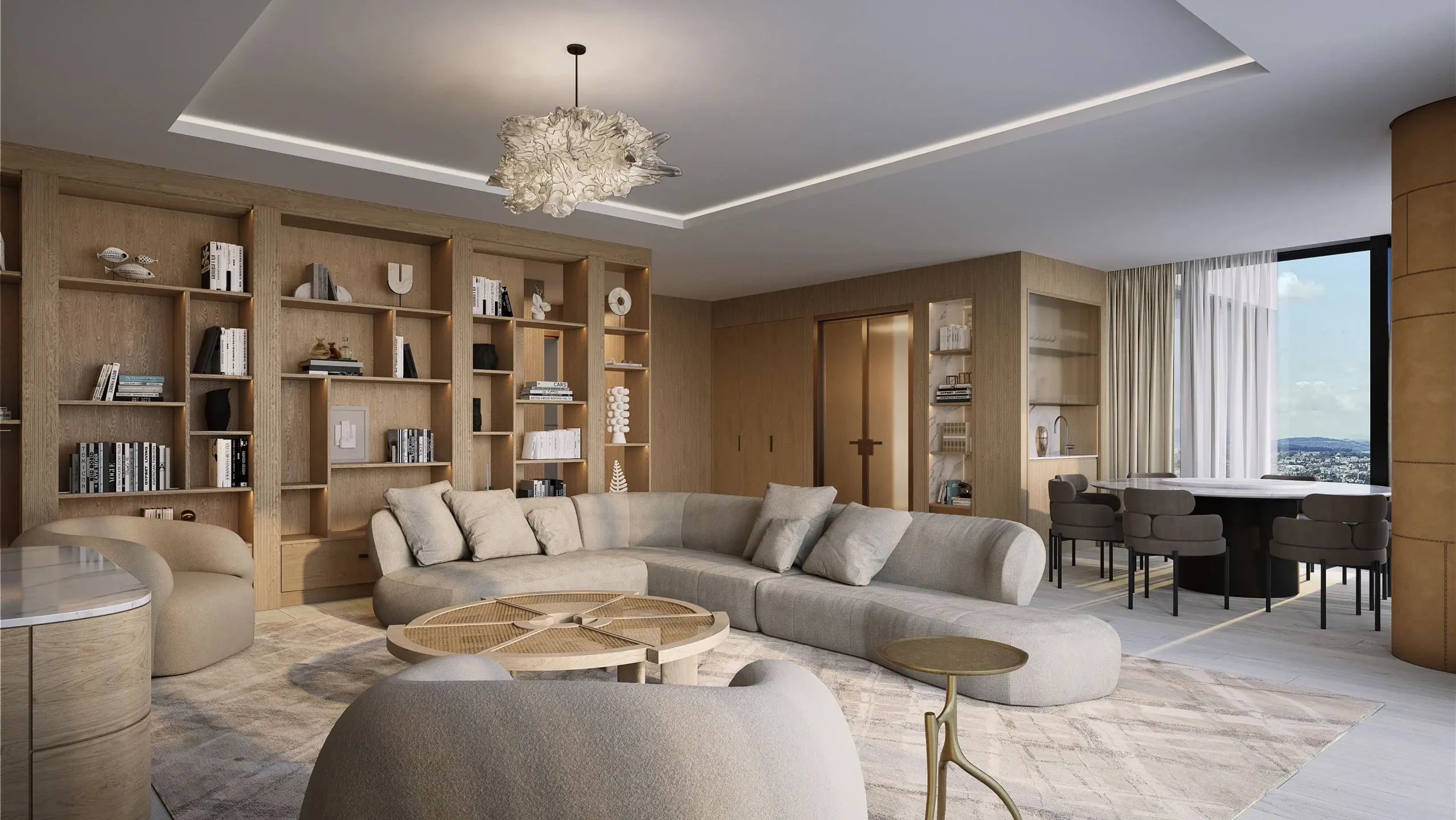
ความน่าดึงดูดใจที่ยั่งยืนของไวท์โอ๊ค: เหตุใดจึงเป็นราชาแห่งตู้ครัวในปี 2026
เมื่อวางแผนปรับปรุงห้องครัว การเลือกตู้เก็บของจะกำหนดโทนสีทั้งหมดสำหรับพื้นที่ ตู้สีขาวเพรียวบางที่ทาสีขาวมีอิทธิพลมาเป็นเวลาหลายปี แต่แนวโน้มการออกแบบกำลังเปลี่ยนไปอย่างเด็ดขาด ความอบอุ่น เนื้อสัมผัส และความสง่างามตามธรรมชาติ. การเคลื่อนไหวนี้ได้ขับเคลื่อน ตู้ครัวไม้โอ๊คสีขาว สู่แนวหน้า ทำให้พวกเขาเป็นคุณลักษณะที่กำหนดของบ้านสมัยใหม่ที่กำหนดเอง
ไม้โอ๊คสีขาวไม่ได้เป็นเพียงเทรนด์เท่านั้น มันเป็นการลงทุนใน ความทนทาน และ สไตล์เหนือกาลเวลา. บทความนี้จะเจาะลึกว่าทำไมไม้โอ๊คขาวจึงเป็นตัวเลือกที่เหนือกว่า โดยพิจารณาถึงการเจียระไน การตกแต่งพื้นผิวยอดนิยม และคุณประโยชน์หลักที่รับประกันตำแหน่งในแนวการออกแบบปี 2026
เหตุใดไม้โอ๊คขาวจึงครองเทรนด์ครัวปี 2026
การเปลี่ยนไปใช้วัสดุอย่างไม้โอ๊คขาวมีความเกี่ยวข้องโดยตรงกับความต้องการที่เพิ่มขึ้น “เงียบสงบหรูหรา” และ การออกแบบทางชีวภาพ- เชื่อมโยงการตกแต่งภายในเข้ากับธรรมชาติ ไม้โอ๊คสีขาวให้พื้นผิวที่สวยงามและเป็นออร์แกนิกที่เพิ่มความลึกโดยไม่ทำให้ตาพร่าเกินไป
เปิดสปอตไลท์แล้ว ตู้ครัวไม้โอ๊คสีขาว Rift Cut
แม้ว่าไม้โอ๊คแปรรูปธรรมดาจะพบได้ทั่วไป แต่จุดเด่นที่แท้จริงของการออกแบบสมัยใหม่ก็คือ รอยแยกตัดไม้โอ๊คสีขาว. เทคนิคการกัดเฉพาะนี้ทำได้โดยการตัดตั้งฉากกับวงแหวนการเติบโตของไม้ ส่งผลให้ได้ลวดลายเกรนตรงที่เป็นเอกลักษณ์และเป็นที่ต้องการอย่างมาก
สุนทรียศาสตร์ที่สะอาดตาและทันสมัย: วัสดุที่ตัดรอยแยกช่วยลดรูปแบบ "อาสนวิหาร" อันน่าทึ่งตามแบบฉบับของไม้แปรรูปธรรมดาให้เหลือน้อยที่สุด ให้รูปลักษณ์ที่สะอาดตาและเป็นเส้นตรงที่เข้ากันได้อย่างลงตัวกับการออกแบบร่วมสมัยและสมัยใหม่ในช่วงกลางศตวรรษ
ความเสถียรของมิติ: วิธีการตัดทำให้ไม้มีความเสถียรเป็นพิเศษ ซึ่งเป็นข้อดีอย่างมากสำหรับบานตู้แบนขนาดใหญ่ ซึ่งช่วยลดความเสี่ยงของการบิดเบี้ยวเมื่อเวลาผ่านไป
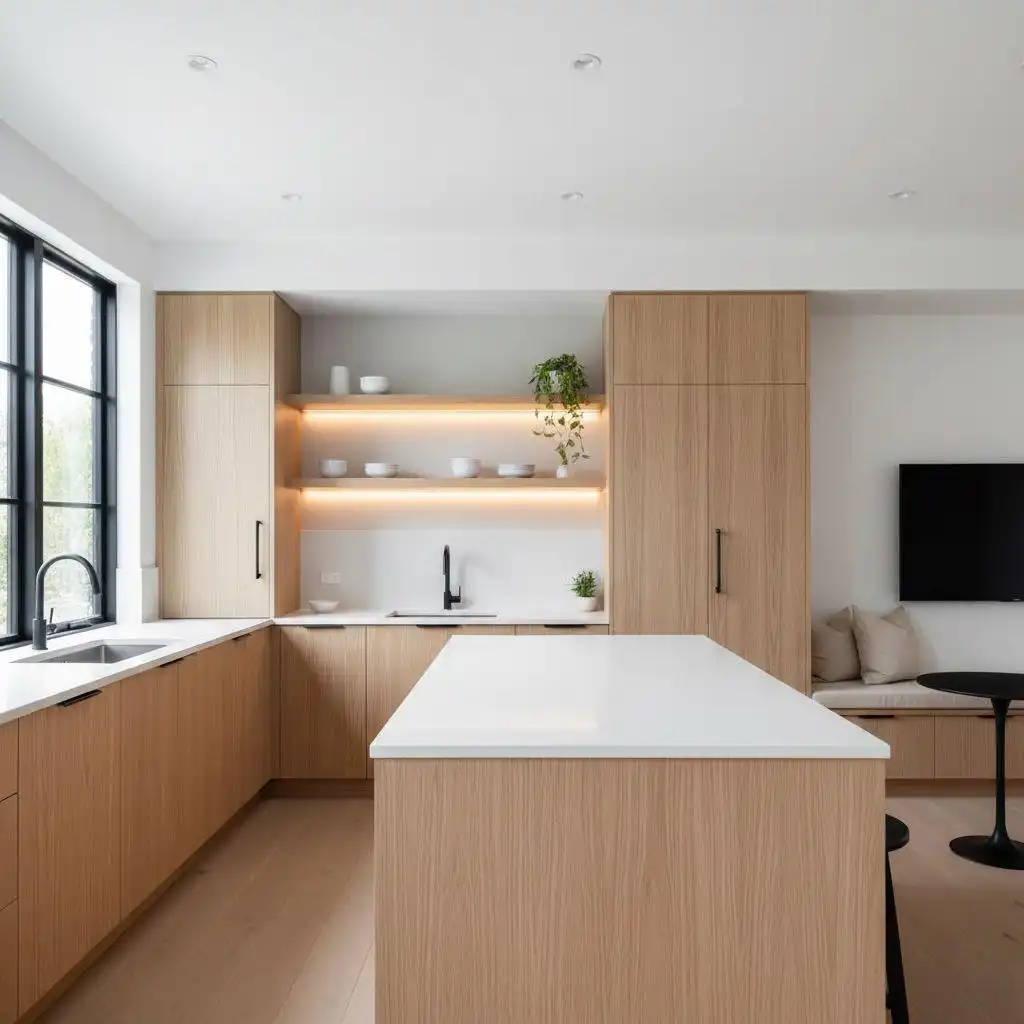
สำรวจการตกแต่งที่สมบูรณ์แบบ: จากธรรมชาติไปจนถึงการย้อมสี
จุดแข็งที่ยิ่งใหญ่ที่สุดของไวท์โอ๊คคือความสามารถรอบด้านในการรับพื้นผิวที่แตกต่างกัน ช่วยให้เจ้าของบ้านปรับแต่งความอบอุ่นและความอิ่มตัวของสีของห้องครัวได้
ตู้ครัวไม้โอ๊คสีขาวธรรมชาติ & ตู้ครัวไม้โอ๊คสีอ่อน
สำหรับผู้ที่ตามหาความงามแบบสแกนดิเนเวียหรือญี่ปุ่น (เจแปนดิ) ที่สดใสและโปร่งสบาย ตู้ครัวไม้โอ๊คสีขาวธรรมชาติ เสร็จสิ้นเหมาะอย่างยิ่ง
รูปลักษณ์: มักใช้น้ำยาเคลือบใสหรือน้ำยาล้างสีขาวหรือสีเทาเล็กน้อยเพื่อปรับอันเดอร์โทนสีเหลืองให้เป็นกลาง ตู้เหล่านี้ยังคงรักษาสีตามธรรมชาติของไม้ นั่นคือแสงที่สวยงามและเป็นสีน้ำตาลเอิร์ธโทน
ทำไมมันถึงได้ผล: ช่วยให้ห้องครัวสว่างขึ้นพร้อมทั้งมอบพื้นผิวที่สำคัญซึ่งมักจะหายไปจากพื้นผิวที่ทาสี
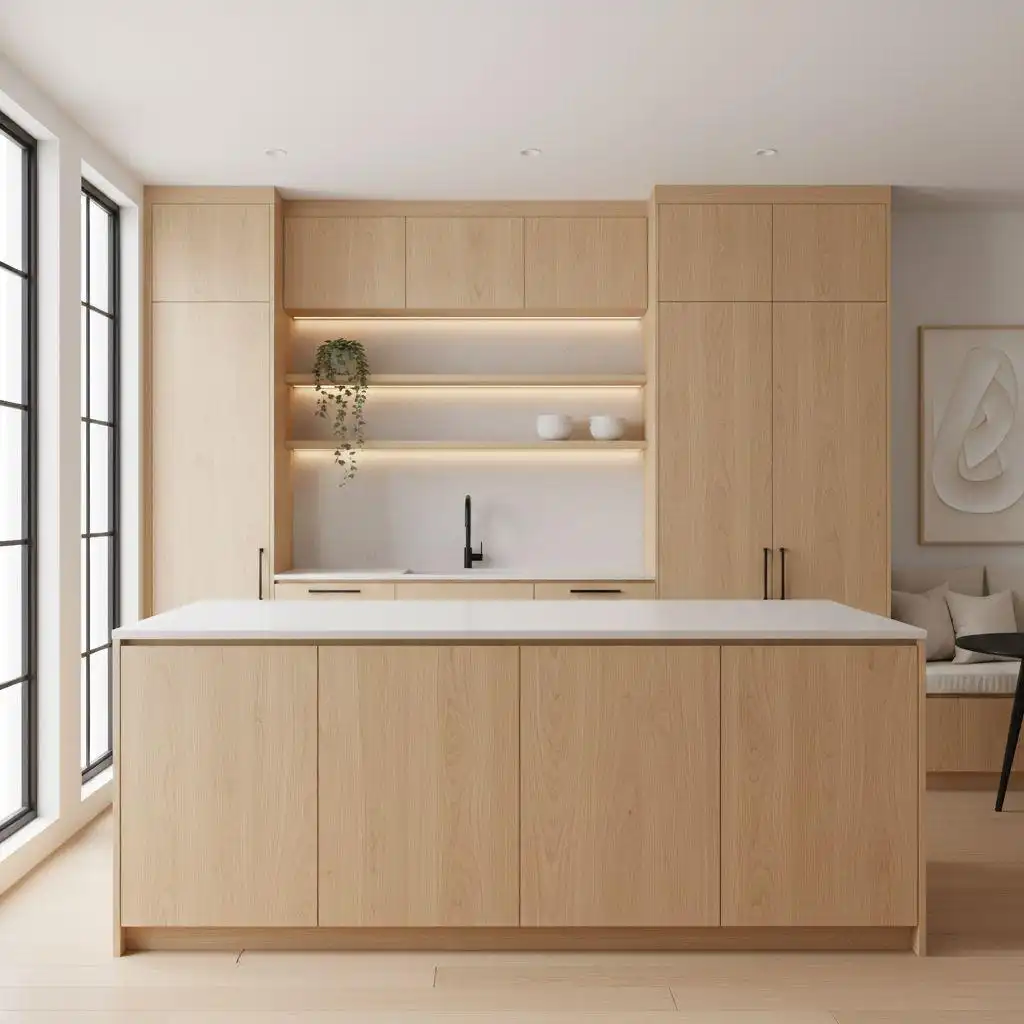
ตู้ครัวไม้โอ๊คสีขาวที่ยังไม่เสร็จ: The Purist's Choice
แม้ว่าจะไม่ใช่ผลิตภัณฑ์ขั้นสุดท้าย แต่เริ่มต้นด้วย ตู้ครัวไม้โอ๊คสีขาวที่ยังไม่เสร็จ ช่วยให้นักออกแบบและเจ้าของบ้านควบคุมได้สูงสุด นี่เป็นแนวทางปฏิบัติทั่วไปสำหรับงานสั่งทำพิเศษซึ่งมีการพัฒนารอยเปื้อนขั้นสุดท้ายในสถานที่เพื่อให้เข้ากับองค์ประกอบอื่นๆ เช่น พื้นหรือขอบตกแต่งได้อย่างสมบูรณ์แบบ
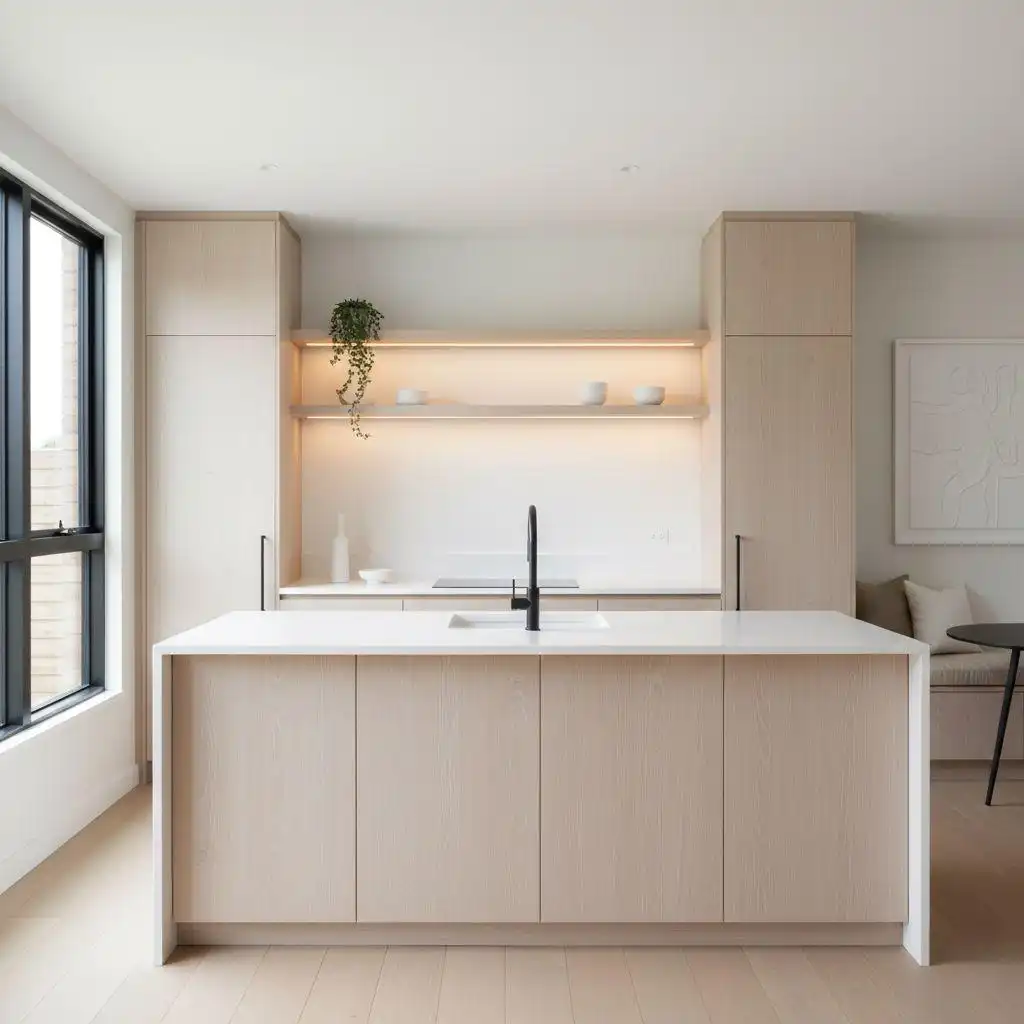
ตู้ครัวไม้โอ๊คสีไวท์โอ๊คและพื้นผิวด้าน
พื้นผิวด้านไม่สามารถต่อรองได้ในการออกแบบปัจจุบัน พื้นผิวที่มีความมันเงาสูงให้ความรู้สึกล้าสมัยและมักจะเน้นย้ำจุดที่ไม่สมบูรณ์แบบ
เคลือบด้าน: ตู้ครัวไม้โอ๊คสีขาวพร้อมพื้นผิวด้าน ดูดซับแสงแทนที่จะสะท้อนแสง ให้รูปลักษณ์ที่นุ่มนวลและหรูหราเน้นลายไม้
ตัวเลือกการย้อมสี: ไม้โอ๊คขาวขจัดคราบได้อย่างสวยงาม ตัวเลือกยอดนิยม ได้แก่ คราบโทนอุ่นสีน้ำตาลปานกลางที่ให้ความรู้สึกถึงศิลปะและงานฝีมือแบบคลาสสิก หรือแม้แต่คราบสีเข้มเกือบเป็นสีเอสเปรสโซ่เพื่อความแตกต่างอย่างมาก
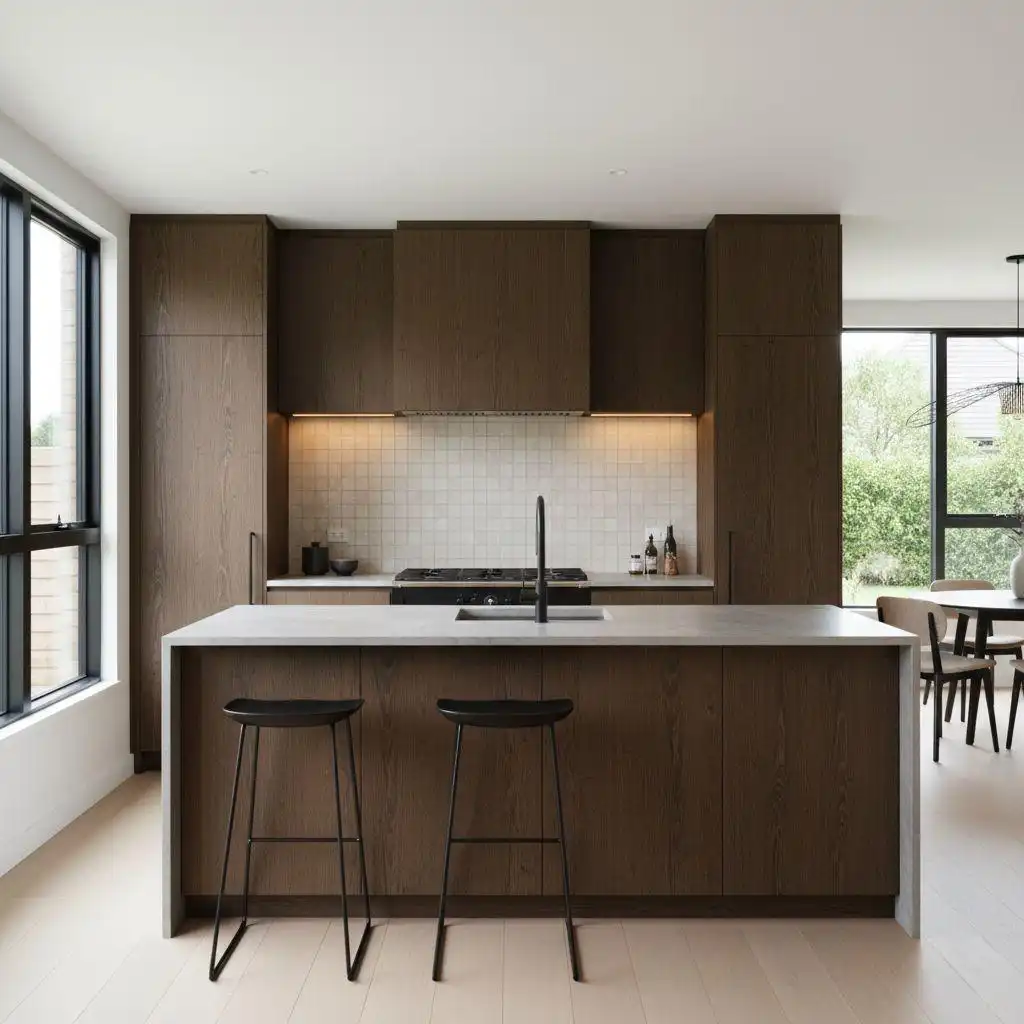
การตัดสินใจที่ขับเคลื่อนด้วยเนื้อหา: การจัดการกับข้อกังวลหลัก
การเลือกไม้สำหรับพื้นที่ที่มีผู้คนสัญจรไปมาสูง เช่น ห้องครัว มักจะทำให้เกิดคำถามเกี่ยวกับอายุการใช้งานและการดูแลรักษา
ตู้ครัวไม้โอ๊คสีขาว ความทนทาน: สร้างมาเพื่อการใช้งานที่ยาวนาน
ไม้โอ๊คสีขาวเป็นไม้เนื้อแข็งที่มีความหนาแน่นสูง โดยได้คะแนนสูงในระดับความแข็งของ Janka
ความแข็ง: ความแข็งแรงทำให้ทนทานต่อการสึกหรอในแต่ละวันของห้องครัวที่ยุ่งวุ่นวาย ทนทานต่อสิ่งสกปรก รอยขีดข่วน และรอยถลอกได้ดีกว่าไม้เนื้ออ่อนหลายชนิดและแม้แต่ไม้เนื้อแข็งยอดนิยมบางชนิด
ไม้โอ๊คขาวทนความชื้นได้หรือไม่?
สิ่งสำคัญคือใช่ ต้นโอ๊กสีขาวแตกต่างจากไม้โอ๊คแดงซึ่งมีโครงสร้างเซลล์เปิดและมีรูพรุน เซลล์ปิดหมายความว่ารูพรุนของมันถูกอุดด้วยโครงสร้างภายในที่เรียกว่า ไทลอส-
ความต้านทานน้ำ: โครงสร้างเซลล์ที่เป็นเอกลักษณ์นี้คือสิ่งที่ทำให้ไม้โอ๊คสีขาวทนทานต่อการซึมผ่านของความชื้นและการสลายตัวตามธรรมชาติ นี่คือเหตุผลว่าทำไมในอดีตจึงมีการใช้ไม้โอ๊คขาวในการสร้างเรือและถังไวน์ และเหตุใดจึงเป็นตัวเลือกที่เหนือกว่าสำหรับสภาพแวดล้อมในห้องครัวและห้องน้ำซึ่งมีการหกและความชื้นคงที่
ข้อดีและข้อเสียของตู้ครัวไม้โอ๊คสีขาว
| ข้อดี (ข้อดี) | ข้อเสีย (ข้อเสีย) |
| ความทนทานที่เหนือกว่า เนื่องจากคะแนน Janka สูง | ต้นทุนที่สูงขึ้น กว่าไม้ MDF หรือไม้เนื้ออ่อนกว่า (เช่น ไม้เมเปิลหรือไม้เบิร์ช) |
| ต้านทานความชื้นได้ดีเยี่ยม (เมล็ดข้าวปิด). | การเปลี่ยนแปลงสี ต้องการการคัดเลือกอย่างระมัดระวัง ชิ้นไม้อาจมีโทนสีที่แตกต่างกันไปตามธรรมชาติ |
| อเนกประสงค์ สำหรับรูปแบบสมัยใหม่ ดั้งเดิม และการเปลี่ยนผ่าน | ต้องใช้ช่างทำตู้ที่มีประสบการณ์ในการตัดที่ซับซ้อน เช่น Rift Cut |
| ยอมรับคราบได้ดี และดูโดดเด่นด้วยพื้นผิวด้านที่ชัดเจน |
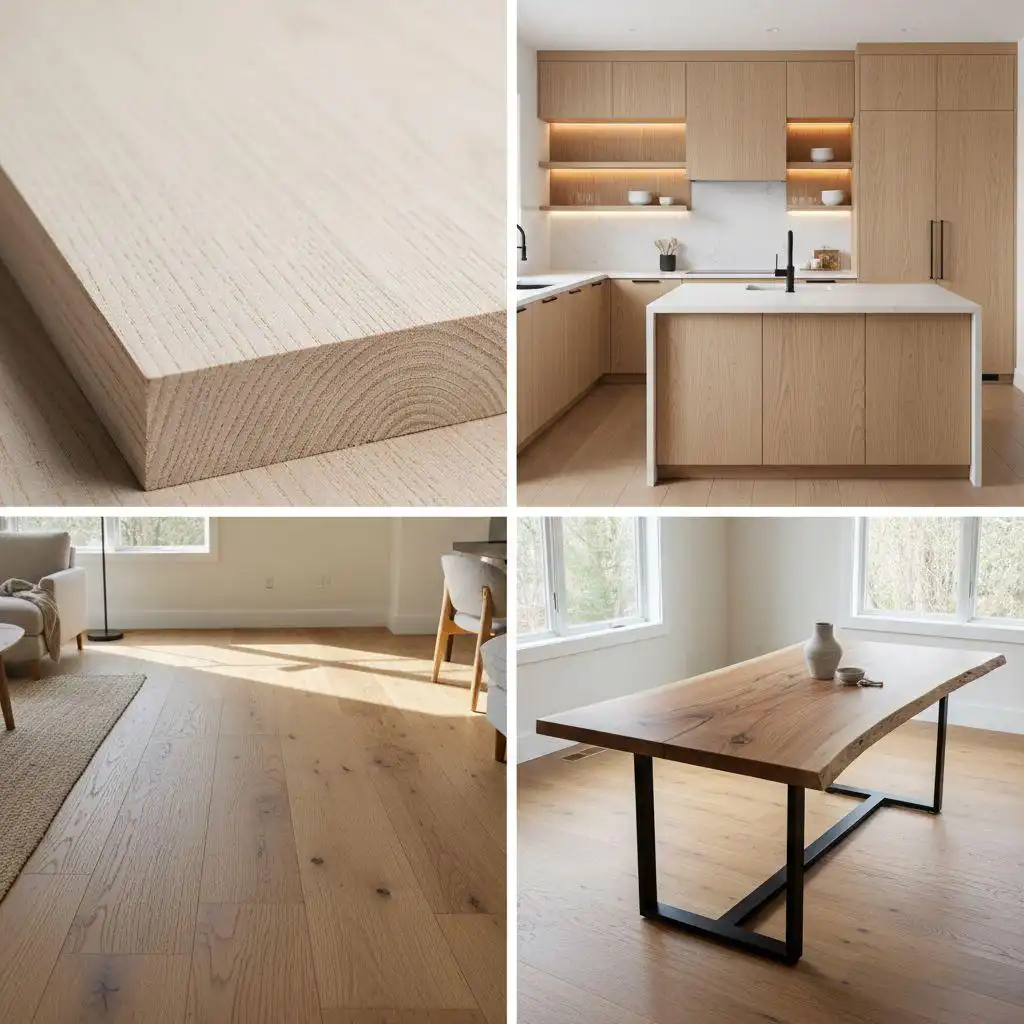
ค่าใช้จ่ายของตู้ครัวไม้โอ๊คสีขาว
การลงทุนในตู้ไม้โอ๊คสีขาวโดยทั่วไปจะสูงกว่าไม้ MDF ทาสีมาตรฐานหรือแม้แต่ไม้เมเปิ้ลทั่วไป ริฟท์คัท ไวท์โอ๊ค สั่งราคาสูงสุดเนื่องจากกระบวนการกัดที่ไม่มีประสิทธิภาพซึ่งจำเป็นเพื่อให้ได้เกรนตรง แต่เมื่อมองผ่านเลนส์ที่มีคุณค่าระยะยาว ความทนทาน, และ สไตล์เหนือกาลเวลาการลงทุนเริ่มแรกมักจะให้ผลตอบแทนที่คุ้มค่า ซึ่งมีส่วนสำคัญต่อมูลค่าการขายต่อบ้านของคุณ
บทสรุป
ไม้โอ๊คสีขาวไม่ใช่แฟชั่นที่ผ่านไปแล้ว เป็นวัสดุการออกแบบขั้นพื้นฐานที่กลับคืนสู่ตำแหน่งที่ถูกต้องในการออกแบบห้องครัวระดับไฮเอนด์ เส้นตรงที่สง่างามของ รอยแยกตัดไม้โอ๊คสีขาว, ควบคู่กับก เป็นธรรมชาติ หรือ ไม้โอ๊คสีอ่อน พื้นผิวด้าน มอบความสมดุลที่ลงตัวระหว่างความอบอุ่นและความหรูหรา หากคุณกำลังมองหาห้องครัวที่ให้ความรู้สึกทันสมัย เรียบง่าย และทนทานไปพร้อมๆ กัน ไม้โอ๊คสีขาวคือตัวเลือกที่ชัดเจนสำหรับปี 2026 และต่อๆ ไป
บทความที่เกี่ยวข้อง:
ตู้ครัวสีขาว: เหตุใดจึงเป็นตัวเลือกที่ชาญฉลาดที่สุดสำหรับห้องครัวสมัยใหม่ในปี 2026