


Standard kitchen cabinets were never designed for real houses.
They were designed for efficient manufacturing, predictable shipping, and showroom display. And while they can work in some situations, most homeowners discover the limitations only after installation—when cabinets meet walls, ceilings, floors, and appliances that don’t behave the way drawings suggest.
From a manufacturing perspective, this problem isn’t surprising. Homes are built on site. Cabinets are built in factories. When one side assumes everything is “standard,” the mismatch becomes inevitable.
What “Standard Cabinet Size” Actually Means
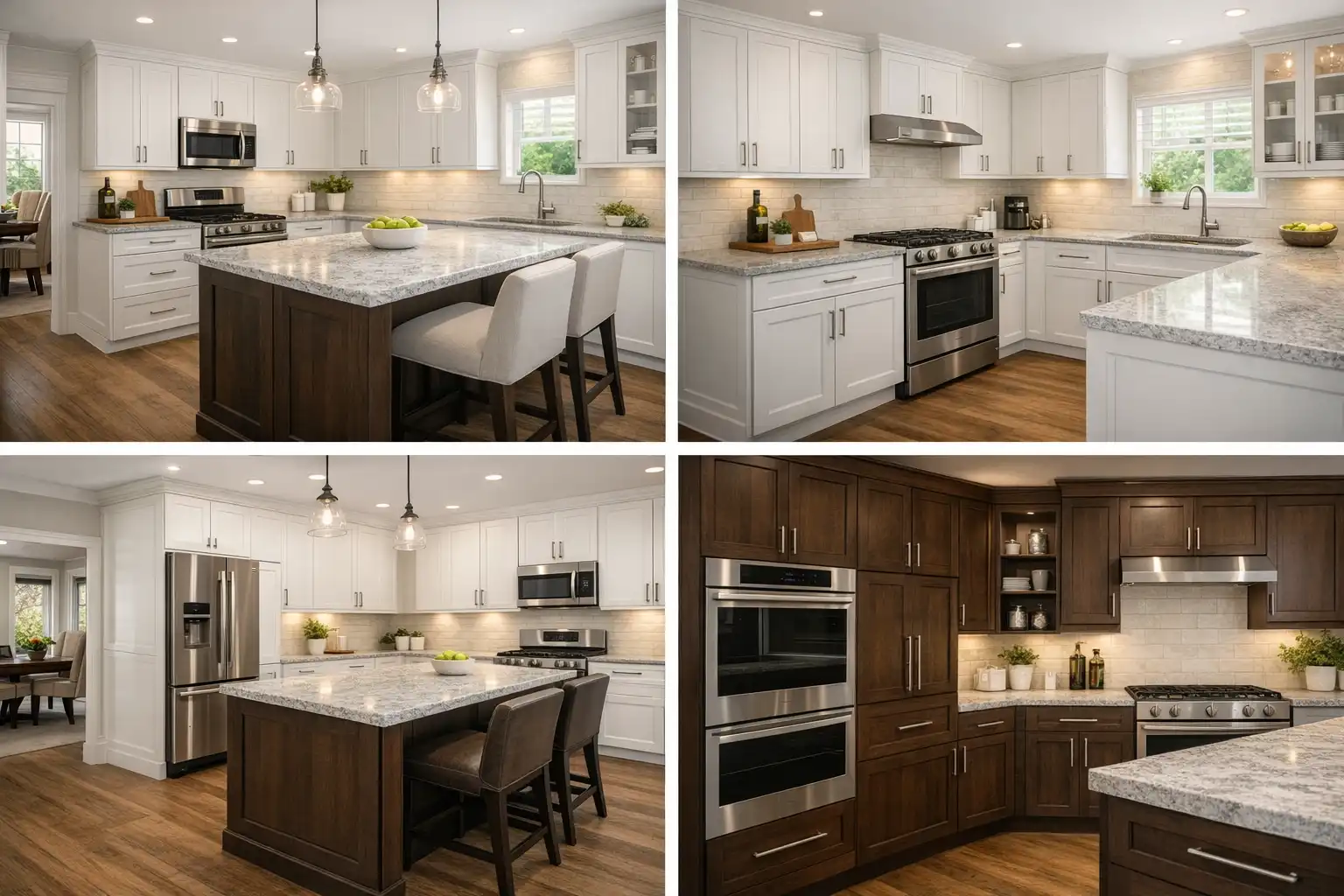
When people hear standard kitchen cabinets, they often assume it means “fits most kitchens.” In manufacturing terms, it means something very different.
Standard kitchen cabinets are built using fixed size increments, such as:
-
Base cabinets in set widths
-
Upper cabinets in predefined heights
-
Fixed depths designed around general clearances
These dimensions are chosen because they:
-
Simplify production
-
Reduce waste
-
Speed up fulfillment
None of them are based on your specific kitchen.
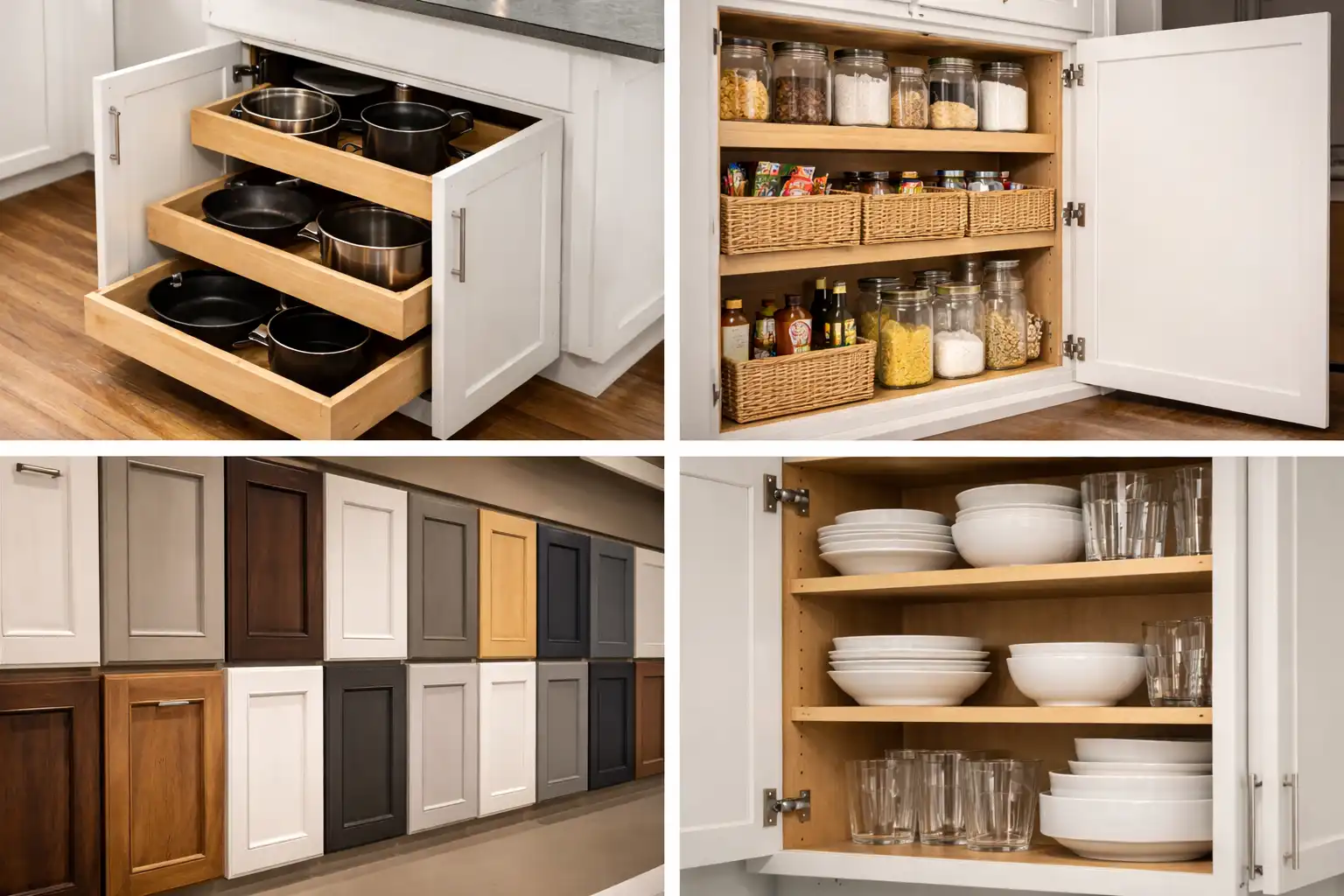
The Assumption Behind Standard Cabinets
Standard kitchen cabinets assume:
-
Walls are straight and square
-
Floors are level
-
Ceilings are consistent in height
-
Appliances sit exactly where plans say they will
In new construction under controlled conditions, those assumptions may be close enough. In most homes—especially remodels—they are not.
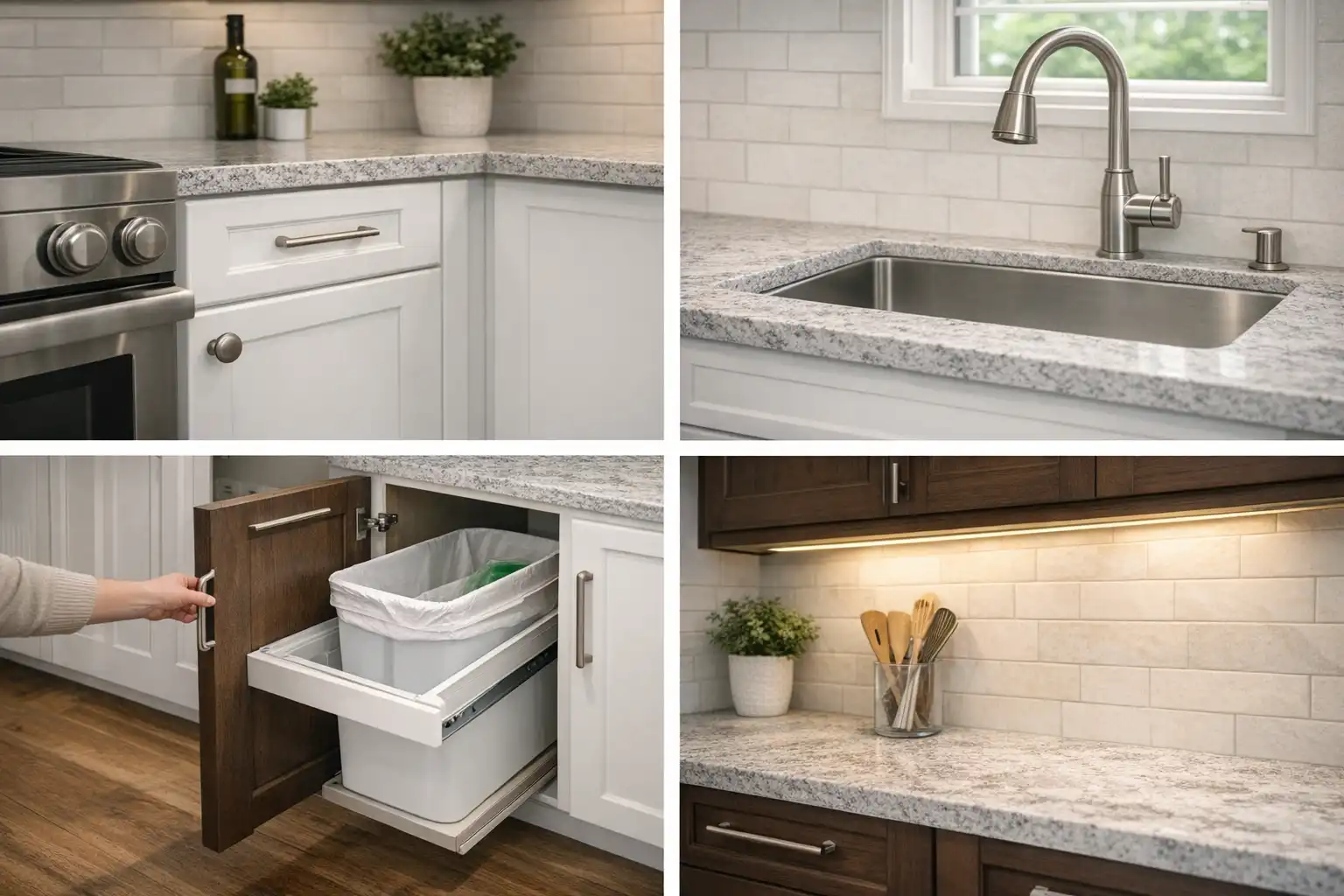
Why Real Homes Rarely Match “Standard” Conditions
After years of manufacturing cabinets for remodels, one thing becomes clear: no two kitchens are truly the same.
Walls Are Rarely Perfectly Straight
Even a small deviation in wall straightness becomes noticeable across a run of cabinets. When standard kitchen cabinet sizes are used, gaps appear. Those gaps are usually filled with filler panels, trim, or adjustments made during installation.
These solutions hide the problem—but they don’t solve it.
Ceiling Heights Vary More Than You Think
Many homes have ceilings that are:
-
Slightly lower than modern standards
-
Uneven across the room
-
Affected by beams or soffits
Standard upper cabinet heights often stop short of the ceiling, leaving dead space that collects dust or requires additional trim work. The result looks “added on” instead of built in.
Floors Are Often Out of Level
Floors settle. Especially in older homes.
Standard kitchen cabinets assume a level starting point. When floors slope, installers must compensate on site. This can affect door alignment, reveal consistency, and long-term performance.
Appliances Don’t Always Fit the Grid
Modern appliances vary more than most people realize:
-
Refrigerator depths differ by brand
-
Range heights vary slightly
-
Dishwasher clearances can change with flooring thickness
Standard cabinet dimensions don’t adapt easily to these differences, which often leads to spacing compromises.
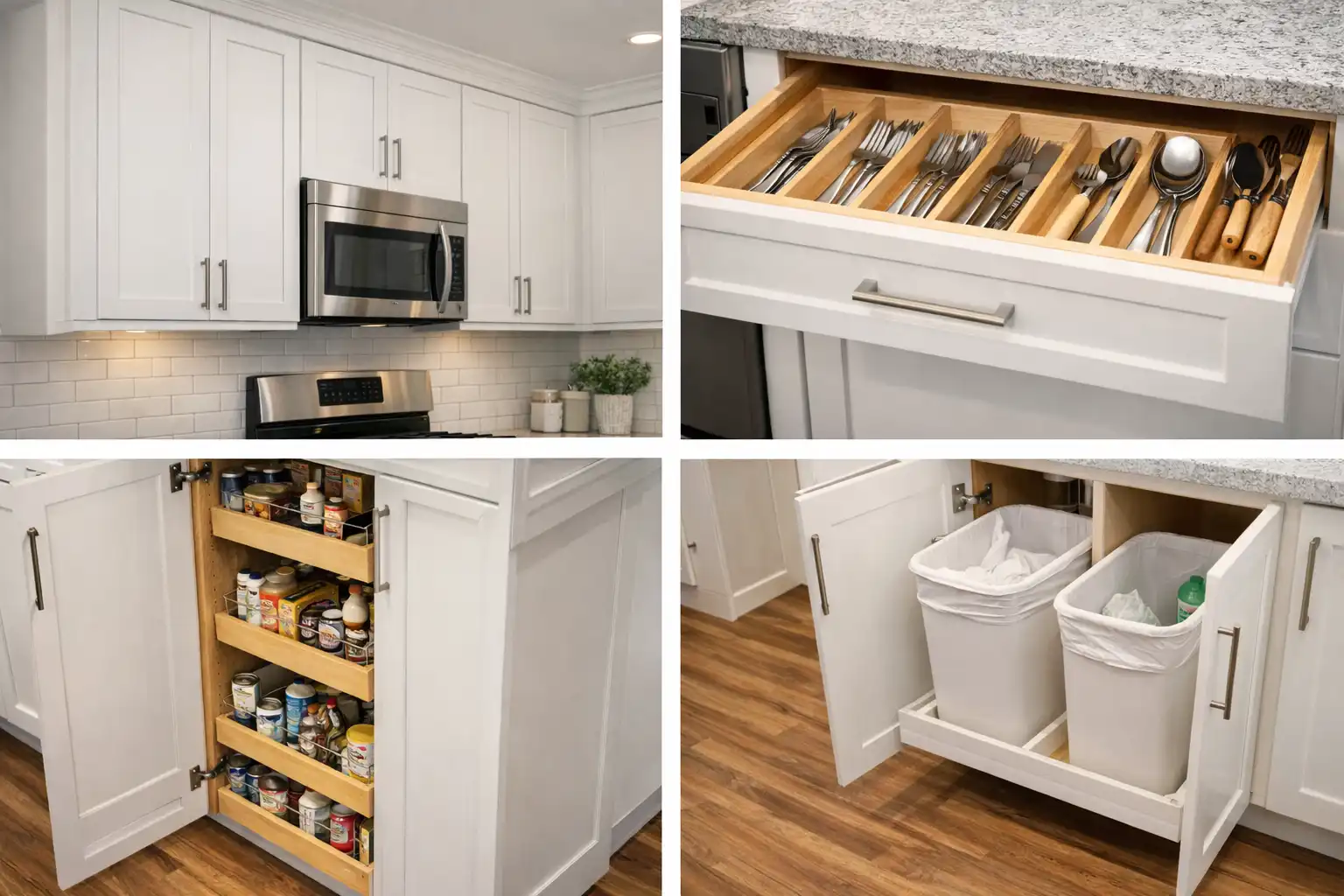
The Hidden Cost of “Making It Work”
When standard kitchen cabinets don’t fit, something has to give.
Usually, that means:
-
Filler panels added between cabinets
-
Reduced cabinet width to accommodate gaps
-
Lost storage that was never planned for
From a homeowner’s perspective, this feels like paying for space that disappears.
From a manufacturing perspective, it’s the natural outcome of forcing fixed sizes into variable conditions.
Why Fillers Are a Symptom, Not a Feature
Fillers are often presented as normal—and sometimes they are unavoidable. But excessive filler usage usually points to a deeper issue: the cabinets were not sized for the room.
Each filler:
-
Reduces usable storage
-
Interrupts visual continuity
-
Adds labor during installation
When cabinets are built to exact dimensions, fillers become the exception instead of the rule.
Why Standard Cabinets Struggle in Remodels
Remodels introduce constraints that standard cabinets aren’t designed to handle:
-
Existing plumbing locations
-
Fixed electrical runs
-
Structural elements that cannot move
Standard cabinets require the space to adapt. Custom-sized cabinets allow the cabinets to adapt instead.
Where Custom Cabinet Sizing Changes the Outcome
Custom cabinets are built after final measurements are taken. That changes the process entirely.
Instead of selecting sizes from a catalog:
-
Cabinet widths are built to fit the available space
-
Heights are adjusted to actual ceiling conditions
-
Depths can be modified to improve clearance or storage
From a factory-direct standpoint, this simply means the cabinet is built once—correctly—rather than adjusted later on site.
Small Kitchens Feel the Problem the Most
In large kitchens, lost inches may go unnoticed. In small kitchens, every inch matters.
Standard cabinets in small kitchens often result in:
-
Awkward clearances
-
Reduced storage
-
Visually crowded layouts
Custom sizing allows those inches to be used intentionally instead of wasted.
Why Standard Cabinets Still Exist
It’s important to be fair: standard cabinets exist for good reasons.
They:
-
Are faster to produce
-
Are easier to budget
-
Work well in predictable layouts
They are not “bad.” They are simply designed for ideal conditions—which many homes don’t meet.
Часто задаваемые вопросы
Why don’t standard kitchen cabinets fit older homes?
Older homes often have uneven walls, floors, and ceiling heights. Standard cabinets assume uniform conditions, which leads to gaps and compromises during installation.
What are non-standard kitchen cabinet sizes?
Non-standard sizes refer to cabinets built outside preset manufacturing increments. These cabinets are sized based on actual measurements rather than fixed dimensions.
Are filler panels always a problem?
Not always. Small fillers can be unavoidable. However, excessive fillers usually indicate that cabinet sizing did not account for the room’s actual dimensions.
Can standard cabinets be modified to fit better?
They can be adjusted to a degree, but structural dimensions remain fixed. Most modifications happen during installation, not manufacturing.
Do custom cabinets eliminate installation issues completely?
No cabinet system eliminates all challenges. However, cabinets built to measurement typically reduce the number of compromises required on site.
Are custom cabinets worth it for small kitchens?
In many cases, yes. Small kitchens benefit significantly from precise sizing because storage and clearance are more sensitive to dimensional changes.
What does “built to measurement” actually mean?
It means cabinets are manufactured after final site measurements are taken, allowing widths, heights, and depths to be tailored to the space.
Is custom sizing only about aesthetics?
No. Proper sizing affects storage capacity, usability, installation efficiency, and long-term satisfaction—not just appearance.
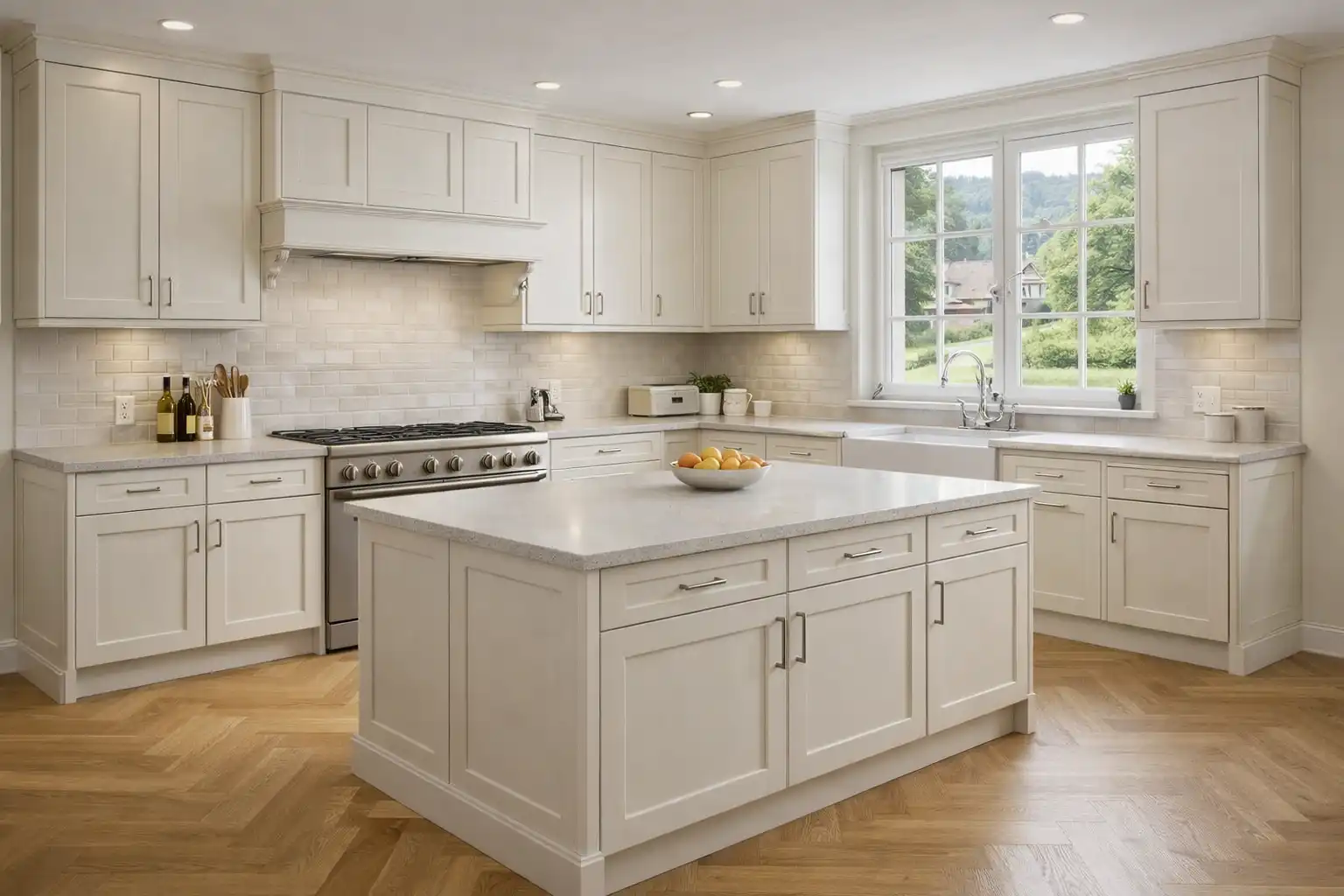
Summary: Why Fit Matters More Than You Expect
Standard kitchen cabinets are designed for efficiency, not individuality. When they meet real-world conditions—uneven walls, variable ceilings, existing constraints—the mismatch becomes visible.
Custom cabinet sizing doesn’t make a kitchen extravagant. It makes it appropriate for the space it’s in.
The more irregular the room, the more important that difference becomes.
A Practical Next Step
Understanding why standard kitchen cabinets don’t fit most homes usually changes how people approach their renovation. Once you see where fixed dimensions create compromises, it becomes easier to decide whether adapting the space—or adapting the cabinets—makes more sense for your project.
If your kitchen involves non-standard dimensions, an older layout, or tight clearances, it’s often helpful to review your measurements with someone who works on the manufacturing side, not just the design side. A short conversation can clarify what can be built to size, where fillers are unavoidable, and how cabinet dimensions affect both storage and installation.
There’s no obligation and no sales script involved. It’s simply a practical discussion about how cabinets are actually made—and whether custom sizing would meaningfully improve the result in your home.
If you’re still evaluating cabinet options, understanding how sizing decisions affect real installations can make the process much clearer. For homeowners working with non-standard dimensions, a brief review of measurements with a manufacturer can help identify where compromises are unavoidable—and where they aren’t.
If that would be useful for your project, you can [review your kitchen layout with our team here], or explore how our cabinets are built to measurement [in this overview].