


A successful kitchen project is defined by how the cabinetry interacts with the environment’s most volatile elements: heat and moisture. When planning a kitchen cabinet layout guide, most designers focus on the “Work Triangle.” However, from a manufacturing and engineering perspective, the most critical zones are the interfaces between the cabinetry and the stove, and the cabinetry and the window.
In this factory technical analysis, we will examine the structural requirements, safety clearances, and material durability standards necessary for high-performance kitchen zones.
1. The High-Heat Zone: Cabinets Near the Stove
The area surrounding the range or cooktop is the most high-stress environment in any kitchen. Thermal expansion and grease accumulation are constant threats to the cabinet’s finish and core integrity.
Thermal Clearance and Heat Shielding
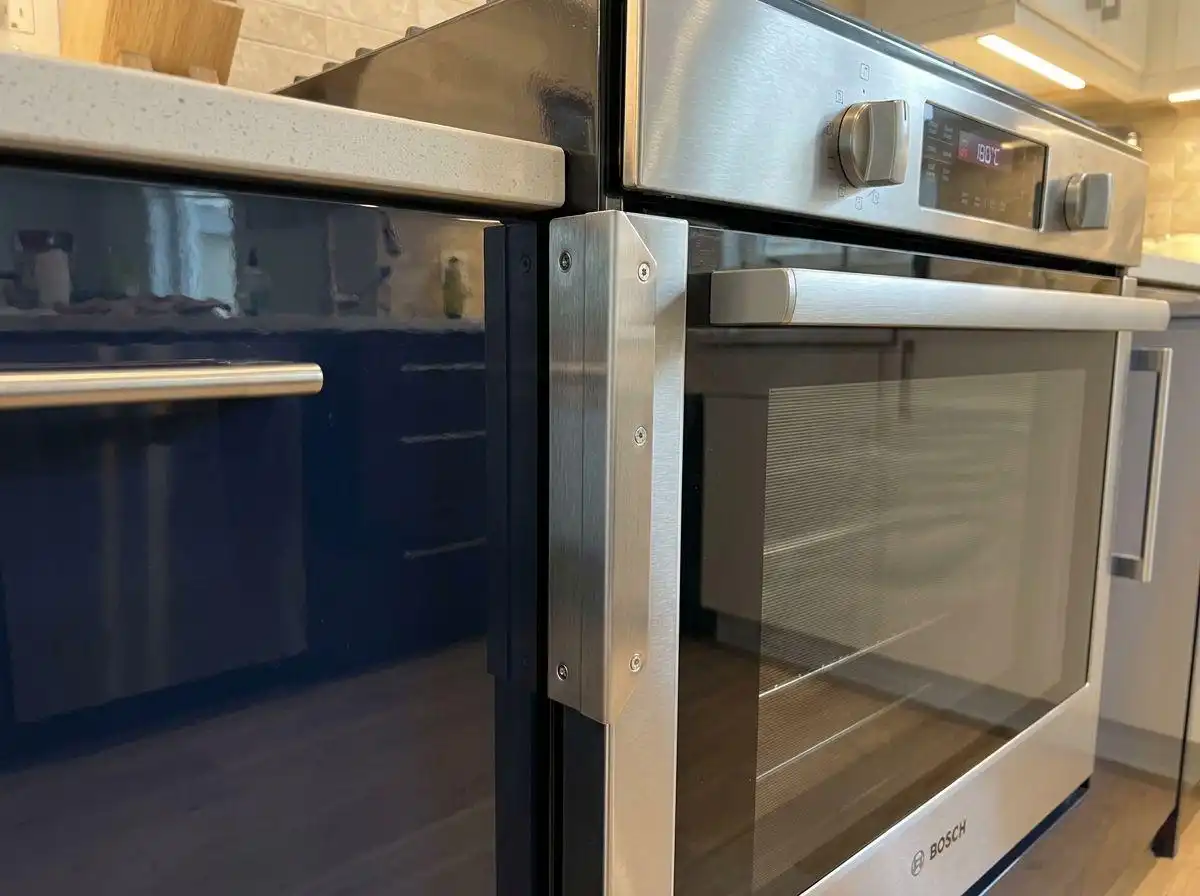
According to international safety standards and our internal factory stress tests, base cabinets adjacent to an oven should feature a dedicated heat shield. If you are using modern European-style frameless cabinets, we recommend a 5mm to 10mm thermal gap or the installation of stainless steel heat deflection strips. This prevents the delamination of edge banding—a common failure in lower-quality cabinetry using EVA glues.
Material Selection for Cooking Zones
In our kitchen cabinet layout guide, we prioritize PET or high-pressure laminate (HPL) finishes for cabinets near the stove. Why? Because these materials have a much higher melting point than standard PVC foils. Furthermore, the upper wall cabinets above a cooktop must be positioned at a minimum of 30 inches (760mm) from the cooking surface to prevent “lacquer clouding” or steam-induced warping of the bottom panels.
2. The Humidity and Light Zone: Cabinets Near the Window
Windows bring natural light and ventilation, but they also introduce two major aging factors: UV radiation and localized humidity.
UV Resistance and Color Stability
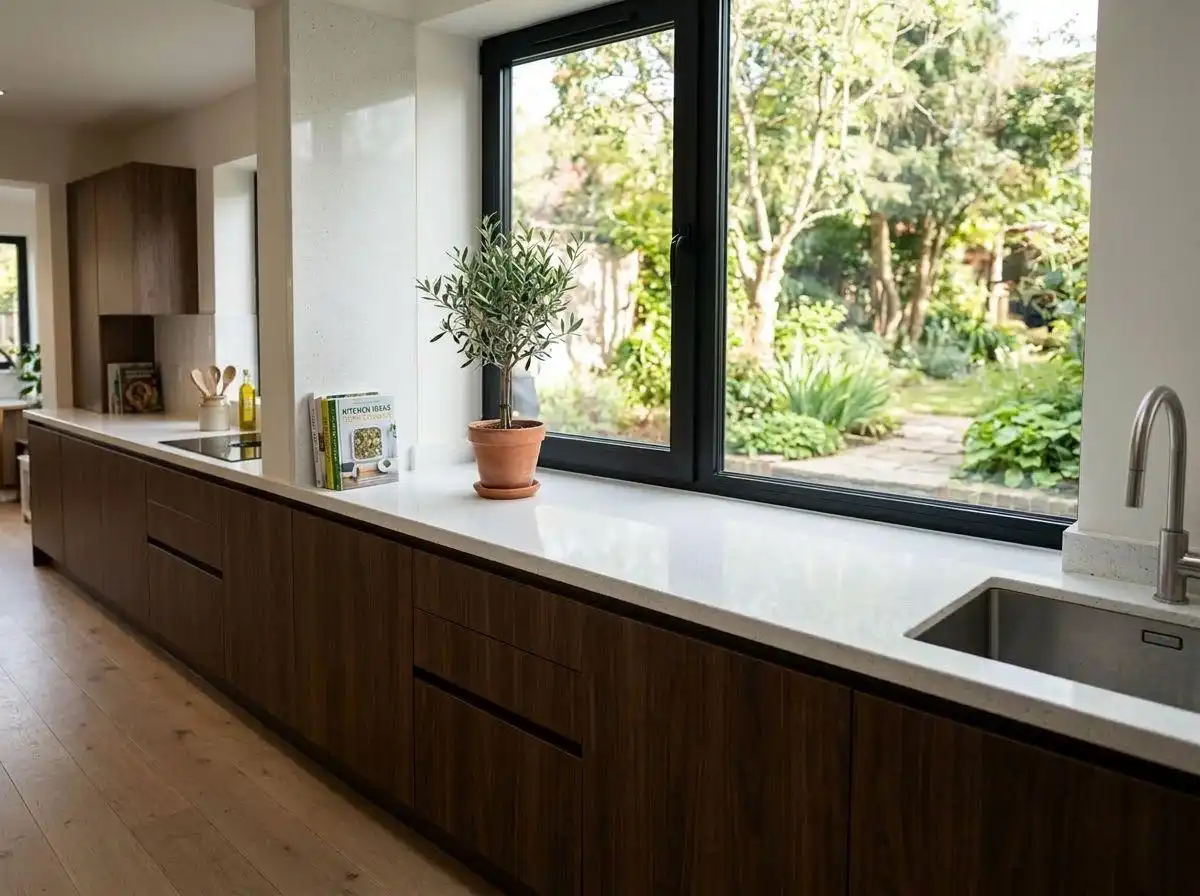
Direct sunlight can cause “photodegradation” in wood veneers and certain paints. When your kitchen cabinet layout guide places a significant portion of the cabinetry near a large window, we specify UV-cured topcoats. Unlike air-dried paints, UV-cured finishes are chemically cross-linked under intense light during manufacturing, making them significantly more resistant to yellowing or fading over time.
Managing Moisture Near Sinks and Windows
Windows are often the site of the kitchen sink. This creates a “Humidity Micro-Climate.” We recommend that any cabinet box within 24 inches of a window/sink area be constructed from Морская фанера. This substrate resists the swelling that occurs when condensation from the windowpane drips onto the cabinetry surfaces.
3. Structural Optimization: Maximizing Small Space Efficiency
Responding to the search intent for “small kitchen layout ideas,” our factory focuses on “The Incremental Millimeter.”
The Use of Filler Strips and Blind Corners
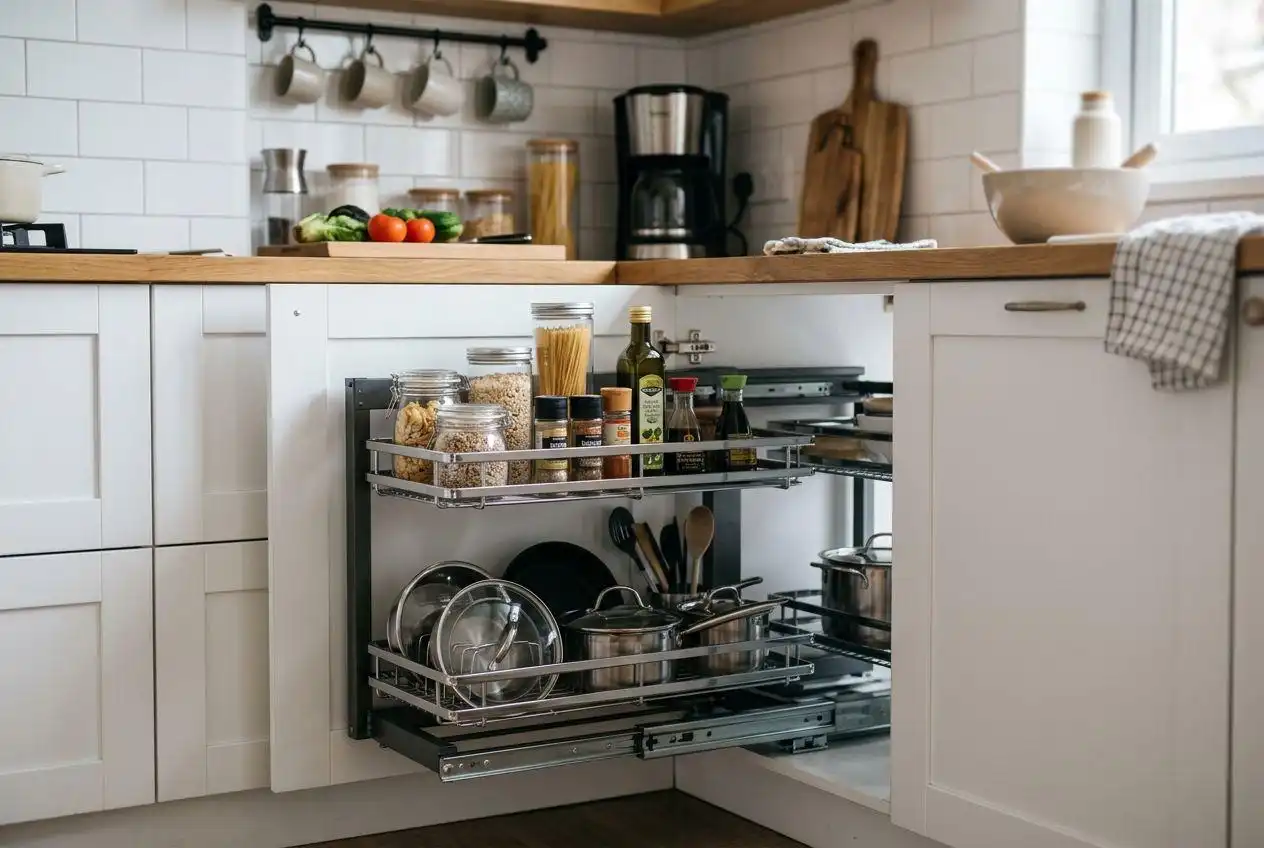
A common flaw in a poor kitchen cabinet layout guide is the omission of filler strips near walls. Without a minimum 50mm filler, cabinet doors may not open fully, or handles may strike adjacent walls. In our factory, we manufacture custom blind-corner pull-outs that utilize 100% of the internal cabinet volume, a critical feature for urban apartments with limited square footage.
Vertical Expansion Standards
For small kitchens, we advocate for “To-the-Ceiling” cabinetry. This not only maximizes storage but also eliminates the “Dust Trap” above the cabinets. From a technical standpoint, this requires a two-piece crown molding system to account for ceiling un-levelness, ensuring the cabinetry remains perfectly plumb.
4. Hardware Logistics in Specific Layouts
The layout dictates the mechanical stress on the hardware.
-
Near-Stove Drawers: These drawers often hold heavy cast-iron cookware. We specify slides with a 70kg dynamic load rating for these zones.
-
Near-Window Hinges: Constant exposure to the outdoor air through an open window can accelerate corrosion. We utilize Grade-5 stainless steel hinges with salt-spray test certification for these specific placements.
5. Physical Clearance and Ergonomic Metrics
А kitchen cabinet layout guide must adhere to strict ergonomic clearances to be functional for B2B housing projects and B2C luxury homes:
| Zone Location | Recommended Clearance | Technical Reason |
| Cabinet to Stove Side | Min. 50mm (with shield) | Prevents finish scorching |
| Cabinet to Window Trim | Min. 25mm | Allows for window cleaning and casing |
| Walkway Width | Min. 1050mm | Ensures two-person traffic flow |
| Countertop Overhang | 20mm to 30mm | Protects door fronts from liquid spills |
FAQ: Technical Layout Challenges
Q: Can I put a tall pantry cabinet right next to a built-in oven?
А: Yes, but you must use a “double-wall” insulation strategy. We build a specialized 18mm heat-refractive panel between the oven housing and the pantry to ensure the pantry contents (and the wood core) remain at room temperature.
Q: My window is lower than the standard countertop height. How do I adjust the layout?
А: This is a common “Design Trap.” We recommend a “Dropped Sill” approach where the countertop material wraps into the window sill, creating a waterproof, integrated ledge that serves as a plant shelf or extra prep space.
Q: How do you prevent cabinets near windows from swelling?
А: Beyond using plywood, we apply a specialized hydrophobic sealant to the top edges of the cabinet doors. This prevents “wicking,” where moisture sits on the top edge and enters the core.
6. Conclusion: Engineering the Perfect Flow
Mastering a kitchen cabinet layout guide is an exercise in managing environmental risks. By aligning the cabinet’s material specifications with its physical location—whether that is near the extreme heat of a stove or the variable humidity of a window—you create a kitchen that is both architecturally beautiful and structurally invincible.
As a factory-direct partner, we don’t just provide the boxes; we provide the layout engineering necessary for long-term project success.
[Request a Custom 2D/3D Layout Analysis]
[Consult our Engineering Team for Multi-Unit Project Planning]