
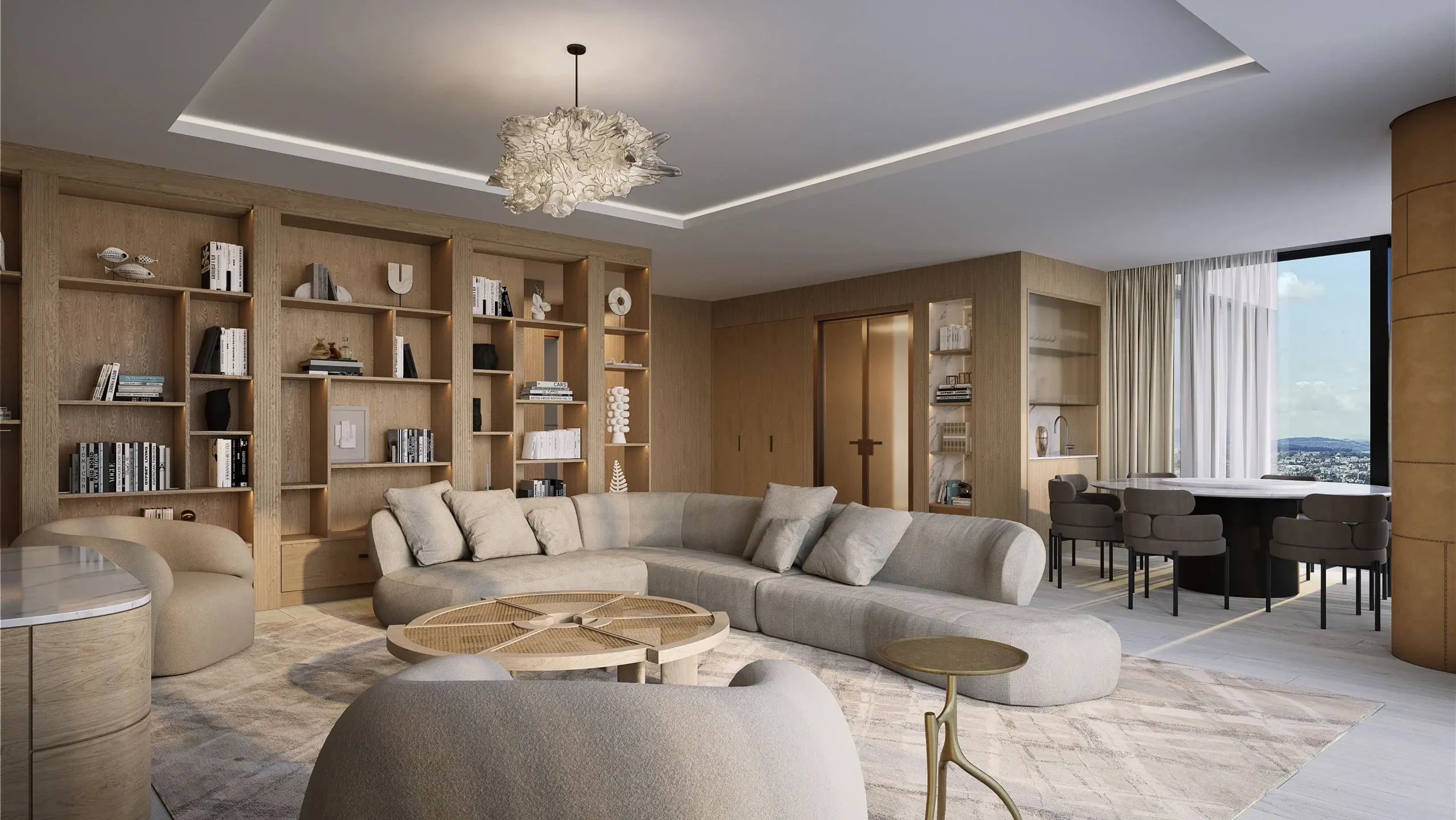
In the architectural landscape of 2026, the bedroom has evolved from a mere sleeping quarters into a high-functioning, multifunctional sanctuary. At the absolute core of this transition is custom wardrobe design, a specialized discipline that balances sophisticated aesthetics with rigorous mechanical engineering. While stock furniture and mass-market solutions offer a temporary fix, they frequently fail to address the unique volumetric challenges of modern luxury apparel collections and the complex spatial constraints of contemporary urban living. Achieving a system that provides genuine, lifelong utility requires a deep understanding of closet organization systems and the physics of vertical weight distribution.
As a specialist in high-performance cabinetry and interior architecture, I have observed that the most successful custom wardrobe design projects are those that prioritize structural logic and material science over fleeting visual trends. This guide serves as the absolute authority on engineering a storage environment that maximizes bedroom storage efficiency while maintaining a refined, furniture-grade architectural profile.
1. The Physics of Wardrobe Structural Engineering
The foundation of any superior custom wardrobe design is its substrate. Unlike standard kitchen cabinetry, a wardrobe must support massive, concentrated vertical loads—such as heavy winter outerwear, leather goods, and expansive footwear collections—without lateral bowing, structural fatigue, or joint separation.
Material Density and Molecular Stability
For high-capacity custom wardrobe design, the industry standard for 2026 is the use of 3/4-inch (19mm) high-density furniture board with a multi-layered core. This material density is critical to ensuring that long-span shelves used in complex closet organization systems remain perfectly horizontal under constant stress.
-
The Engineering Red Flag: Many budget providers use 1/2-inch (12mm) particle board. This leads to “creep”—the slow, permanent deformation of wood fibers under load. In a professional custom wardrobe design, we specify a specific “Modulus of Rupture” (MOR) to ensure the system can handle up to 50 lbs per linear foot without structural compromise.
The Mechanics of Floor-Mounted vs. Wall-Hung Systems
In professional custom wardrobe design, we advocate for floor-mounted structures that transfer the gravitational load directly to the home’s subfloor. This allows for significantly deeper storage modules and the integration of heavy mechanical components, such as motorized pull-down wardrobe lifts. These mechanical assists are essential for utilizing the full vertical volume of high-ceiling suites, thereby doubling the bedroom storage efficiency compared to standard reach-in closets.
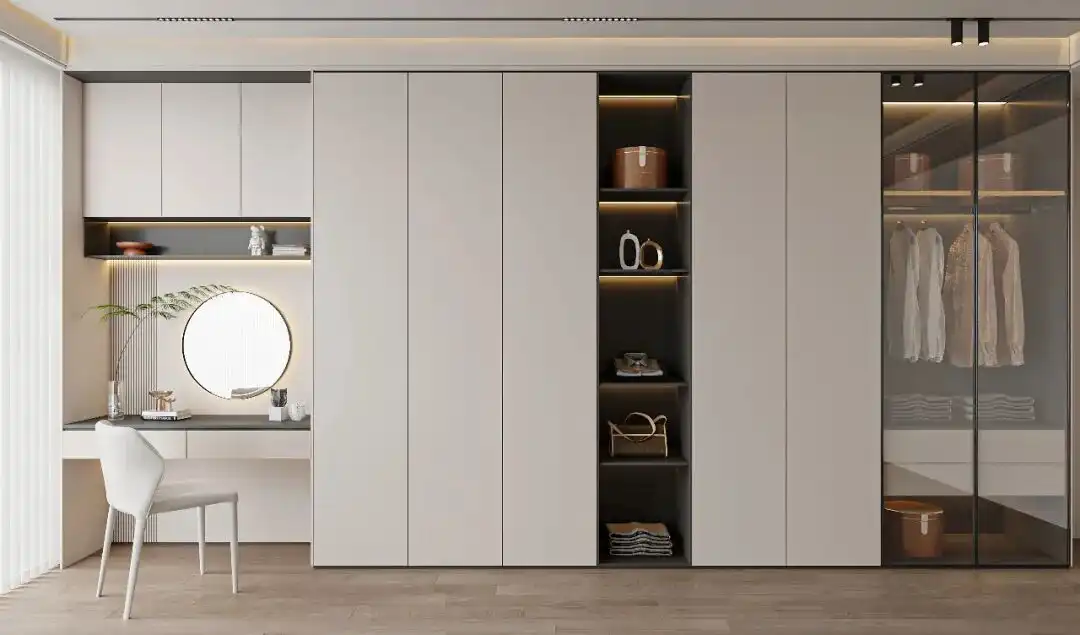
2. Closet Organization Systems: The Biomechanics of Access
A common failure in amateur custom wardrobe design is the reliance on “static shelving,” which creates dead zones and inaccessible corners. In 2026, the global standard for luxury is “Active Retrieval Technology.”
Vertical Zoning and Reach-In Ergonomics
Sophisticated walk-in closet planning requires dividing the storage envelope into three distinct biomechanical zones:
-
The Primary Impact Zone (Eye to Waist Level): Reserved for high-frequency apparel. In this zone of custom wardrobe design, we utilize full-extension glass-fronted drawers that allow for immediate visual identification.
-
The Secondary Ergonomic Zone (Lower Tiers): Dedicated to heavy denim, footwear, and laundry integration. We specify soft-close, high-load runners that ensure cabinet hardware durability even when loaded with 100 lbs of shoes.
-
The Archive or “Cold” Zone (Upper Tiers): Utilized for seasonal rotations and travel gear. In high-end custom wardrobe design, this zone is often accessed via integrated, rail-mounted library ladders that match the custom cabinetry aesthetics.
Specialized Hardware and Micro-Organization
The “internal soul” of modern closet organization systems lies in specialized, modular hardware. We integrate full-extension, velvet-lined jewelry inserts, moisture-controlled watch winders, and dedicated “tech drawers” for wearable devices. These elements ensure that the custom wardrobe design functions as a high-precision tool for personal management.
3. Material Science and Custom Cabinetry Aesthetics
While functionality is the driver, the visual integration of custom wardrobe design into the bedroom’s architectural language is what defines a luxury residence.
Nanotechnology Surface Finishes
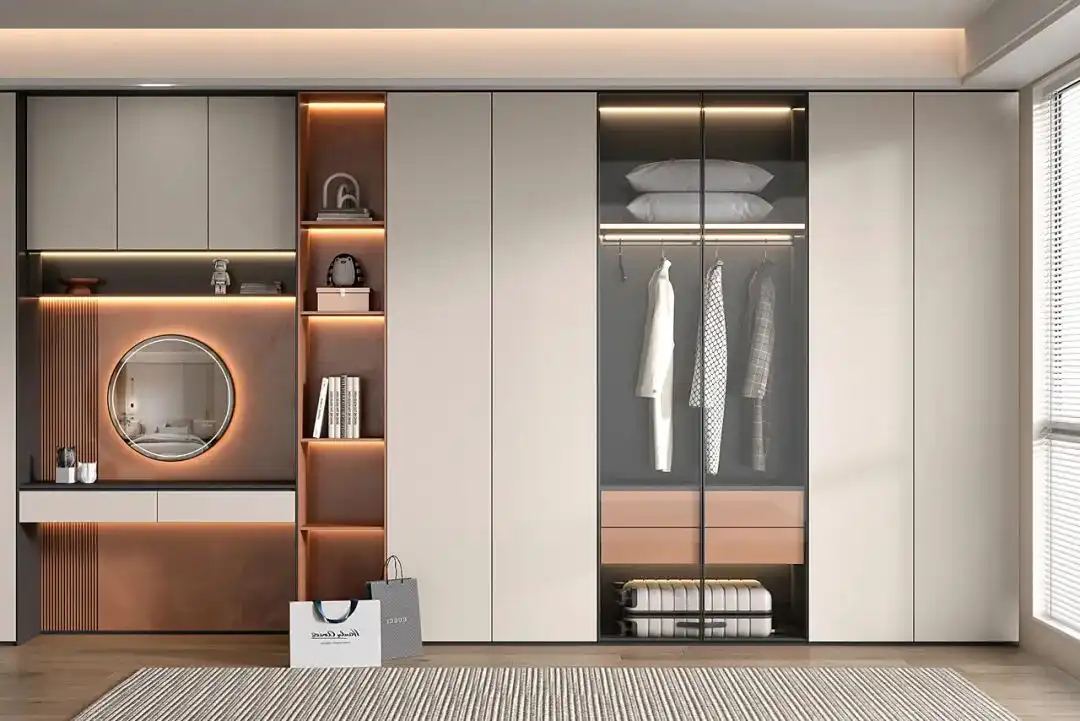
The exterior panels of a wardrobe occupy a massive visual plane. In our 2026 custom wardrobe design projects, we utilize “Super-Matte” nanotechnology finishes. These surfaces are not only anti-fingerprint and scratch-resistant but also feature thermal healing properties. This ensures that the custom cabinetry aesthetics remain pristine despite the high-touch nature of a dressing area.
Integrated Lighting and Color Rendering
Dark corners are the ultimate enemy of organization. Superior custom wardrobe design utilizes recessed, 45-degree angled LED channels with integrated PIR (Passive Infrared) motion sensors.
-
The Technical Standard: We mandate a Color Rendering Index (CRI) of 95 or higher. This ensures that a navy blue suit and a black suit are easily distinguishable under artificial light—a critical requirement for successful walk-in closet planning.
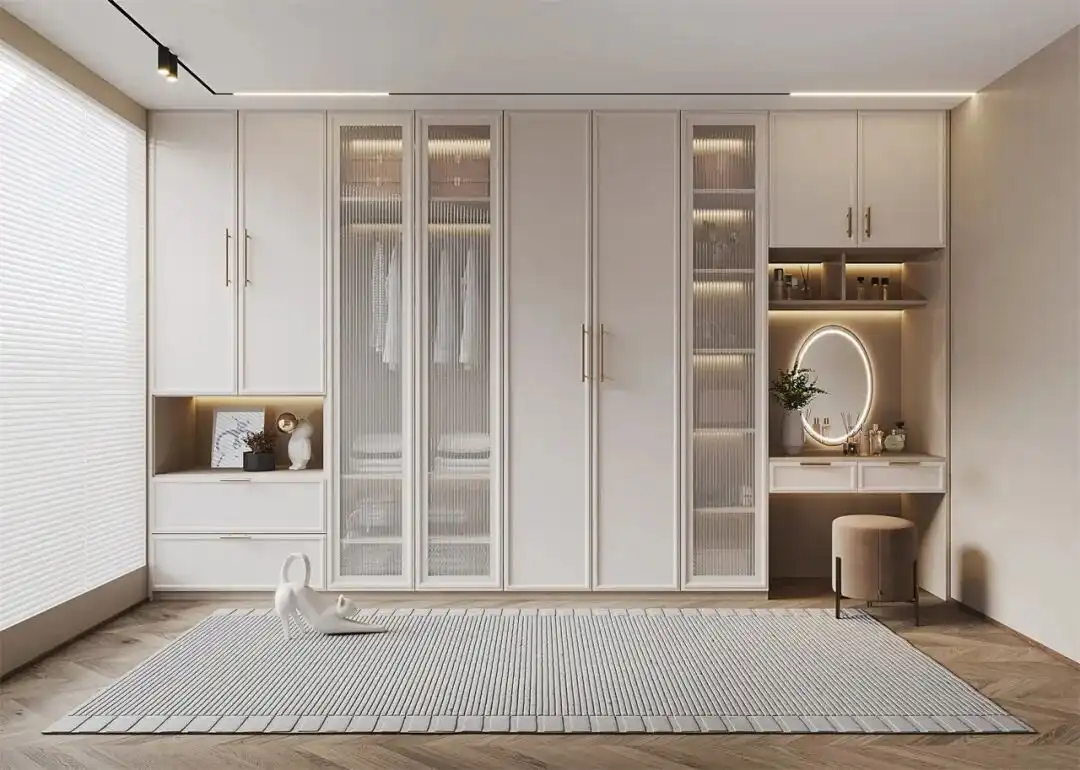
4. Advanced Walk-In Closet Planning: Traffic Flow and Preservation
For projects with the square footage for a dedicated dressing room, walk-in closet planning becomes an exercise in traffic flow engineering and garment preservation.
The Central Island Command and Social Flow
In a large-scale custom wardrobe design, a central island serves as the operational hub for packing and outfit coordination. To maintain professional bedroom storage efficiency, the island must be positioned with a minimum of 36 inches (914mm) of clearance on all sides to allow for full drawer extension and comfortable human passage.
Climate Control and UV Protection
High-value apparel collections require an environment that prevents degradation. Sophisticated custom wardrobe design accounts for this by integrating UV-filtered glass doors and passive carbon-filtration vents within the cabinetry. By controlling the micro-climate inside the closet organization systems, we elevate the project from simple storage to a garment preservation gallery.
FAQ: Professional Insights on Wardrobe Procurement
What is the most durable substrate for custom wardrobe design?
For the internal structural carcass, high-density melamine-faced furniture board is the standard due to its superior scratch resistance and chemical stability. For the visible doors, we recommend high-pressure laminates or post-catalyzed conversion varnish finishes to ensure the custom cabinetry aesthetics endure for decades.
How does custom wardrobe design affect home resale value?
Professional real estate data for 2026 indicates that a master suite featuring bespoke closet organization systems can increase a home’s marketability by up to 15%, as “storage volume” remains a top-tier priority for luxury homebuyers.
Can custom wardrobe design be integrated into irregular architectural spaces?
Absolutely. Bespoke cabinetry is the only viable method for utilizing “dead space” under eaves, sloped ceilings, or around structural columns, transforming architectural obstacles into high-capacity assets for bedroom storage efficiency.
Why is structural engineering more important than color in wardrobe design?
A beautiful color cannot compensate for a shelf that sags or a drawer that sticks. Wardrobe structural engineering ensures that the system remains functional under load, which is the primary factor in long-term homeowner satisfaction and “regret-free” procurement.
Conclusion: Engineering Your Private Sanctuary
A successful custom wardrobe design is far more than a collection of shelves; it is a meticulously engineered architectural response to the specific requirements of your daily life and your luxury investments. By prioritizing high-density material science, mechanical hardware durability, and ergonomic closet organization systems, you create a space that reduces daily friction and protects your long-term property value.
If you are ready to move beyond the limitations of mass-market furniture and invest in a system that reflects the absolute authority of professional interior engineering, our design team is prepared to conduct a comprehensive spatial analysis of your home.
[Request a Structural Layout Analysis – Optimize Your Storage Ecosystem Today]