


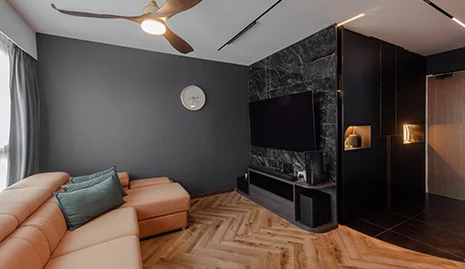
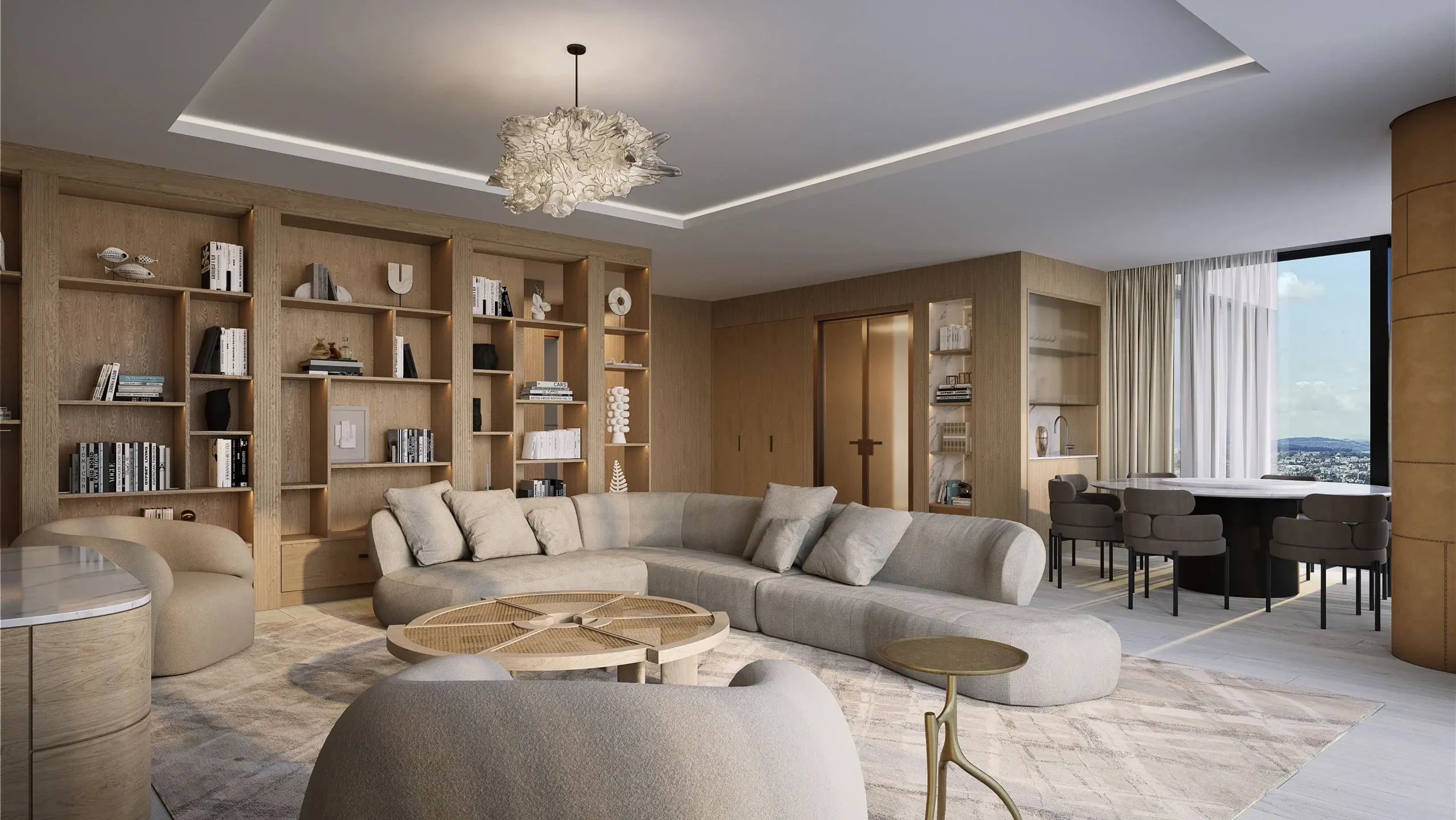
For property developers and fix-and-flip investors, the “Value-Add” of a kitchen is determined by the perceived longevity and functional intelligence of the cabinetry. A kitchen that looks premium but fails mechanically within three years is a liability. Conversely, cabinetry engineered with factory-grade precision acts as a “Value Anchor” for the entire residence.
Here are the 5 blueprints for engineering maximum resale value into your cabinetry projects.
Blueprint I: The “First Impression” Aesthetics (Visual ROI)
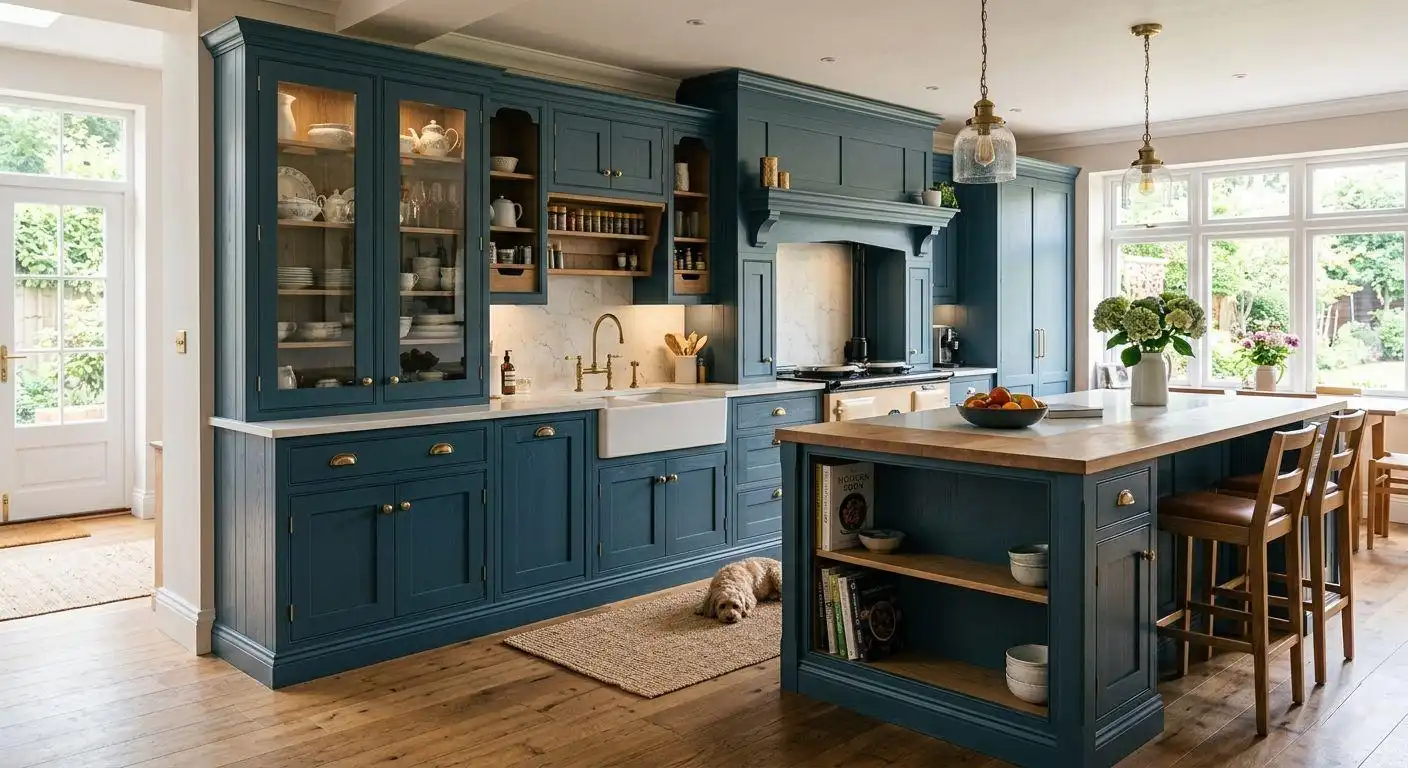
In real estate, the first 30 seconds of a walkthrough determine the buyer’s emotional price bracket. Custom cabinetry allows for a “Seamless Architecture” that stock cabinets cannot replicate.
Integrated Appliances and Flush Finishes
-
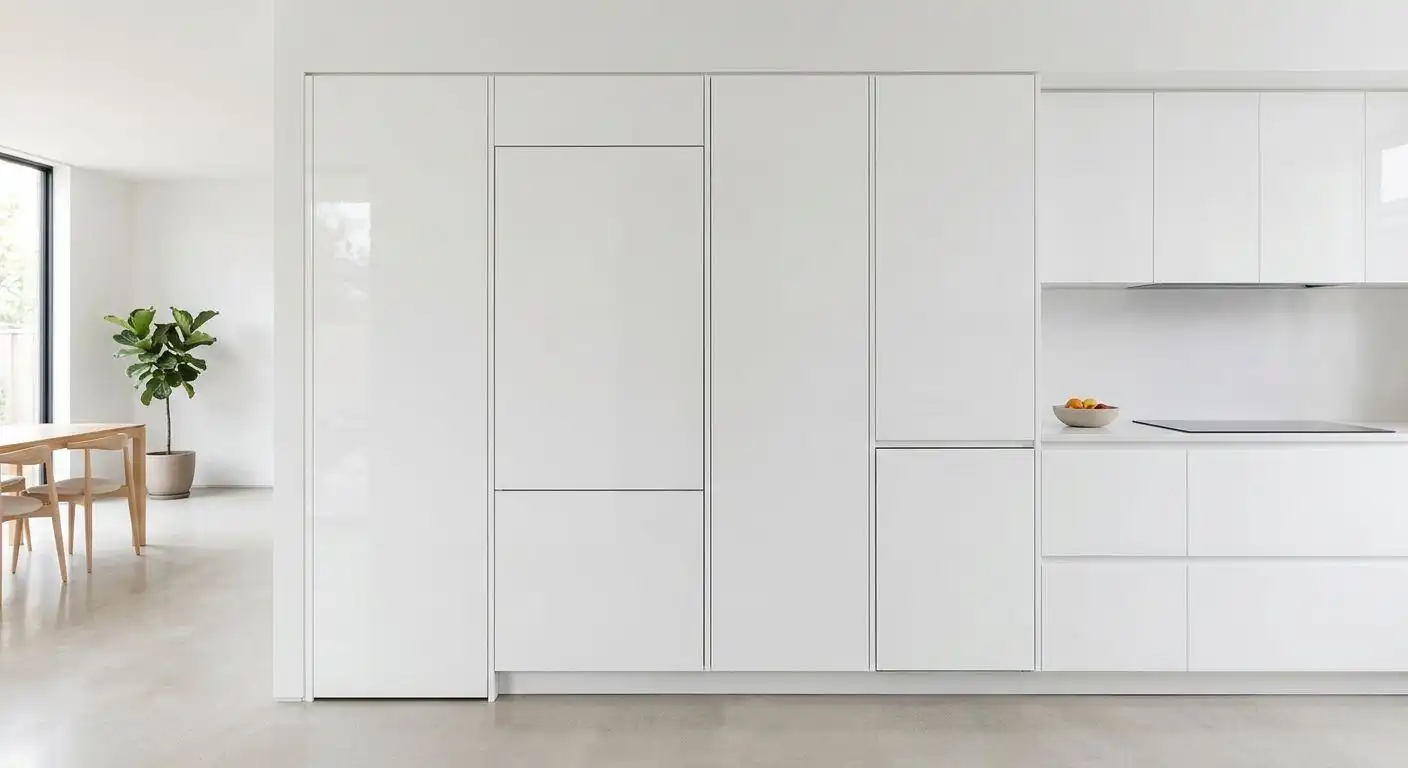
The Blueprint: Utilize integrated panel-ready fronts for refrigerators and dishwashers. When the cabinetry hides the visual clutter of appliances, the kitchen appears larger and more “architectural.”
-
Investment Impact: A kitchen with a continuous line of cabinetry—achieved through custom-sized fillers and exact-depth carcasses—can command a 5% to 8% premium on the total home price compared to a kitchen with gaps and mismatched appliance depths.
Blueprint II: The Durability Delta (Material Integrity)
Resale value is heavily influenced by “The Inspection Factor.” Appraisers and savvy buyers look past the paint to the substrate.
Plywood vs. Particle Board in Appraisal
-
The Blueprint: Specify Фанера мебельная for all carcasses and PUR (полиуретановая) кромка for all doors.
-
The Technical Edge: PUR edge banding is heat and moisture-resistant, preventing the “swelling” common in cheap kitchen corners. In a resale scenario, a kitchen that shows zero signs of delamination or water damage after 5 years of use signals a “Low-Maintenance” home, which is a major selling point for B2C buyers.
-
The ROI: Using high-durability materials reduces the “depreciation rate” of the kitchen, ensuring the “New Kitchen” look lasts until the day the property is listed.
Blueprint III: Spatial Engineering and Volumetric Efficiency
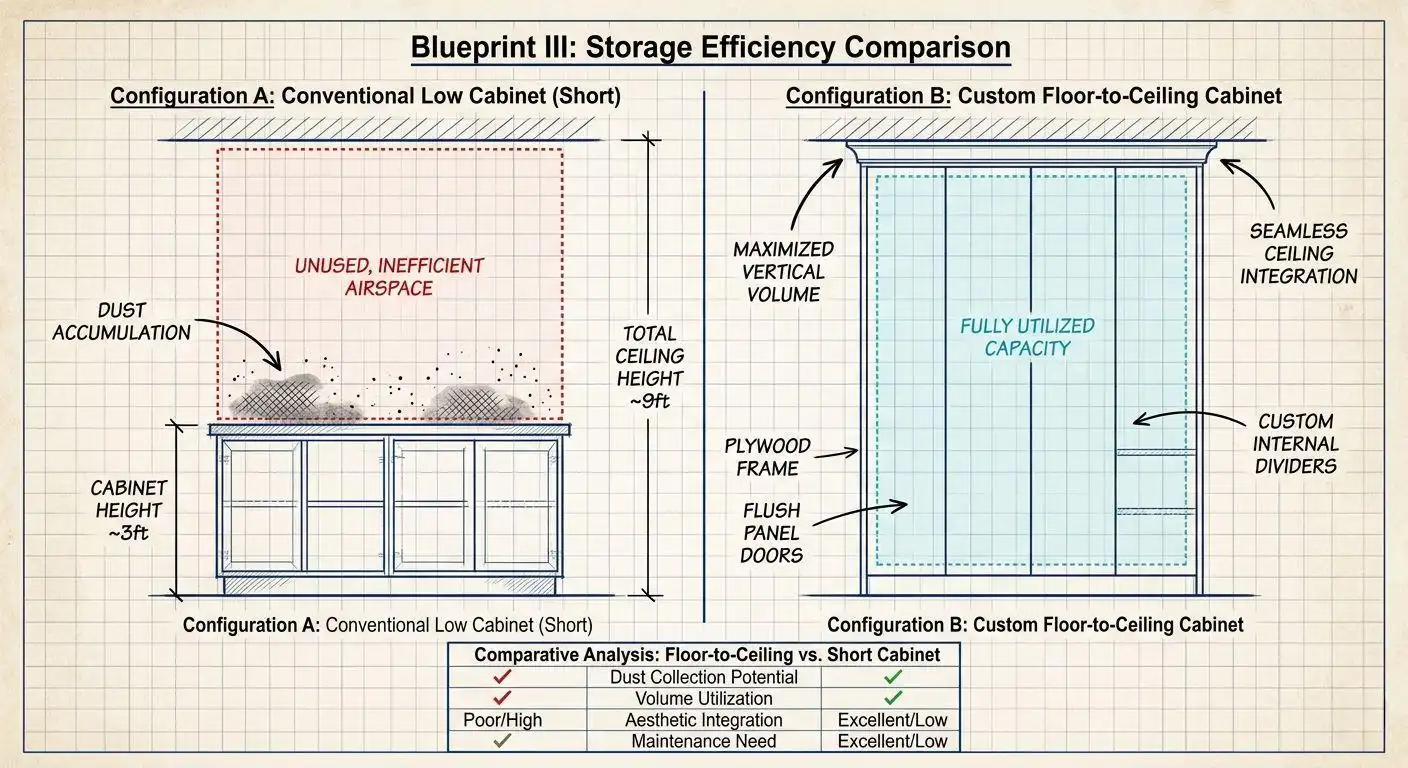
Custom cabinetry allows you to “capture” square footage that stock cabinets leave behind. In urban markets where every square inch is worth thousands of dollars, this is a direct financial gain.
The “To-The-Ceiling” Strategy
-
The Blueprint: Manufacture wall cabinets that reach the ceiling with integrated crown molding.
-
The Math of Value: In a standard 9-foot ceiling kitchen, stock 30-inch cabinets leave 18 inches of wasted “dust space.” Custom 42-inch or 48-inch cabinets recover this volume. By adding an extra shelf of storage across the entire kitchen perimeter, you effectively increase the “Functional Storage Capacity” by 20% to 30%, a metric that real estate agents use to justify higher asking prices.
Blueprint IV: The “Silent Luxury” Kinetic Experience
The “Feel” of a kitchen is a powerful psychological driver. The resale value is often hidden in the sound—or lack thereof—of the hardware.
Industrial-Grade Kinetic Hardware
-
The Blueprint: Standardize on Soft-Close Under-mount Slides и Hydraulic Hinges with a minimum 100,000-cycle rating.
-
The Buyer Experience: When a prospective buyer opens a drawer and it glides with zero resistance and closes in total silence, it creates a “Subconscious Quality Bias.” They perceive the entire home as being built to a higher standard.
-
The ROI: This “perceived quality” allows sellers to hold firm on their asking price during negotiations, often preventing the “discounting” that happens when a home feels “flimsy.”
Blueprint V: Future-Proofing with Eco-Certified Health Standards
As we move toward 2027, “Healthy Homes” are becoming a premium asset class. Buyers are increasingly asking about VOCs (Volatile Organic Compounds) and formaldehyde.
The Non-Toxic Premium
-
The Blueprint: Использовать F4-Star or NAF (No Added Formaldehyde) certified boards.
-
Marketing the Health Asset: Including an “Eco-Certified” or “Healthy Air” certificate in the home’s disclosure pack creates a unique selling proposition (USP).
-
The ROI: In high-end suburban markets, “Healthy Kitchens” are selling 15% faster than standard kitchens. Speed of sale is a critical component of ROI for developers, as it reduces carrying costs and interest payments.
Comparative ROI Analysis: Stock vs. Custom
| Особенность | Stock Cabinetry | Custom Cabinetry (Factory Direct) | ROI Impact |
| Материал | Particle Board (MFC) | 18mm Plywood / PUR Edging | High (Longevity) |
| Высота | Fixed (Leaves gaps) | Ceiling Height (Full volume) | Medium (Storage) |
| Аппаратное обеспечение | Basic Side-mount | Synchronized Soft-close | Medium (Perception) |
| Finish | Standard PVC | UV-Lacquer / PET / Wood Veneer | High (Aesthetics) |
| Resale Delta | Base Market Value | +10% to +15% over market | Максимум |
FAQ: Maximizing Investment in Cabinetry
Q: Does a “trendy” color hurt resale value?
А: Generally, yes. For maximum ROI, we recommend “Neutral Luxury”—Sage Greens, Navy Blues, or Warm Oaks. These colors have broad appeal and don’t feel “dated” as quickly as high-contrast or bright neon trends.
Q: Is it better to spend more on the stone or the cabinets?
А: The cabinets are the foundation. A $10,000 marble slab on top of $2,000 shaky cabinets will eventually cause the stone to crack. Invest 60% of the budget in high-quality custom cabinetry carcasses and 40% on the stone for the best structural ROI.
Q: Can I get custom quality at a commercial price point?
А: Yes, by working Factory-Direct. By eliminating the middleman and showroom markups, developers can procure F4-Star plywood cabinetry at prices comparable to high-end stock units from big-box retailers.
Conclusion: The Blueprint for Profit
Custom cabinetry is the only interior element that combines structural engineering, furniture design, and real estate appreciation. By following these 5 blueprints—focusing on seamless aesthetics, plywood integrity, vertical volume, kinetic hardware, and health certifications—you are not just “spending” on a kitchen; you are “investing” in the property’s equity.
As a factory-direct partner, we specialize in providing developers with the technical edge needed to win in competitive real estate markets.