




In the high-stakes world of home renovation in 2026, the kitchen remains the most capital-intensive room. However, the market is currently flooded with products that utilize high-gloss finishes and trendy colors to mask significant engineering flaws. To the untrained eye, a display model may look pristine, but a technical analysis often reveals the hallmarks of low quality kitchen cabinets. Understanding how to dissect cabinet construction quality is not just an aesthetic preference; it is a necessity for protecting your home equity and ensuring operational safety.
As a specialist in custom cabinetry, I have seen countless homeowners forced into secondary renovations because their initial “budget-friendly” choice failed within three years. This guide is designed to provide you with the professional vocabulary and technical insight required to identify kitchen cabinet red flags during your first showroom visit. By analyzing the fundamental differences in cheap vs expensive cabinets, you can move beyond marketing rhetoric and make a decision based on mechanical reality.
1. The Carcass Engineering: Material Density and Substrates
The most significant indicator of low quality kitchen cabinets is the composition of the cabinet box, also known as the carcass. While the doors are what you see, the carcass is what carries the load of your stone countertops and heavy cookware.
The Vulnerability of Particle Board
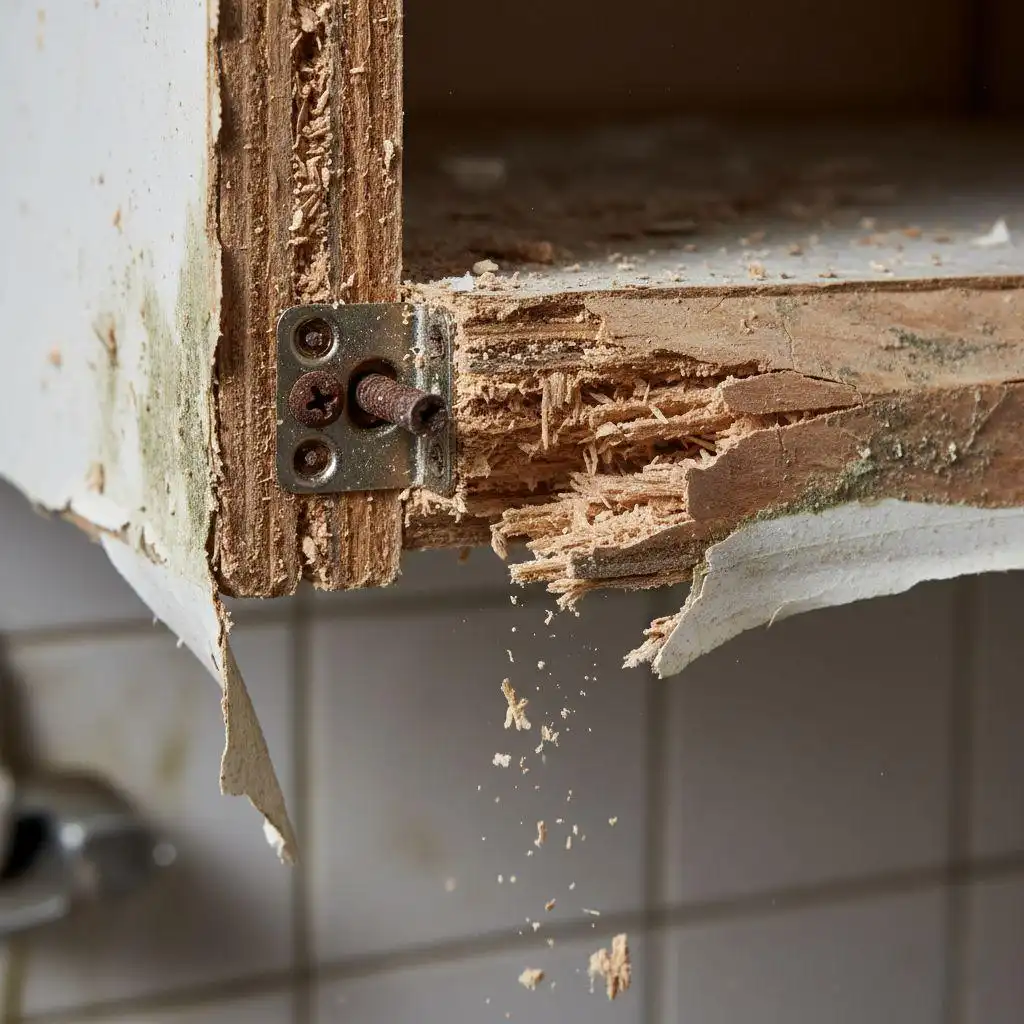
When debating particle board vs plywood cabinets, the technical failure of cheap options becomes clear. Many budget manufacturers use low-density particle board that relies on urea-formaldehyde adhesives. These low quality kitchen cabinets are highly susceptible to “hydro-expansion.” In a kitchen environment where steam and minor plumbing leaks are inevitable, particle board acts like a sponge, swelling and losing its structural screw-holding capacity.
The Plywood Standard for Quality
In contrast, high-performance cabinet construction quality dictates the use of 3/4-inch furniture-grade plywood. Plywood’s cross-laminated layers provide superior resistance to shear force and moisture. If you notice a manufacturer using 1/2-inch or thinner back panels, you are looking at one of the primary kitchen cabinet red flags. A thin back panel means the cabinet is likely to rack (tilt) under the weight of a quartz or sintered stone countertop.
2. Hardware Mechanics: The “Engine” of the Kitchen
If the carcass is the body, the hardware is the engine. One of the fastest ways to identify low quality kitchen cabinets is to examine the hinges and drawer slides. Cabinet hardware durability is non-negotiable in a room where doors are opened thousands of times per year.
Identifying Inferior Slides
Em cheap vs expensive cabinets, the difference in motion is palpable. Low quality kitchen cabinets often use side-mounted, epoxy-coated rollers or non-synchronized undermount slides. If you feel a “stutter” or hear a metallic grinding sound when opening a drawer, the hardware is already failing its ergonomic test.
The Hinge Integrity Test
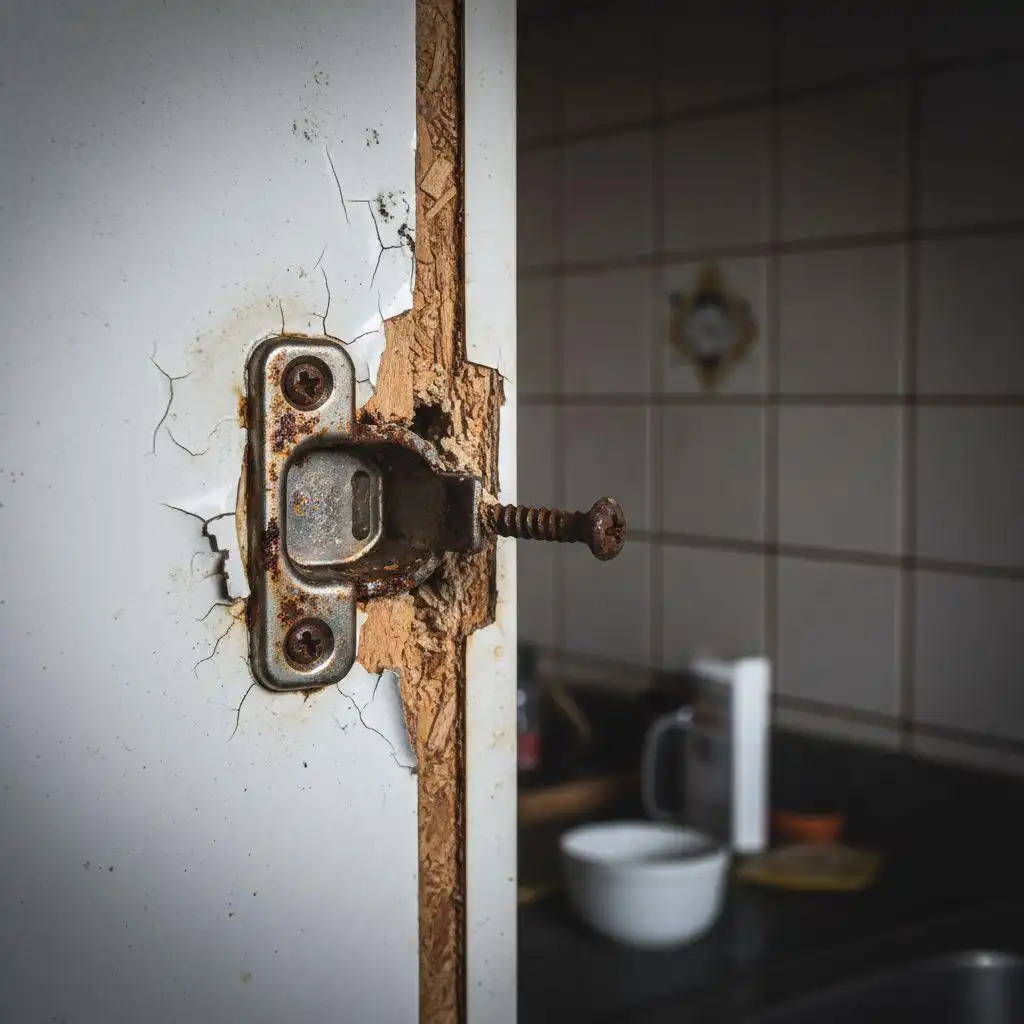
Luxury cabinetry in 2026 utilizes six-way adjustable, all-metal soft-close hinges with integrated deactivation switches. Kitchen cabinet red flags include hinges with plastic components or those that are only “clip-on” without a solid screw-to-frame connection. Without high-tier durabilidade do hardware do gabinete, your doors will begin to sag and misalign within months of installation, creating a “dilapidated” look even in a brand-new kitchen.
3. Joinery and Assembly: Beyond Staples and Glue
The method by which the cabinet components are joined is a definitive marker of cabinet construction quality.
The Failure of Staples and Plastic Brackets
If you peek inside a cabinet and see plastic corner brackets (gussets) or visible staples, you are dealing with low quality kitchen cabinets. Staples provide zero long-term tension resistance. In high-traffic zones, these joints will eventually separate due to the constant vibration of drawers closing and appliances running.
The Superiority of Mechanical Joinery
Professionally engineered cabinet construction quality utilizes doweled-and-glued joints or classic dovetail construction for drawer boxes. In the cheap vs expensive cabinets comparison, a dovetail joint—where the wood pieces interlock like fingers—is the absolute gold standard for tensile strength. If a manufacturer tries to sell you a “stapled drawer box” with a fancy wood front, they are selling you a visual illusion, not a durable product.
4. Surface Finishing: The Chemical Barrier
The finish on your cabinetry is its first line of defense against grease, humidity, and UV light. Low quality kitchen cabinets often skip the critical curing stages required for a long-lasting barrier.
The Problem with On-Site Painting
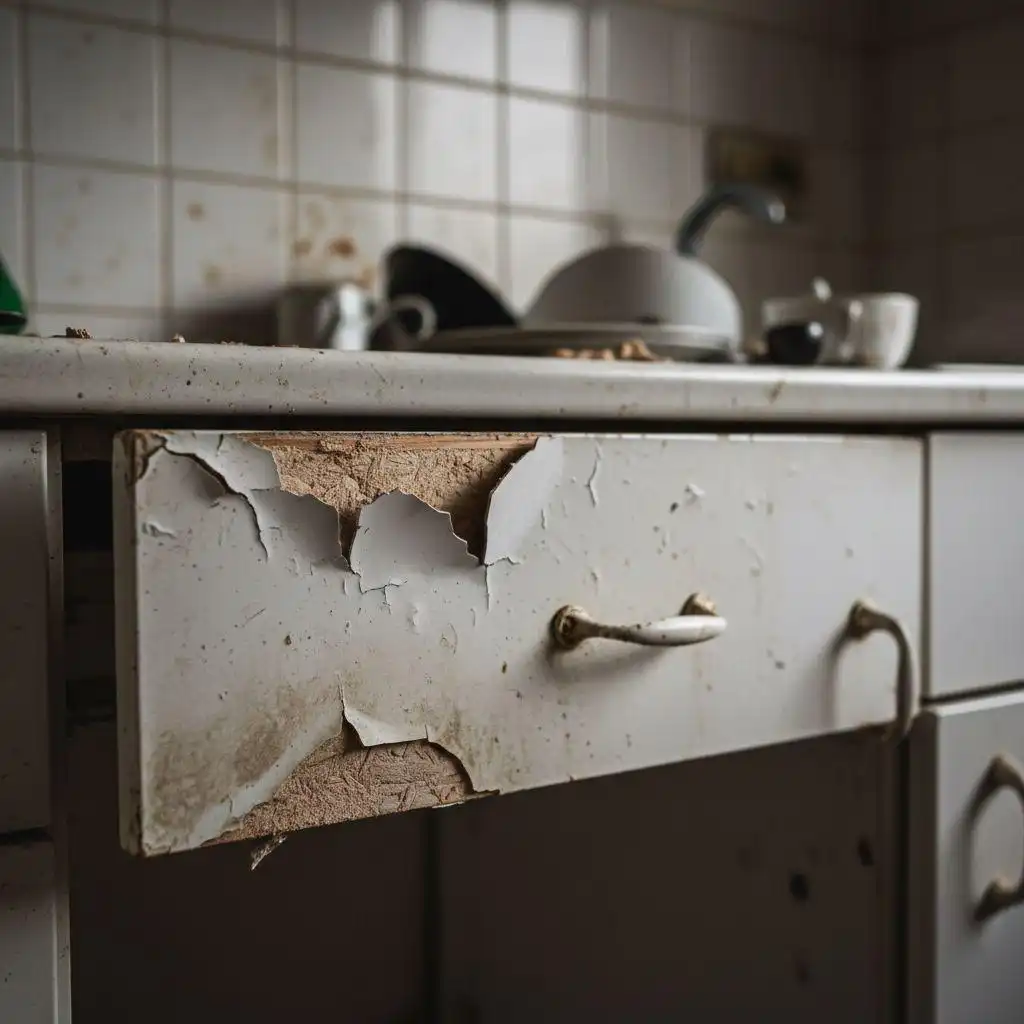
One of the major kitchen cabinet red flags is a finish that was applied on-site or a “thin-film” lacquer that lacks a catalyst. These finishes are prone to “ambering” (yellowing) and “delamination” (peeling) near heat sources like ovens or dishwashers.
Industrial-Grade Conversion Varnish
To achieve the highest cabinet construction quality, look for “Post-Catalyzed Conversion Varnish.” This is a chemical-cure finish that creates a molecular bond, making the surface virtually impenetrable to household chemicals. When comparing cheap vs expensive cabinets, ask for the “ASTM D3359” cross-cut tape test results—a professional-grade finish should not flake or peel when subjected to mechanical stress.
5. FAQ: Navigating the Quality Gap
How can I spot low quality kitchen cabinets in 60 seconds?
Open the largest drawer. If the back panel of the cabinet is less than 1/2-inch thick, or if the drawer box is held together by staples rather than interlocking joints, you have found low quality kitchen cabinets.
Is plywood always better than particle board?
For the carcass, yes. However, for door panels, high-density fiberboard (HDF) is often used in expensive cabinets because it provides a more stable surface for paint. The cabinet construction quality depends on where each material is applied.
Why does cabinet hardware durability matter so much?
Hardware carries the dynamic load. If a hinge fails, the door falls. If a slide fails, the drawer becomes a safety hazard. In low quality kitchen cabinets, hardware is the first thing to be sacrificed to lower the price point.
What are the most common kitchen cabinet red flags in a showroom?
Look for “orange peel” texture in the paint, uneven gaps between doors (reveals), and plastic shelf pins. These details indicate a lack of precision in the manufacturing process.
Conclusion: The Absolute Authority on Your Investment
Distinguishing between cheap vs expensive cabinets requires a shift in perspective. Instead of looking at the color, look at the connections. Instead of admiring the style, analyze the substrates. Low quality kitchen cabinets are designed to sell on the showroom floor; high-quality cabinets are engineered to perform in your home for decades.
If you are ready to move beyond the superficial and invest in cabinet construction quality that stands the test of time, our technical team is prepared to guide you through the structural specifications of your next project.
[Request a Technical Specification Audit – Ensure Your Quality Standards]