
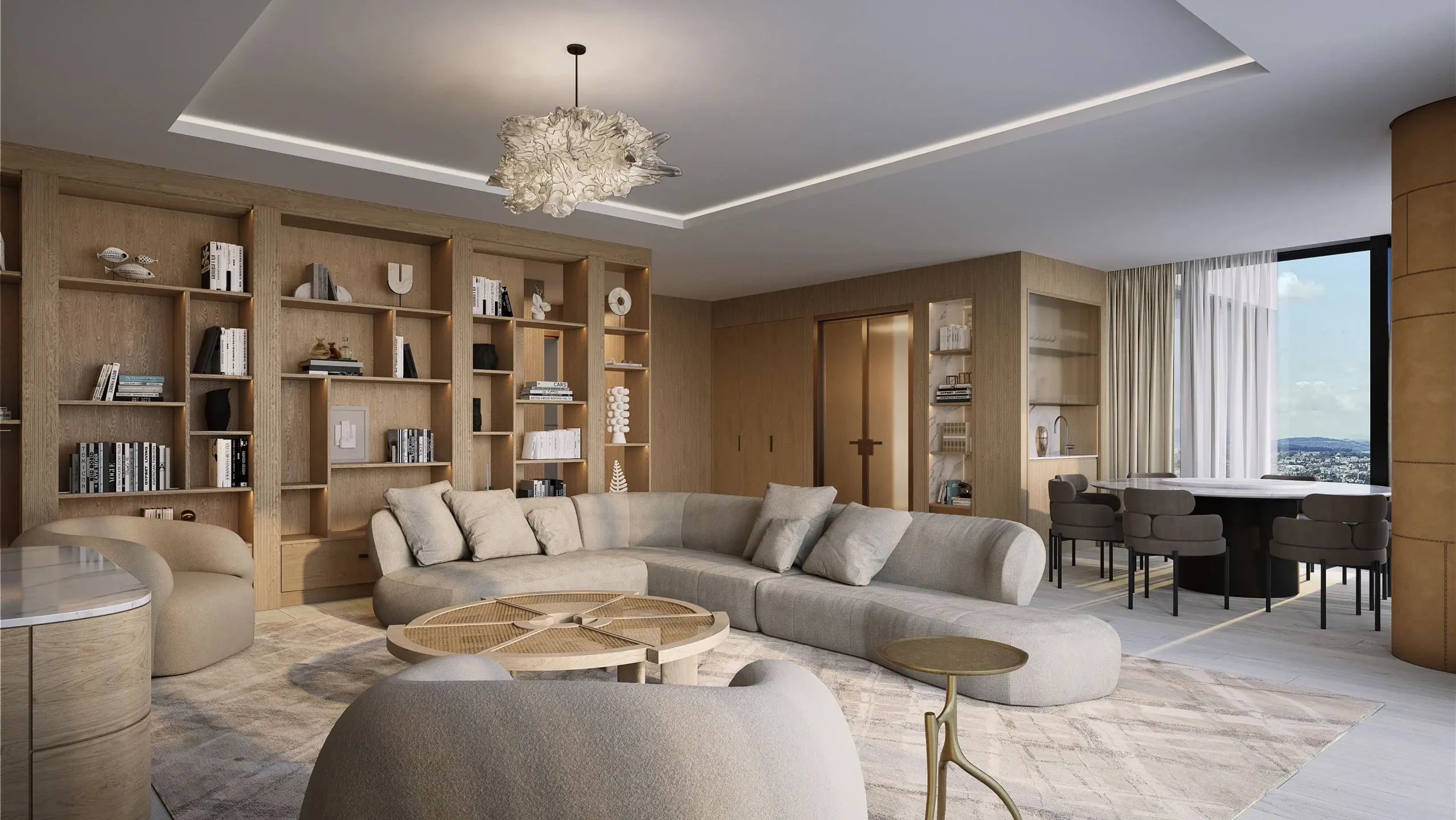
In the architectural landscape of 2026, the living room has transitioned into a high-density technological node. However, the aesthetic integrity of this primary social space is frequently compromised by the “technological debris” of power cords, fiber optic interconnects, and bulky hardware. The challenge of modern TV cabinet design is no longer merely about providing a horizontal surface for a screen; it is about the sophisticated, invisible engineering of concealment. Homeowners now demand minimalist media consoles that offer a gallery-like profile while housing complex, high-heat home theater systems. Achieving this without creating a “bulky” or intrusive footprint requires a mastery of internal routing, structural geometry, and material science.
As a specialist in custom interior architecture and cabinetry, I advocate for a “Built-in Philosophy.” This guide serves as the absolute authority on TV cabinet design, focusing on how to eliminate visual bulk, manage extreme thermal loads, and achieve the elusive “floating” aesthetic that defines contemporary luxury.
1. Structural Geometry: The Engineering of Floating Systems
The primary reason many media units appear “bulky” is an inefficient use of depth and a lack of integration with the room’s vertical planes. To achieve a streamlined TV cabinet design, we must manipulate the relationship between the cabinetry and the wall’s structural studs.
Cantilevered Load Management and Creep Prevention
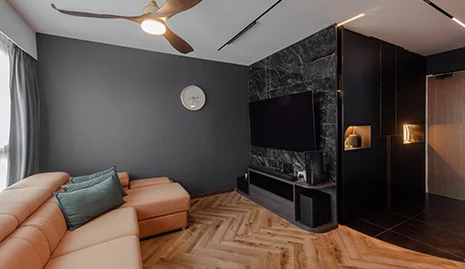
In 2026, the gold standard for a lightweight, modern aesthetic is floating television cabinetry. By wall-mounting the unit, we create an unbroken plane of flooring, which psychologically expands the room’s perceived square footage.
-
技術基準: A high-performance floating TV cabinet design utilizes a specialized steel-reinforced “French Cleat” system. Unlike standard mounting, this distributes the cantilevered weight across multiple studs. For a unit housing heavy AV receivers or UPS power backups, the internal substrate must be a 19mm high-density core to prevent “long-term creep”—the subtle sagging that occurs over years. By engineering the unit to support 300% of its intended load, we ensure the TV cabinet design remains perfectly level for the life of the home.
Shallow Profile Engineering and Recessed Chassis
To prevent the cabinet from encroaching on traffic flow, advanced TV cabinet design now employs “semi-recessed” architecture. By utilizing the 3.5-inch void within a standard partition wall, we can sink the rear of the cabinet into the wall itself. This allows a 15-inch deep unit to only protrude 11.5 inches into the room, providing ample integrated home theater storage while maintaining a sleek, non-bulky silhouette. This is the cornerstone of living room spatial optimization。
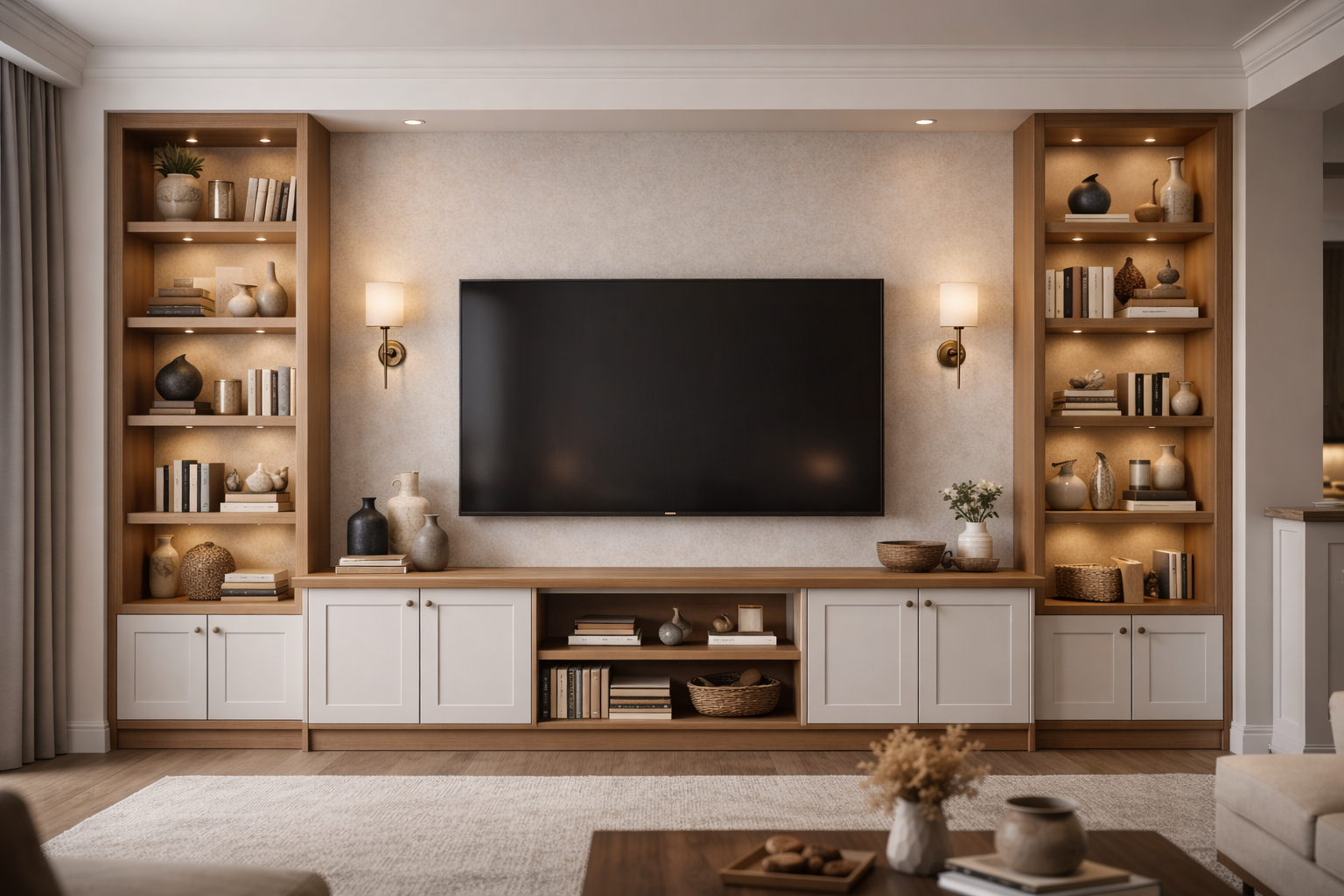
2. Advanced Hidden Cable Infrastructure: The False-Back Doctrine
The “internal soul” of a high-functioning TV cabinet design is its hidden network of arterial pathways. A disorganized tangle of wires is more than a visual failure; it creates electromagnetic interference (EMI) and acts as a dust trap that leads to hardware overheating.
The Double-Chassis Routing Strategy
洗練された TV cabinet design utilizes a “Double-Back” or “Double-Chassis” construction. We engineer a 2.5-inch internal void between the storage compartments and the rear panel. This serves as a dedicated horizontal and vertical chase for all hidden cable infrastructure。
-
EMI Separation: プロフェッショナルでは minimalist media consoles, we separate high-voltage power lines from low-voltage data cables (HDMI 2.1, Fiber Optic) within this void. This prevention of “cross-talk” is essential for maintaining the signal integrity of 8K video streams—a detail often missed in non-professional TV cabinet design。
Precision Access and Brush Strips
We have replaced the dated “round plastic grommet” with integrated linear brush strips that run the entire length of the TV cabinet design. These allow for the “fluid entry” of cables at any point along the console while preventing dust from entering the equipment bays. This level of detail is what separates a generic piece of furniture from a bespoke engineering solution.
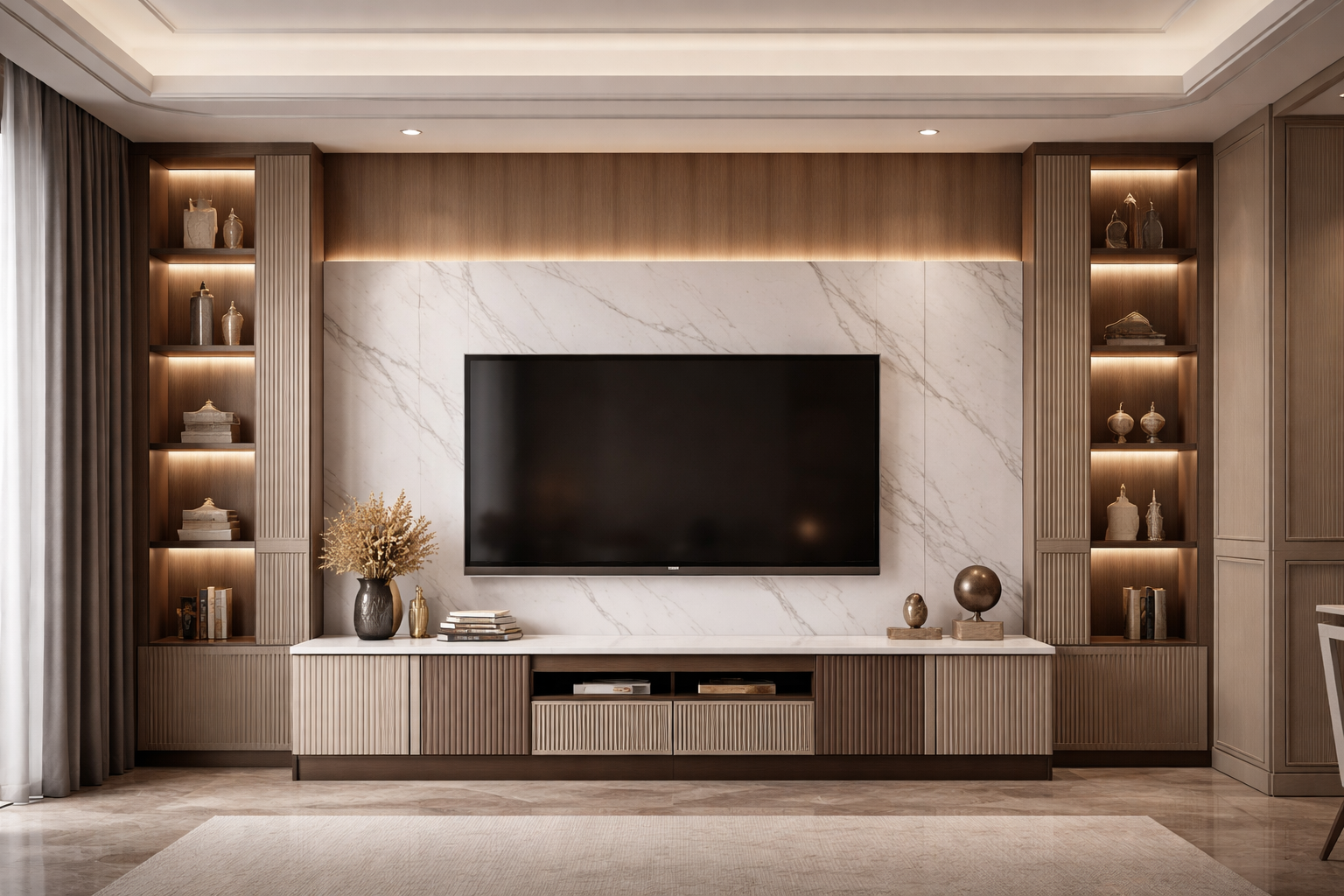
3. Thermal Fluid Dynamics: Protecting the Investment
Enclosing high-performance gaming consoles, such as a PS5 Pro or a 2026-gen GPU, without a calculated airflow plan is a recipe for catastrophic hardware failure. A closed TV cabinet design can quickly become a “heat trap.”
Passive Chimney Ventilation and Active Cooling
プロフェッショナルでは TV cabinet design, we utilize the “Chimney Effect.” By integrating a 10mm “shadow gap” at the bottom toe-kick and a corresponding vent at the top rear, we create a natural pressure differential. Cool air is drawn in from the floor, passes over the heat-generating components, and is exhausted through the top. For ultra-high-end integrated home theater storage, we integrate whisper-quiet (under 18dB) USB-powered fans that activate only when a thermal sensor reaches 85°F.
Acoustic and Infrared (IR) Transparency
To preserve the minimalist integrity of the TV cabinet design, all peripheral devices should remain invisible. We utilize “Signal-Transparent” materials for door fronts, such as CNC-perforated aluminum or high-density acoustic fabrics. These allow for both the passage of IR remote signals and the unobstructed projection of sound from center-channel speakers hidden within the minimalist media consoles。
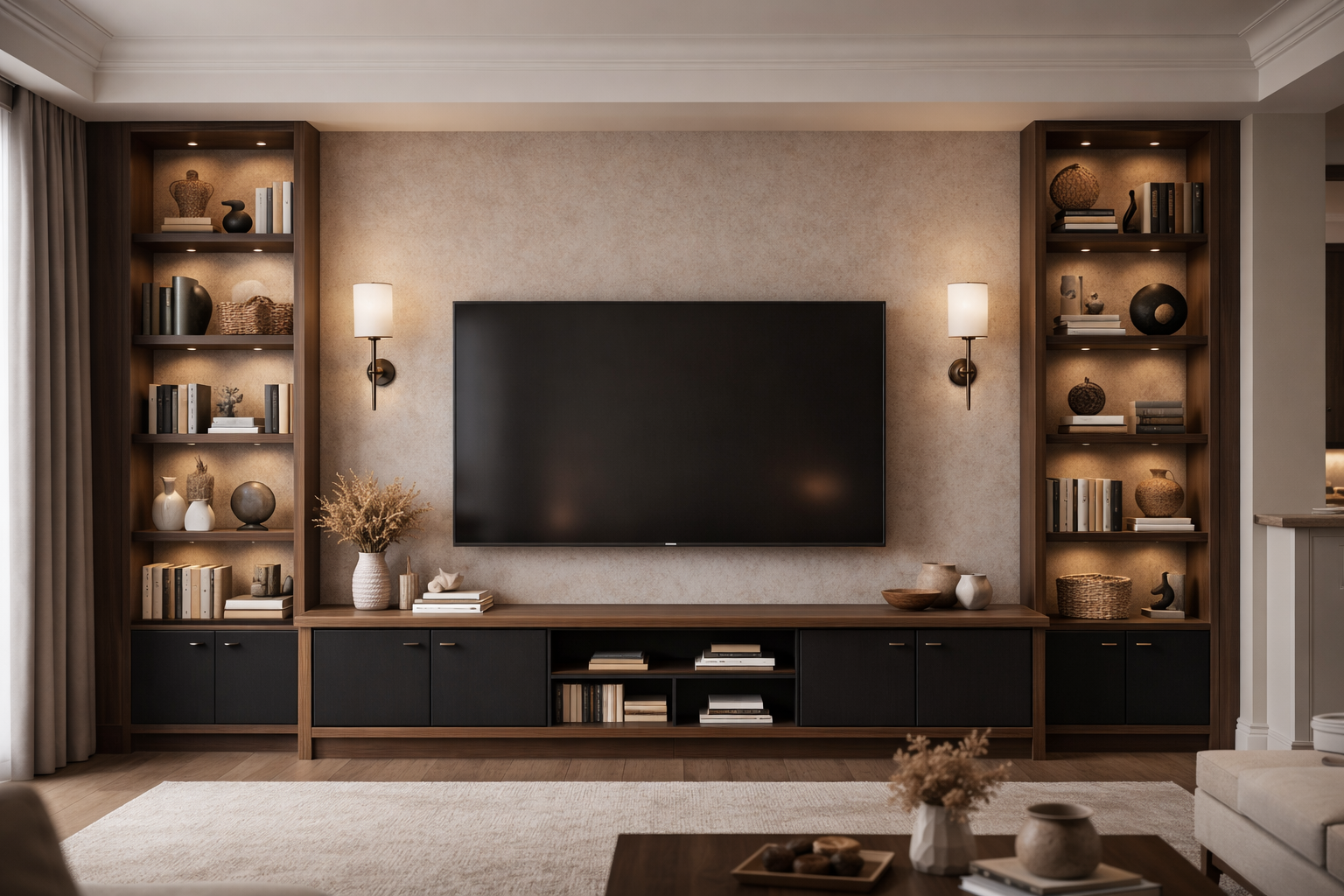
4. Material Science and Visual Recession
The choice of materials directly impacts the “Visual Weight” and the lifespan of the TV cabinet design。
-
Anti-Reflective Nanotechnology: We specify ultra-matte finishes that absorb 98% of light. This prevents the cabinet from reflecting the TV screen’s glow, ensuring that the TV cabinet design recedes into the background during cinematic viewing, enhancing the immersive experience.
-
Carbon-Fiber Substrates: To achieve the ultra-thin, 8-foot horizontal spans seen in high-end floating television cabinetry, we utilize carbon-fiber reinforced plywood. This allows for a shelf thickness of only 12mm while supporting a distributed load of over 200 lbs, eliminating the need for bulky center supports.
FAQ: Professional Engineering Insights
What is the ideal mounting height for a floating TV cabinet design?
The absolute standard is to have the top surface sit between 18 and 22 inches from the floor. This ensures that a 75-inch or larger screen is positioned at eye level when seated, preventing neck strain and maximizing living room spatial optimization。
How do I manage 8K HDMI cables in a shallow TV cabinet design?
8K cables have a limited bend radius. A professional TV cabinet design must include “Radius Corners” within the internal cable chases to prevent signal degradation caused by tight wire crimping.
Can floating television cabinetry support stone tops?
Yes, but it requires a “Steel Skeleton” inside the cabinetry. If you plan to use 20mm Quartz or Sintered Stone, the TV cabinet design must be engineered with internal vertical steel supports that transfer the weight back to the wall studs.
Why is integrated home theater storage better than open shelving?
Open shelving is a magnet for dust and visual chaos. A closed, architecturally-integrated TV cabinet design protects your investment and maintains the “Minimalist” aesthetic required for a modern luxury home.
Conclusion: The Mastery of Invisible Engineering
成功した TV cabinet design is a triumph of invisible engineering. It provides a high-performance foundation for your technology while ensuring that the visual landscape of your home remains serene and weightless. By prioritizing structural physics, thermal fluid dynamics, and advanced hidden cable infrastructure, you transform a piece of furniture into a vital component of your home’s architectural soul.
If you are ready to eliminate the bulk and move toward a more integrated vision of TV cabinet design, our architectural team is prepared to conduct a comprehensive structural audit of your living space.
[Request a Structural Layout Analysis – Optimize Your Media Hub Today]