


Quelle est la profondeur standard des armoires de cuisine ?
Comprendre la profondeur des armoires dans la conception de cuisine
La profondeur standard des armoires de cuisine est un aspect fondamental de la conception d’une cuisine qui influence à la fois la fonctionnalité et l’esthétique. Il s'agit de la distance entre le bord avant de l'armoire et le panneau arrière, qui est monté contre le mur. Cette mesure affecte directement l’espace de stockage dont vous disposez, la largeur de vos comptoirs et la facilité avec laquelle vous pouvez accéder aux articles. Par exemple, une armoire avec une profondeur standard d'armoires de cuisine (24 pouces) s'étend à deux pieds du mur, offrant suffisamment d'espace pour les ustensiles de cuisine, la vaisselle et les articles de base du garde-manger.
Lorsqu'elles sont correctement conçues, la profondeur standard des armoires de cuisine assure un équilibre harmonieux entre le surplomb du comptoir, l'emplacement des appareils électroménagers et la circulation dans la cuisine. Connaître la profondeur standard des armoires de cuisine est essentiel pour créer un espace à la fois pratique et visuellement attrayant.
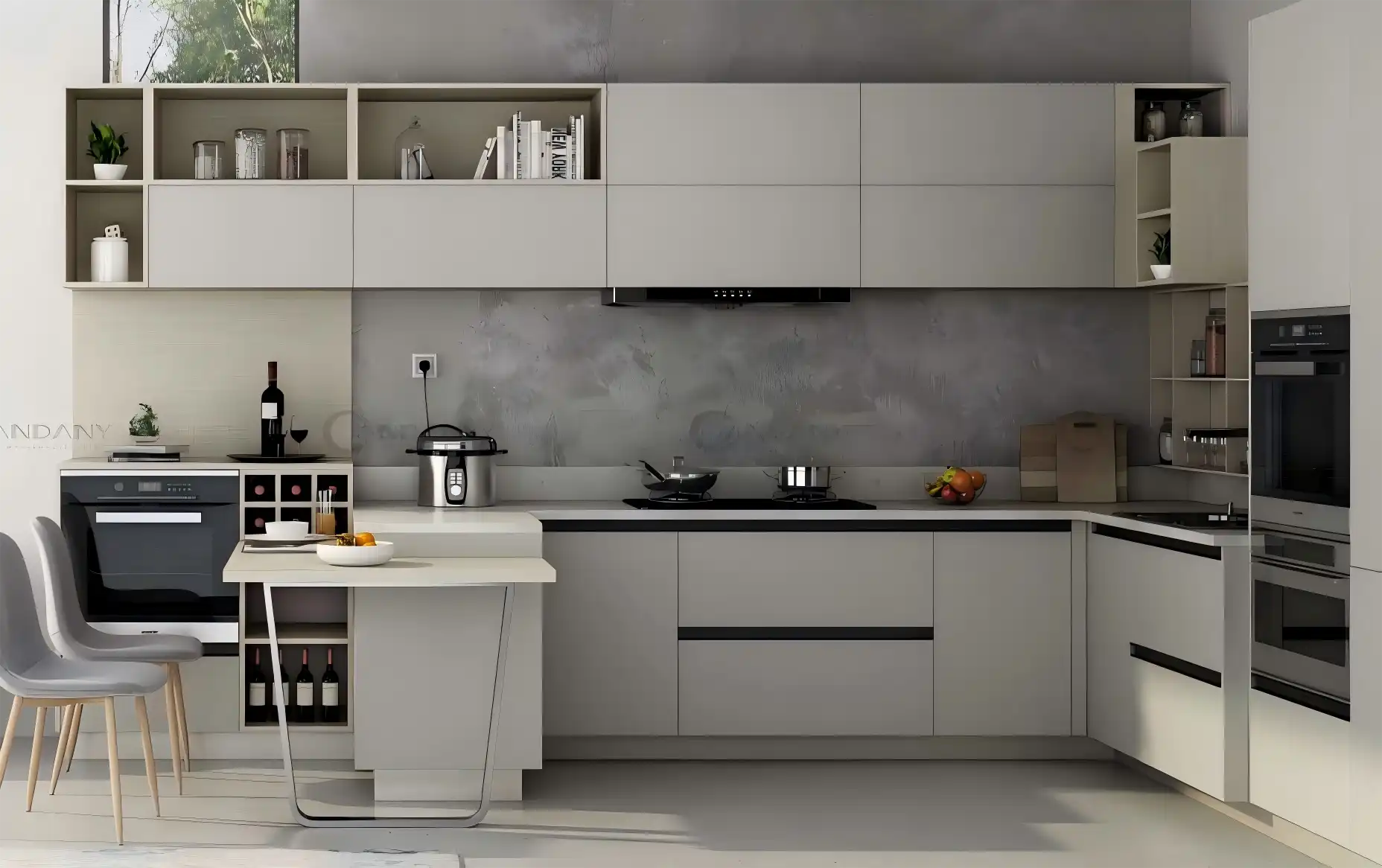
Armoires de base : la base du rangement dans la cuisine
Les armoires inférieures sont les bêtes de somme de la cuisine, posées sur le sol et soutenant les comptoirs, les éviers et les appareils de cuisson. Leurs dimensions sont cruciales pour une préparation confortable des aliments et un stockage efficace.
Hauteur
La hauteur standard des armoires inférieures sans comptoir est de 34,5 pouces (88 cm). Une fois le comptoir installé, la hauteur totale atteint généralement 36 pouces (91 cm), ce qui est considéré comme confortable pour la plupart des gens.
Largeur
Les armoires inférieures sont disponibles dans une gamme de largeurs pour s'adapter à différents aménagements de cuisine. Les largeurs courantes incluent 9, 12, 15, 18, 24, 30, 33, 36 et 42 pouces, augmentant par incréments de 3 pouces. Cette variété permet une flexibilité dans la conception de l’aménagement de votre cuisine.
Profondeur
La profondeur standard des armoires inférieures est de 24 pouces (61 cm), ce qui est la profondeur standard la plus courante pour les armoires de cuisine, à l'exclusion du comptoir. Lorsque le comptoir est ajouté, la profondeur totale augmente jusqu'à environ 25 à 26 pouces, selon le matériau. La plupart des comptoirs ont une épaisseur de 1 à 1,5 pouces (2,5 à 4 cm), bien que les matériaux de luxe comme le quartz ou le marbre puissent atteindre 2 pouces (5 cm) d'épaisseur. Cette profondeur standard d’armoires de cuisine convient à la plupart des cuisines, offrant un équilibre entre rangement et espace de travail.
Il existe cependant des variations par rapport à cette profondeur standard des armoires de cuisine. Les armoires inférieures peu profondes, allant de 18 à 21 pouces de profondeur, sont idéales pour les petites cuisines, les couloirs ou les appartements où l'espace est limité. D’un autre côté, les armoires inférieures profondes (27 à 30 pouces) sont couramment utilisées dans les îlots de cuisine ou dans les cuisines de luxe plus grandes qui nécessitent un espace de comptoir supplémentaire. Lors du choix de la profondeur des armoires inférieures, il est important de prendre en compte non seulement l’espace disponible, mais également son rapport avec la profondeur standard des armoires de cuisine, le confort, la sécurité et le flux global de la conception de votre cuisine.
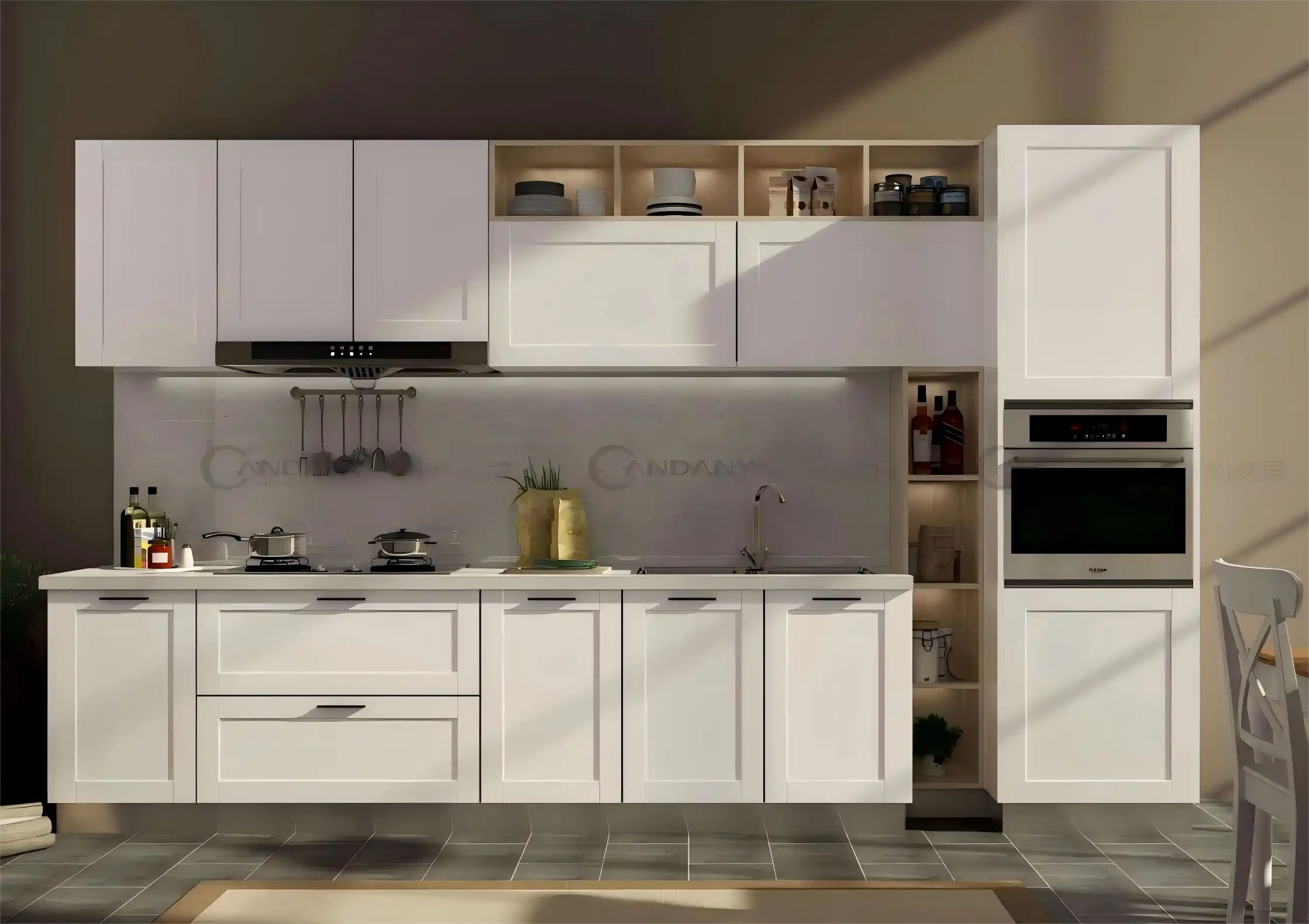
Armoires murales : maximiser le stockage vertical
Les armoires murales, également appelées armoires supérieures, sont montées au-dessus des comptoirs ou des appareils électroménagers et sont principalement utilisées pour ranger la vaisselle, les verres et les aliments. Leurs dimensions sont conçues pour offrir un accès pratique sans interférer avec les activités sur le comptoir.
Hauteur
La hauteur des armoires murales varie généralement de 30, 36 à 42 pouces, selon la hauteur du plafond et l'espace disponible au-dessus du dosseret. Pour un plafond de 8 pieds, des armoires de 30 pouces suffisent généralement. Si vous avez un plafond de 8 à 9 pieds, les armoires de 36 pouces fonctionnent bien. Pour les plafonds plus hauts ou les installations pleine hauteur, les armoires de 42 pouces sont idéales.
Largeur
Semblables aux armoires inférieures, les largeurs des armoires murales varient de 9 à 48 pouces, également par incréments de 3 pouces. Cela permet une flexibilité dans la création d’un look cohérent avec vos armoires inférieures.
Profondeur
La profondeur standard des armoires murales est de 12 pouces (30 cm), ce qui constitue un élément clé de la profondeur standard des armoires de cuisine, permettant un accès facile aux articles sans avoir à vous pencher au-dessus du comptoir. Cette profondeur standard des armoires de cuisine pour unités murales est moins profonde que celle des armoires inférieures pour éviter toute interférence avec les activités du comptoir. Il existe cependant des variations par rapport à cette profondeur standard des armoires de cuisine.
Les armoires murales de 15 pouces de profondeur offrent un espace de rangement supplémentaire au-dessus des appareils électroménagers ou dans le cadre d'un grand dosseret mural. Pour un aspect encastré et affleurant, en particulier au-dessus des réfrigérateurs, des armoires de 18 à 24 pouces de profondeur peuvent être utilisées. La plupart des concepteurs recommandent de garder les armoires murales suffisamment peu profondes pour éviter de bloquer la lumière ou de donner l'impression que la cuisine est à l'étroit, tout en s'alignant sur le concept global de profondeur standard des armoires de cuisine.
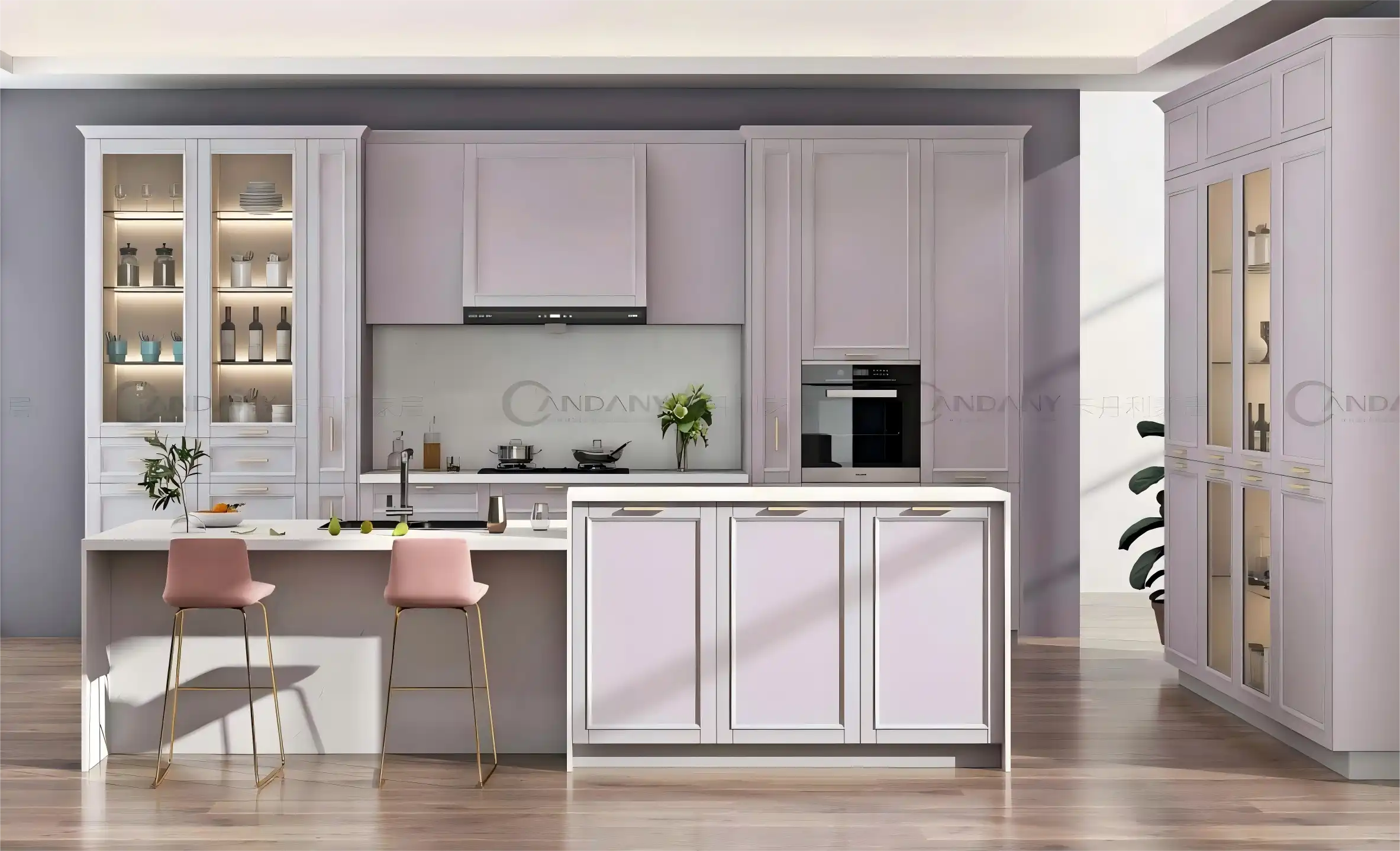
Armoires hautes : utiliser efficacement l'espace vertical
Les armoires hautes, également appelées garde-manger ou armoires utilitaires, s'étendent du sol au plafond et sont parfaites pour ranger des objets volumineux ou encombrants. Ils font un excellent usage de l’espace vertical et peuvent être personnalisés pour répondre à divers besoins de stockage.
Hauteur
Les hauteurs standard des armoires hautes sont de 84, 90 ou 96 pouces, selon la hauteur de votre plafond. Chaque option offre un équilibre différent entre capacité de stockage et proportion visuelle dans la pièce.
Largeur
Les largeurs typiques des armoires hautes vont de 18 à 36 pouces, offrant suffisamment d'espace pour ranger divers articles.
Profondeur
La profondeur standard des armoires hautes se situe généralement entre 12 et 24 pouces (30 à 61 cm), ce qui correspond à la profondeur standard du spectre des armoires de cuisine, en fonction de leur utilisation prévue. Une profondeur de 12 pouces est idéale pour stocker des conserves, des plateaux et des articles plus petits, tandis qu'une profondeur de 24 pouces (correspondant à la profondeur standard des armoires de cuisine pour les unités de base) offre un stockage complet pour les appareils électroménagers, les balais et les fournitures en vrac. Certaines conceptions combinent des sections peu profondes et profondes dans une armoire haute, créant ainsi une solution de rangement hautement fonctionnelle qui fonctionne dans la profondeur standard des armoires de cuisine, avec des étagères profondes pour les objets plus grands et des étagères peu profondes pour une organisation facile.
Un résumé des dimensions standard des armoires
| Type d'armoire | Profondeur standard | Hauteur standard | Largeur standard | Variations/Remarques courantes |
| Armoire de base | 24 po (61 cm) | 34,5 po (88 cm) sans comptoir 36 po (91 cm) avec comptoir |
9 à 42 pouces (par incréments de 3 pouces) | Peu profond 18 à 21 pouces pour les petites cuisines ; plus profond de 27 à 30 po pour les îlots de cuisine |
| Armoire murale (supérieure) | 12 po (30 cm) | 30, 36 ou 42 po (en fonction de la hauteur du plafond) | 9 à 48 pouces (par incréments de 3 pouces) | 15 à 24 po de profondeur au-dessus du réfrigérateur ou du micro-ondes |
| Armoire haute (garde-manger) | 12 ou 24 po (30 à 61 cm) | 84, 90 ou 96 po (selon le plafond) | 18 à 36 pouces | Combinez des sections peu profondes et profondes pour des options de stockage flexibles |
Comment choisir la bonne profondeur d'armoire pour votre cuisine
La sélection de la profondeur d'armoire appropriée implique un examen attentif de votre espace de cuisine, de vos besoins de rangement et de vos préférences personnelles, tout en gardant à l'esprit la profondeur standard des armoires de cuisine. Voici quelques facteurs clés à garder à l’esprit :
Mesurez soigneusement
Avant de prendre une décision, mesurez avec précision l’espace de votre cuisine pour déterminer la profondeur standard des armoires de cuisine. Cela inclut l’épaisseur des murs, le dégagement de l’appareil et le surplomb du comptoir. Ces mesures garantiront que vos armoires s'ajustent correctement et fonctionnent comme prévu, que vous choisissiez la profondeur standard des armoires de cuisine ou une variante.
Considérez l’aménagement de votre cuisine
La disposition de votre cuisine joue un rôle important dans la détermination de la profondeur des armoires par rapport à la profondeur standard des armoires de cuisine. Dans les cuisines étroites, les armoires peu profondes (18 à 21 pouces) peuvent améliorer la circulation et donner l’impression que l’espace est plus ouvert par rapport à la profondeur standard des armoires de cuisine. Dans les cuisines plus grandes, les armoires plus profondes (24 à 30 pouces) offrent une capacité de stockage accrue et peuvent donner une impression d’équilibre visuel tout en restant en rapport avec la profondeur standard des armoires de cuisine.
Pensez aux besoins de stockage
Évaluez vos besoins de rangement par rapport à la profondeur standard des armoires de cuisine. Si vous avez de gros ustensiles de cuisine ou de petits appareils électroménagers qui doivent être rangés, des armoires plus profondes (27 à 30 pouces) au-delà de la profondeur standard des armoires de cuisine seraient idéales. Si vous avez besoin de moins de rangement, des armoires peu profondes (18 à 21 pouces) peuvent aider à maintenir une sensation ouverte et spacieuse dans votre cuisine tout en offrant une fonctionnalité par rapport à la profondeur standard des armoires de cuisine.
Planifiez votre confort
Bien que les armoires inférieures standard de 24 pouces (la profondeur standard des armoires de cuisine) conviennent bien à la plupart des gens, pensez à votre confort personnel. Les personnes de grande taille ou celles ayant des besoins d'accessibilité spécifiques peuvent préférer des armoires plus profondes ou moins profondes que la profondeur standard des armoires de cuisine pour garantir un accès facile aux articles.
Aligner avec les appareils électroménagers
Pour un look homogène et intégré, adaptez la profondeur de vos armoires à vos appareils électroménagers, idéalement en utilisant la profondeur standard des armoires de cuisine comme référence. Ceci est particulièrement important si vous avez des appareils encastrés ou ceux qui ont une profondeur de 24 pouces (correspondant à la profondeur standard des armoires de cuisine). La coordination de ces dimensions crée une apparence cohérente dans votre cuisine tout en travaillant avec la profondeur standard des armoires de cuisine.
Équilibrer l’esthétique et la fonction
Efforcez-vous de trouver un équilibre entre l’attrait visuel et la fonctionnalité lorsque vous prenez en compte la profondeur standard des armoires de cuisine. Associer des armoires supérieures peu profondes à des armoires inférieures plus profondes (la profondeur standard des armoires de cuisine) peut créer une sensation équilibrée et ouverte. Si vous avez besoin de plus de rangement, des armoires supérieures plus profondes peuvent vous le fournir, mais veillez à conserver une apparence proportionnelle tout en respectant les directives de profondeur standard des armoires de cuisine.
Maximiser l'efficacité du stockage
Quelle que soit la profondeur des armoires que vous choisissez par rapport à la profondeur standard des armoires de cuisine, utilisez des outils d'organisation pour maximiser l'efficacité du stockage. Les tablettes coulissantes, les Lazy Susans et les tablettes réglables peuvent vous aider à tirer le meilleur parti des armoires plus profondes et garantir un accès facile à tous les articles, même ceux à l'arrière, que vous utilisiez la profondeur standard des armoires de cuisine ou une variante personnalisée.
En considérant attentivement ces facteurs, vous pourrez choisir des profondeurs d'armoires qui créeront une cuisine à la fois fonctionnelle et visuellement attrayante, adaptée à vos besoins spécifiques et à vos contraintes d'espace tout en respectant les principes de profondeur standard des armoires de cuisine.👉Contactez-nous!