
In the hierarchy of home renovation, custom kitchen cabinets represent the most significant capital allocation for the interior environment. In 2026, the market is saturated with various “custom” labels, many of which mask inferior engineering with high-end aesthetic finishes. For the discerning homeowner, the objective is to move beyond the surface-level visual appeal and understand the structural and material standards that define long-term durability. A failure to prioritize the technical specifications of your custom kitchen cabinets often results in mechanical failure and significant depreciation of home equity.
As a general contractor and cabinetry specialist, I have observed that most “regrets” in kitchen remodeling stem from a lack of understanding regarding material science and hardware engineering. This guide serves as the absolute authority on navigating the procurement process for custom kitchen cabinets, ensuring that your investment stands the test of time, moisture, and daily mechanical stress.
1. Material Density and Substrate Engineering
The “soul” of custom kitchen cabinets lies in the substrate. Many homeowners focus on the wood species of the doors while ignoring the composition of the cabinet boxes (the carcass).
The Plywood vs. Particle Board Debate
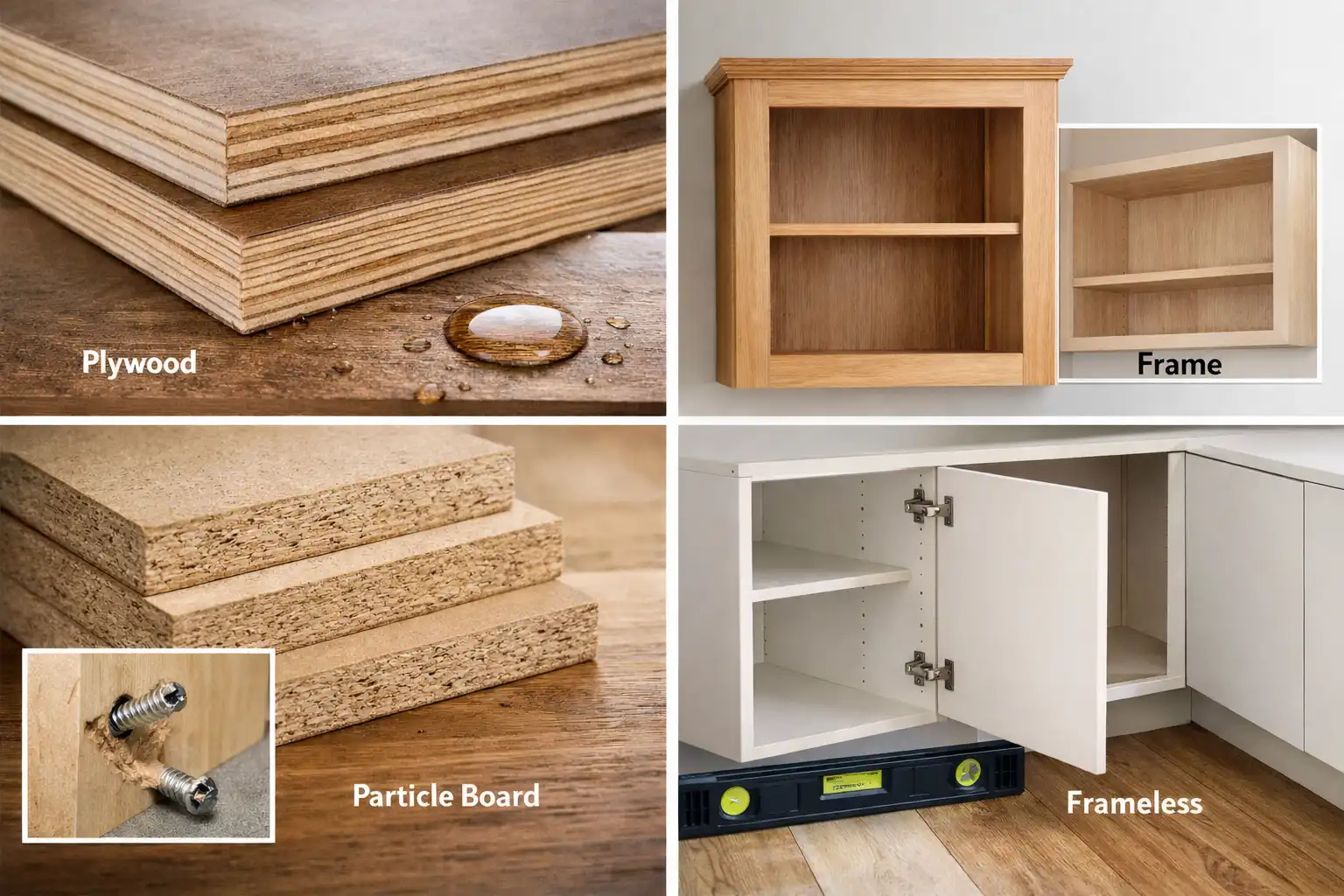
In the world of high-performance custom kitchen cabinets, we advocate for 3/4-inch furniture-grade plywood. Unlike standard particle board, plywood offers superior screw-holding capacity and resistance to moisture-induced swelling. For the ultimate standard, look for “Marine-Grade” or “NAF (No Added Formaldehyde)” certifications. If your custom kitchen cabinets are built with 1/2-inch materials, the structural integrity will eventually compromise under the weight of heavy stone countertops.
Frame vs. Frameless Construction
The architectural style of your custom kitchen cabinets—whether American Face-Frame or European Frameless (Full Access)—dictates both the storage volume and the installation complexity. Frameless custom kitchen cabinets provide roughly 10-15% more usable space but require a perfectly level subfloor and high-precision installation to prevent door misalignment over time.
2. Hardware Engineering: The Mechanical Integrity
The hardware is the “engine” of your custom kitchen cabinets. Every time a drawer is opened or a door is closed, the hardware is subjected to physical stress.
Dynamic Load-Bearing Capacity
When specifying custom kitchen cabinets, ensure your drawer slides are rated for a minimum of 100 lbs (45kg) dynamic load. For specialized pantry pull-outs or heavy pot drawers, we recommend 150 lbs rated slides. Utilizing inferior, non-synchronized slides will result in “drawer sag” and friction-related failure within five years of daily use.
The Standard of Soft-Close Synchronization
Luxury kitchen cabinets in 2026 utilize synchronized soft-close mechanisms that are integrated into the hinge and slide itself, not added as an afterthought. This ensures that the motion remains fluid even when the drawer is fully loaded with cast-iron cookware.
3. Surface Finish and Heat Management
The finish of your kitchen cabinets is its first line of defense against the hostile kitchen environment of steam, grease, and UV light.
Pre-Catalyzed vs. Post-Catalyzed Finishes
For painted or stained custom kitchen cabinets, the finishing process is critical. We specify “Post-Catalyzed Conversion Varnish.” This industrial-grade finish is chemically cured to create a barrier that is significantly more resistant to household chemicals and moisture than standard “off-the-shelf” paints.
Thermal Protection Zones
A technical requirement for kitchen cabinets located next to high-heat appliances (ovens and dishwashers) is the installation of heat shields. Without these deflectors, the constant cycle of heat and steam will eventually cause the finish to peel or the edge-banding to delaminate—a common point of failure in poorly engineered custom kitchen cabinets.
4. The Functional Geometry of Storage
True customization means engineering the cabinetry to fit the user’s specific biological and culinary needs.
-
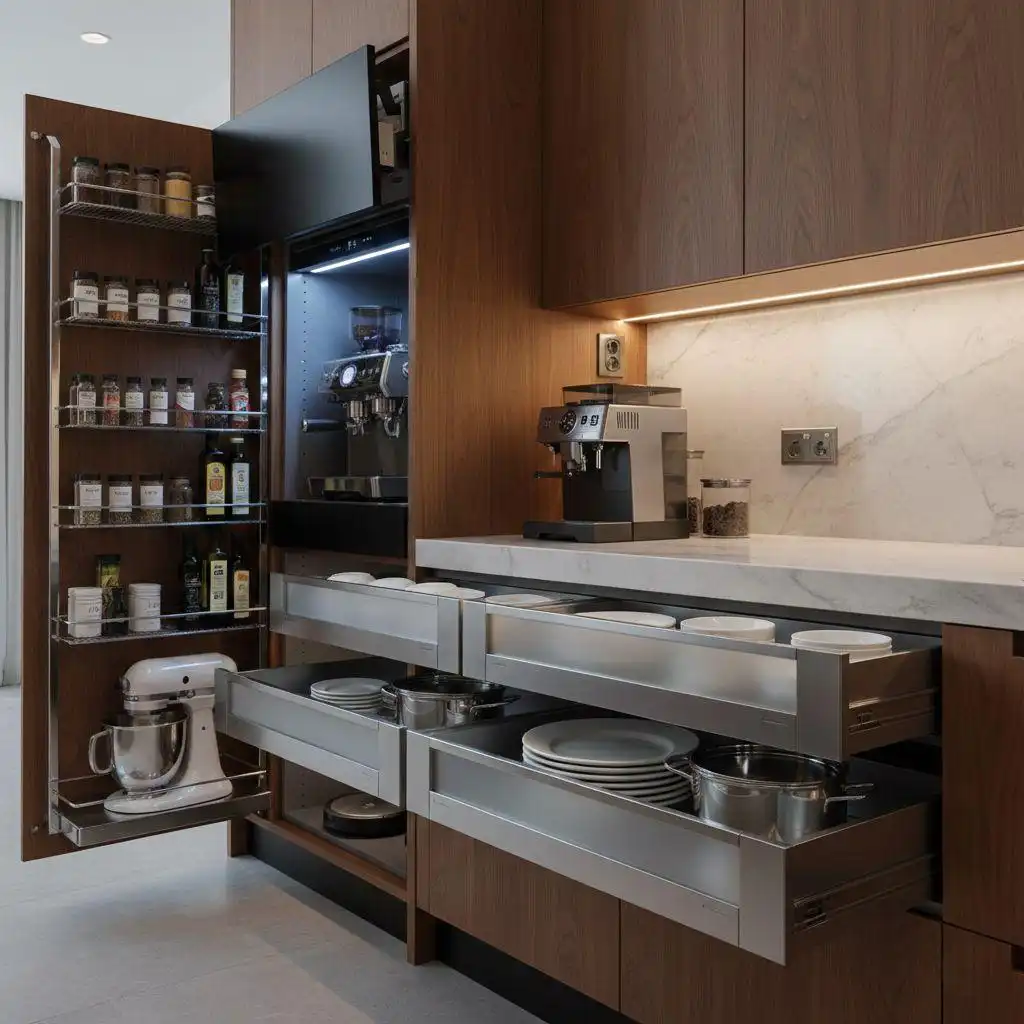
The “Barista Zone” Integration: Custom cabinetry allows for dedicated appliance garages with integrated power.
-
Vertical Organization: Instead of deep, dark base cabinets, modern custom kitchen cabinets utilize full-extension pull-outs for everything from spices to heavy mixers.
-
Ergonomic Toe-Kicks: We can customize the height and depth of the toe-kick in your custom kitchen cabinets to accommodate different heights and even robot vacuums.
FAQ: Resolving Procurement Ambiguity
What is the typical lead time for custom kitchen cabinets?
In 2026, high-end custom kitchen cabinets typically require 8 to 14 weeks for engineering, fabrication, and finishing. Any timeline shorter than 6 weeks often indicates a “semi-custom” product rather than a truly bespoke solution.
How do custom kitchen cabinets affect home resale value?
Professional data indicates that a high-quality kitchen featuring custom kitchen cabinets can yield an ROI of 80% to 120%. Buyers recognize the durability of bespoke cabinetry over “flat-pack” or stock options.
Is solid wood always better for cabinet doors?
Not necessarily. For painted finishes in custom kitchen cabinets, we often recommend HDF (High-Density Fiberboard) center panels. Unlike solid wood, HDF does not expand and contract with humidity, which prevents the “cracking” of the paint lines at the joints.
How do I verify a cabinet maker’s quality?
Ask to see a cross-section of their cabinet box. In a professional custom kitchen cabinets shop, you should see doweled or dovetail joinery, 3/4-inch backing panels, and no visible plastic brackets or staples.
Conclusion: The Absolute Authority on Your Renovation
Choisir custom kitchen cabinets is an exercise in balancing engineering with aesthetics. By prioritizing material density, hardware load-bearing capacity, and industrial finishing standards, you eliminate the risk of long-term regret. Your kitchen should be as structurally sound as it is visually captivating.
If you are ready to invest in cabinetry that prioritizes technical excellence, our architectural team is prepared to guide your project. Contact us today to begin your structural analysis and custom design phase.
[Request a Technical Consultation – Design Your Custom Kitchen Today]