



UN kitchen sink cabinet is often the least glamorous, yet most structurally vital, component in any kitchen build. Far from being a simple storage box, it functions as a weight-bearing structure, a plumbing integrator, and a front-line defense against the moisture that causes the most common kitchen failures. For residential projects, choosing the right kitchen sink cabinet boosts organization and lifespan. For commercial ventures like hotels, serviced apartments, and large residential developments, it directly impacts operational costs, maintenance cycles, and long-term asset performance.
This guide leverages technical specifications and commercial data to provide a comprehensive strategy for selecting a sink cabinet that achieves maximum durability and reliability.
📐 Standard Sizes and Critical Clearances
Correct sizing is paramount when choosing the right kitchen sink cabinet to prevent installation issues and ensure proper sink function.
Width Specifications: Accommodating Your Sink Type
Cabinet width must accommodate the size and type of the sink being installed. Selecting the wrong width can complicate counter installation and restrict sink choice:
-
30″ Sink Cabinet: Best suited for compact kitchens or standard single-bowl sinks. This is a common choice for secondary kitchens or laundry rooms.
-
33″ Sink Base Cabinet: The industry-standard size, ideal for most residential homes and apartments, offering a balance between sink size and cabinet footprint.
-
36″ Sink Cabinet: Recommended for larger undermount sinks or small double bowls, providing ample workspace.
-
42″+ Cabinet: Necessary for oversized farmhouse (apron) sinks or specialized workstation sinks, which often require custom-cut front panels.
Height and Depth Requirements: Maintaining Counter Alignment
Maintaining standard dimensions is essential for alignment with surrounding cabinetry and countertops:
-
Standard Height: The cabinet box is typically 34.5″ tall, resulting in a 36″ counter height once the countertop is added.
-
Standard Depth: Most sink cabinets are 24″ deep. Ensure this depth is maintained to match adjacent base cabinets.
-
Plumbing Clearance: For optimal serviceability, the bottom panel should be open or partially recessed. The National Kitchen and Bath Association (NKBA) recommends leaving a minimum of 8–10 inches of rear clearance to allow easy access to water lines and shut-off valves for maintenance. This is a critical factor for hotel maintenance crews.
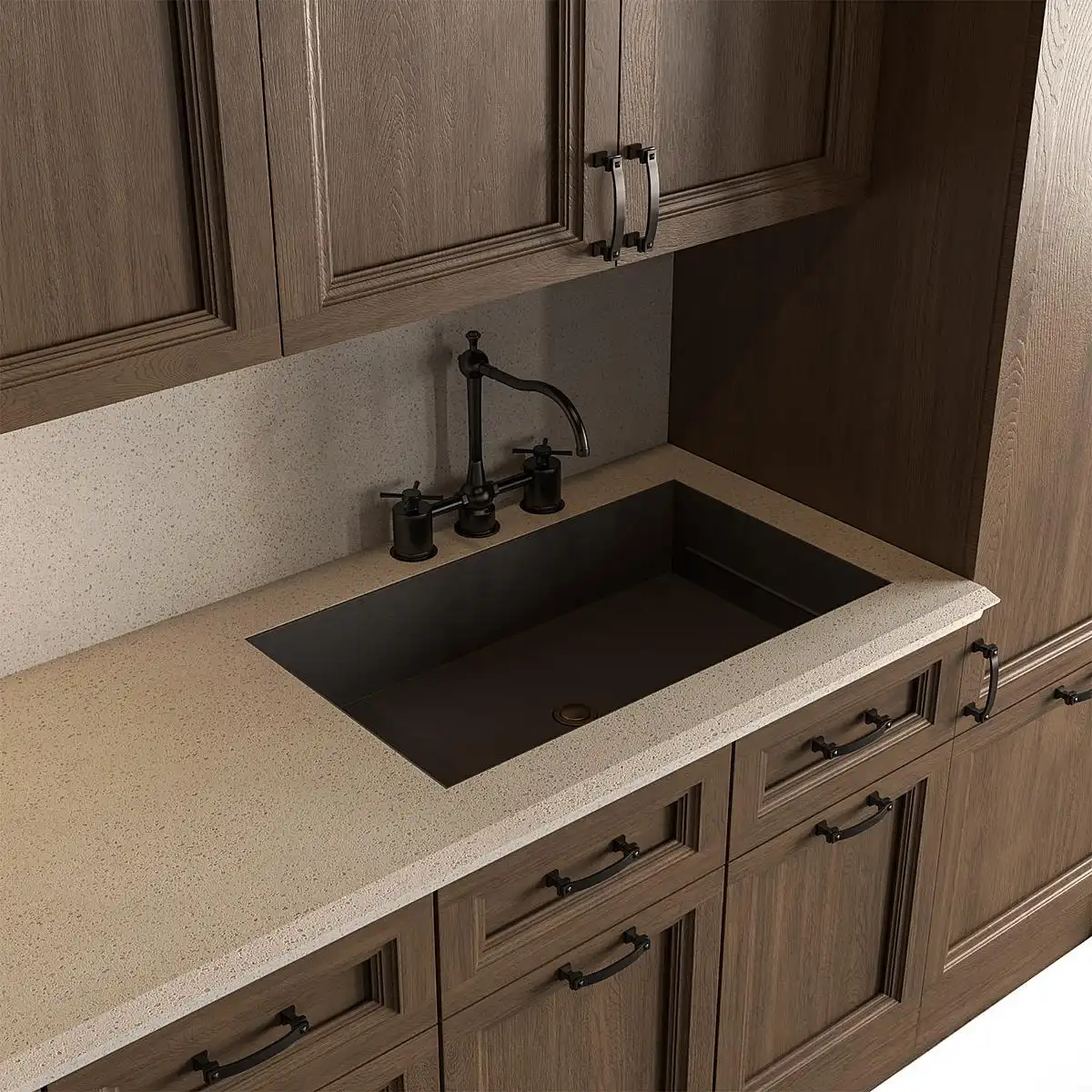
💧 Material Selection for Moisture Management and Durability
The material chosen for the sink base cabinet determines its resistance to moisture—the number one cause of cabinet failure. Choosing the right kitchen sink cabinet material is critical for high-use environments and long-term investment protection.
| Matériel | Key Benefits | Moisture Swelling Rate (Lower is Better) | Recommended Use |
| Contre-plaqué | Excellent strength, high screw-holding power, resistant to warping, structurally stable. | 0.6–1% | Hotels, High-Humidity Climates, Premium Residential |
| MDF (Medium Density Fiberboard) | Smooth surface, good for painting/laminating, lower cost than plywood, suitable for cabinet doors. | 5–8% | Dry Climates, Low-Traffic Areas (Not recommended for high-risk moisture areas) |
| Particle Board | Lowest initial cost. | 10%+ | Budget or Temporary Projects |
Commercial-Grade Protections and Hardware
For maximum durability and a longer life cycle, look for these features:
-
Melamine Faced Boards (MFB) or High-Pressure Laminate (HPL): Melamine and HPL are heat-sealed plastic coatings that create a non-porous surface, making the cabinet interior highly resistant to stains, steam, water, and strong cleaning chemicals used by housekeeping staff. HPL offers superior impact resistance.
-
Metal Reinforcements: Heavy sinks (especially farmhouse and workstation models, which can weigh over 80 lbs when full) require structural support. Choosing the right kitchen sink cabinet involves verifying the inclusion of:
-
Bottom Steel Support Bars (for heavy sinks)
-
Side Reinforcement Frames (to prevent racking)
-
Undermount Sink Brackets integrated into the cabinet structure.
-
-
High-Quality Hardware: Even the box material can’t save poor hardware. Specify:
-
6-Way Adjustable Hinges: Allows for precise door alignment after installation, crucial for commercial projects.
-
Soft-Close Drawer Slides: Reduces slamming impact, extending the life of the drawer box and hardware—a must for preventing wear and tear in multi-family units.
-
Failing to reinforce properly significantly increases the risk of sink detachment and countertop cracking, leading to costly property damage and warranty issues.
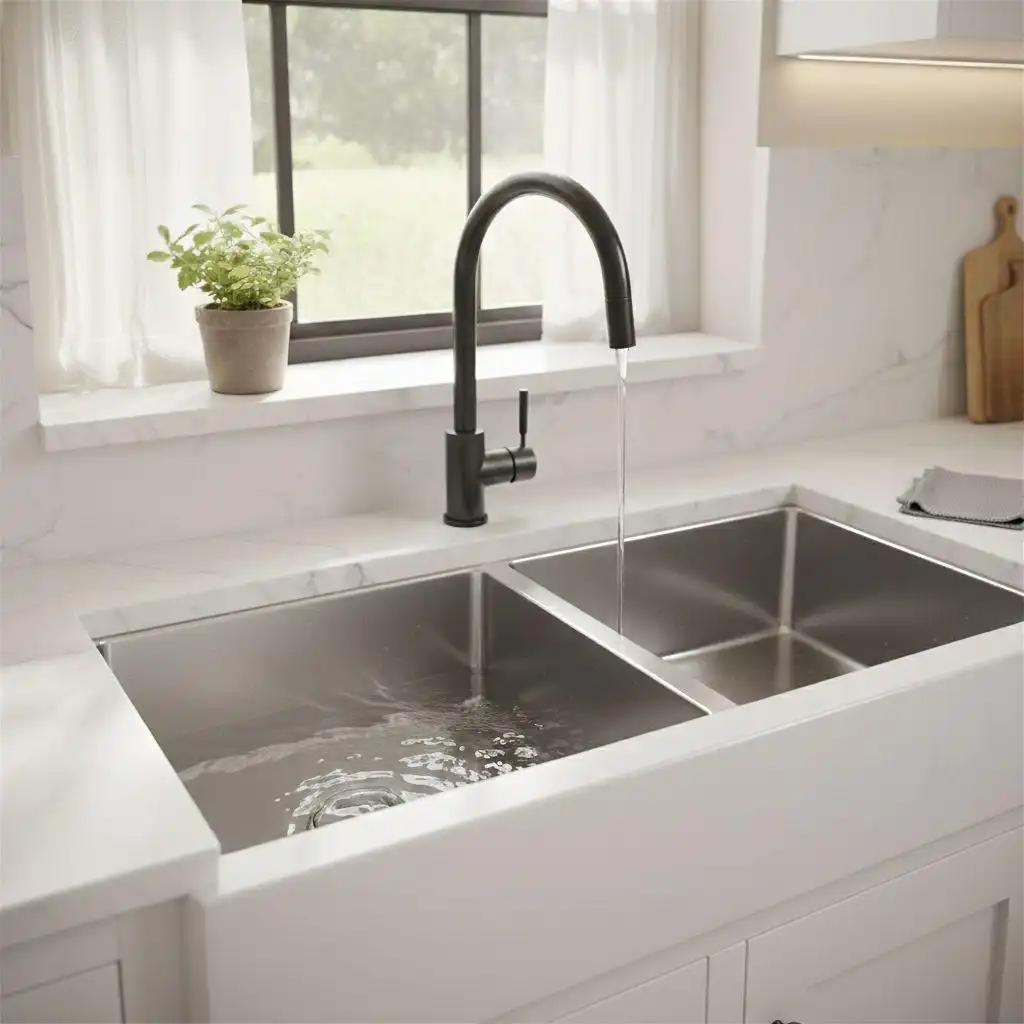
🛠️ Internal Layout for Efficiency and Maintenance
A well-designed internal layout maximizes utility and minimizes service disruption.
Effective Layout and Design Strategies
-
Removable Back Panels: These are essential for quick access to plumbing during repairs. For commercial properties, this feature alone can save hours of maintenance time and labor costs.
-
Adjustable Shelves: Allow for customized storage around plumbing pipes for tall cleaning bottles, waste disposal systems, or integrated reverse osmosis (RO) systems.
-
Full-Extension Pull-Out Trays: These metal or heavy-duty plastic trays utilize the entire depth of the cabinet, improving housekeeping efficiency by eliminating the need to reach into dark, damp corners.
-
Stainless Steel Bottom Pans: Placing a stainless steel or heavy-duty polymer liner on the cabinet floor provides the ultimate protection against water leaks, containing spills before they can saturate and damage the structural base material.
-
Integrated Waste Systems: Designating space for dual trash and recycling bins within a pull-out system streamlines kitchen function and is a standard feature for modern residential and serviced apartments.
💰 Cost Guide and Investment Strategy
The price of choosing the right kitchen sink cabinet is a function of material quality and reinforcement level, directly impacting its expected service life. Developers must view cabinet choice as a long-term investment.
| Material / Finish | Residential Use (Reference) | Hotel/Multifamily Use (Reference) | Value Rationale |
| Melamine/Plywood | $160–$280 | $220–$350 | Excellent moisture protection; low maintenance; ideal balance of cost and durability. |
| HPL/Plywood | $260–$420 | $350–$520 | Highest durability; superior impact resistance; required for severe traffic/abuse environments. |
Investing in a higher-grade, reinforced plywood cabinet minimizes the frequency of replacements, offering superior long-term value, especially in commercial settings where unit downtime is extremely costly. Focusing on materials with a swelling rate below 1% is the most reliable strategy for avoiding premature failure.👉Contactez-nous!