





Quick answer: A workable custom cabinet project timeline is driven by decision gates, not by one production date. Project managers and developers should track the handoff from quotation scope to drawing review, finish and hardware approval, production release, material preparation, fabrication, in-process QC, pre-shipment inspection, packing, and delivery. Each stage needs one named owner, a clear input, and an approved output. Most avoidable delay comes from starting the next step with incomplete drawings, unresolved appliance or site dimensions, unapproved substitutions, or an unclear shipping boundary. Put those decisions on the schedule before you ask a manufacturer to commit to a delivery date.
Who this guide is for
- Project managers coordinating cabinet packages across apartments, villas, hospitality, or multi-unit developments.
- Developers and procurement teams that need a realistic cabinet manufacturing and delivery plan.
- Contractors who must coordinate cabinet drawings, site readiness, appliances, finishes, and installation.
- B2B buyers who want to compare supplier lead-time promises against the actual release conditions behind them.
Key takeaways
- A timeline should start from a controlled drawing and specification package, not from an early visual concept.
- The buyer, designer, contractor, and factory each own different decisions; a named owner prevents approval gaps.
- Drawing approval, material confirmation, sample approval, and production release are separate milestones.
- Cabinet production can be on schedule while a project is still delayed by site measurement, appliances, packing, shipping, or installation readiness.
- Track open questions and revision dates alongside each milestone so that a delayed decision does not disappear inside email.
- Confirm the commercial shipping term and named place before treating an estimated arrival date as the supplier’s delivery commitment.
What should a custom cabinet project timeline include?
A project timeline should show the steps that change the cabinet itself and the steps that affect when it can be installed. For most custom projects, that includes scope alignment, detailed drawings, buyer and design approvals, finish and hardware confirmation, production release, material preparation, fabrication, QC, packing, shipping, and the receiving or installation handover.
The sequence is more important than a generic number of weeks. A factory can reserve a production window, but it cannot safely cut panels from a drawing that still has open appliance dimensions or unapproved changes to door style, visible end panels, hardware, or room quantities. Likewise, a product can pass final inspection yet be unable to leave because packing information, payment, shipping documents, or container arrangements are not ready.
Custom cabinet project milestones, owners, and outputs
Use the following matrix as the working schedule. It does not replace a detailed Gantt chart, but it gives each party a clear release condition before the next stage begins.
On mobile, swipe left or right to view all table columns.
| Milestone | Primary owner | Required input | Output that releases the next stage | Common delay risk |
|---|---|---|---|---|
| 1. Scope and quotation alignment | Buyer / project manager | Current room list, cabinet types, budget direction, and delivery destination. | Confirmed quotation scope, inclusions, exclusions, and commercial basis. | A supplier prices a different room count, material level, or delivery term. |
| 2. Technical drawing review | Factory with designer and buyer approval | Dimensions, elevations, appliance data, site constraints, and finish direction. | Controlled drawing revision with open points listed. | Missing site dimensions, appliance specifications, or conflicting elevations. |
| 3. Finish and hardware confirmation | Buyer / designer | Door style, finish reference, carcass scope, handles, hinges, runners, and visible panels. | Approved sample or written specification reference. | Visual approval is given without confirming substrate, sheen, hardware, or edge treatment. |
| 4. Production release | Buyer / project manager | Approved drawings, approved specification, commercial release, and agreed change-control rule. | Release instruction and production schedule start point. | Team assumes the deposit or a verbal approval is enough to start production. |
| 5. Material preparation and cut planning | Factory | Released BOM, finish information, hardware list, and nesting or cut plans. | Materials allocated and production work order issued. | Late material substitution, incomplete hardware schedule, or change after ordering. |
| 6. Fabrication and in-process QC | Factory | Production work order, panel processing, finishing, drilling, and assembly criteria. | Completed cabinet components checked against drawings and QC points. | Wrong drilling, finish mismatch, unsealed edges, or revision confusion on repeated units. |
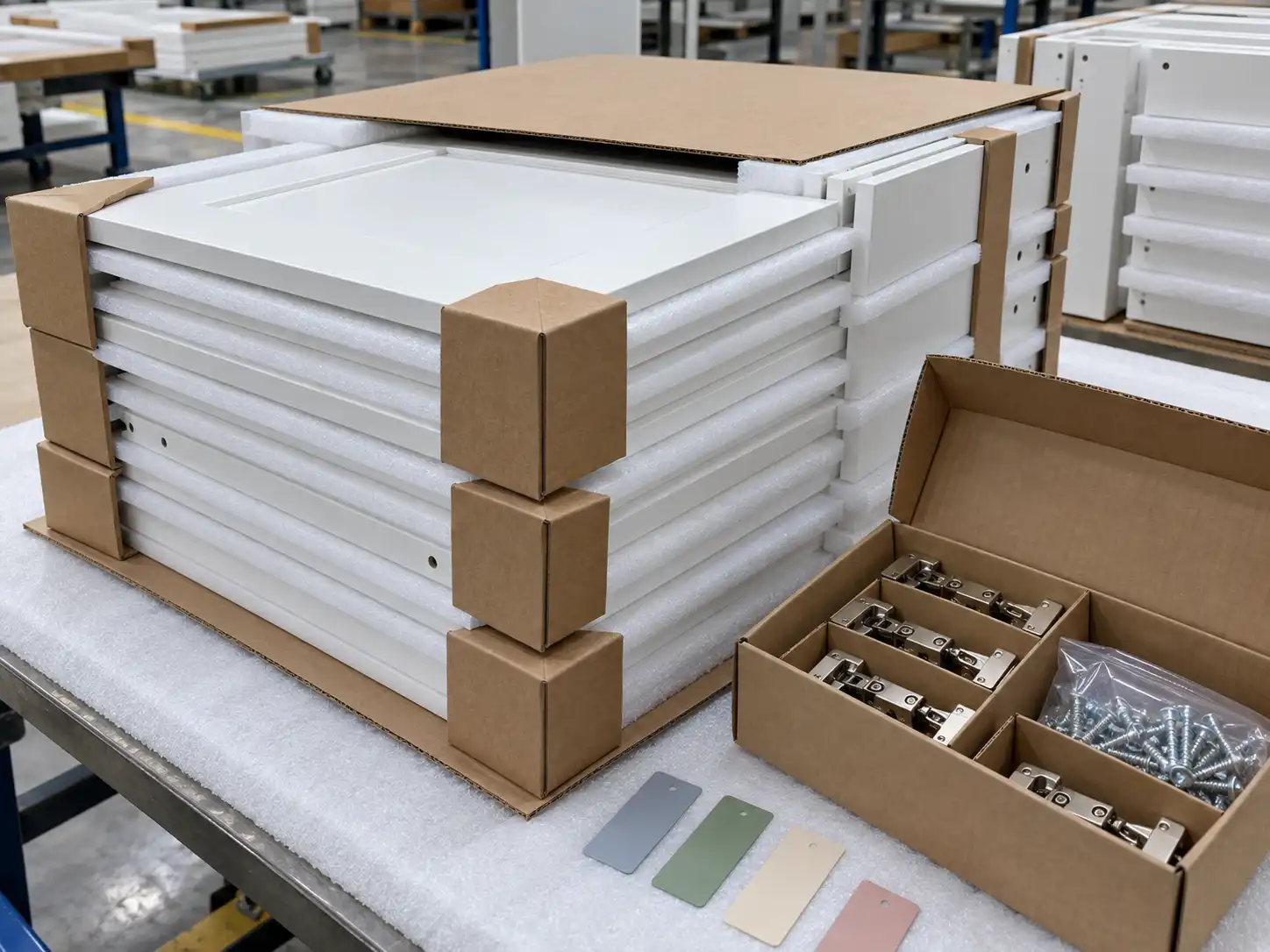
| 7. Final QC, packing, and shipping readiness | Factory with buyer visibility | Final inspection points, packing standard, room or cabinet coding, documents, and balance-payment process. | Packing record, shipment-ready goods, and required documents. | Packing is treated as separate from product approval or accessories are not controlled. |
| 8. Shipment, receipt, and installation handover | Logistics party / buyer / contractor | Named Incoterm, booking, receiving plan, site access, and installation sequence. | Delivery confirmation, damage review, and installation release. | Arrival estimate is mistaken for delivery responsibility, or site is not ready to receive cabinets. |
Which decisions must be complete before production starts?
The drawing revision must be controlled
Cabinet drawing review is not only a design exercise. It determines cabinet widths, heights, fillers, finished end panels, appliance openings, service cut-outs, door swing, drawer clearance, and installation interfaces. Before release, each drawing should carry a revision identifier and a date. The factory, buyer, and project team should know whether changes are still allowed and how they will affect the schedule.

For multi-room work, use a room schedule with cabinet codes instead of relying on descriptive labels alone. A clear code links drawings, cut lists, packing labels, and installation records. If the site has not been measured or appliances are not confirmed, list those points as open rather than allowing them to hide behind the phrase “to be confirmed on site.”
The approved finish should match the build, not just the appearance
A paint chip or door sample can establish colour, texture, and profile, but it does not approve every construction decision. Confirm the door substrate, carcass material, exposed-edge treatment, hardware series, visible panels, and special areas such as sink bases, vanity cut-outs, or tall-unit joins. The relevant KEJIA custom cabinet products may use different construction details, so a kitchen door sample should not be assumed to approve a wardrobe or bathroom vanity automatically.
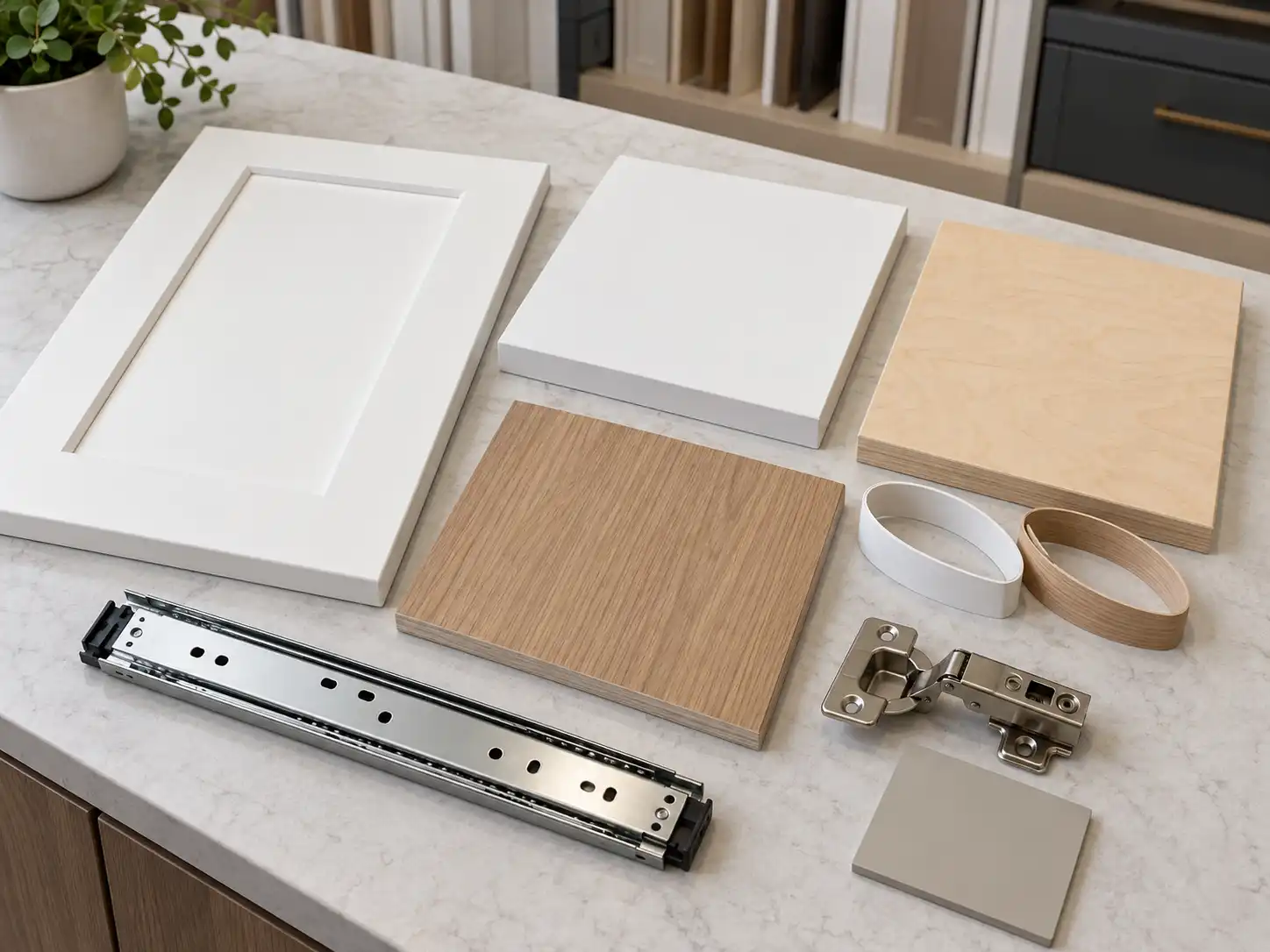
Where a sample is not needed, use a written reference that is specific enough for QC: finish name or code, sheen or texture where relevant, panel application, hardware series, and the visible sides or returns included. A schedule cannot prevent every variation, but it gives the production team a checkable standard.
The commercial release point must be explicit
Do not use “lead time starts after confirmation” unless the quote states what confirmation means. In practice, the release condition may include approved drawings, a confirmed finish and hardware schedule, receipt of an agreed payment milestone, and closure of technical questions. If one of these is missing, the factory may be unable to order materials or issue a stable work order.
Set the release event in writing, then calculate the production plan from that event. This is fairer than expecting a factory to absorb every late design decision inside the original completion date.
How delay risk moves through the cabinet project timeline
Not every delay is a factory delay. The useful question is whether the risk is identified early enough for the responsible party to act. The table below separates common risks from their practical response.
On mobile, swipe left or right to view all table columns.
| Delay risk | When it usually appears | Owner who should resolve it | Schedule effect if unresolved | Practical prevention |
|---|---|---|---|---|
| Room dimensions or appliance data are late | Drawing review | Buyer, designer, or contractor | Drawings cannot be frozen; later changes can affect cut panels and openings. | Set a measurement and appliance-data deadline before detailed drawings start. |
| Finish, door profile, or hardware is changed after approval | Sample approval or production release | Buyer / designer | Material reorder, revised drilling, rework, or a new approval cycle. | Use a dated approval record and a written change-control rule. |
| Cabinet count or visible-panel scope changes | Scope review or drawing review | Project manager / buyer | Quote, material quantities, packing, and production planning must be revised. | Keep a room-by-room quantity schedule tied to the drawing revision. |
| Material or hardware is not final | Before production release | Buyer with factory advice | Work order cannot be finalized or substitute approval is needed. | List a base choice and approved alternate before materials are ordered. |
| Site is not ready to receive or install cabinets | Shipment planning | Contractor / project manager | Storage, re-delivery, handling damage, or installation delay. | Confirm access, dry conditions, finished floors, and installation sequence before shipping. |
| Shipping responsibility is misunderstood | Booking and delivery planning | Buyer / logistics party | Goods may be ready but booking, clearance, or destination handling is not arranged. | State the named place and responsibilities under the agreed commercial term. |
What should project managers ask the factory for at each stage?
At drawing review, request a revision-controlled drawing package, a list of open technical points, and confirmation that cabinet codes match the room schedule. At sample or specification approval, request a photo record or physical reference tied to the material and hardware schedule. At production release, ask for the planned start condition and an agreed rule for changes after release.
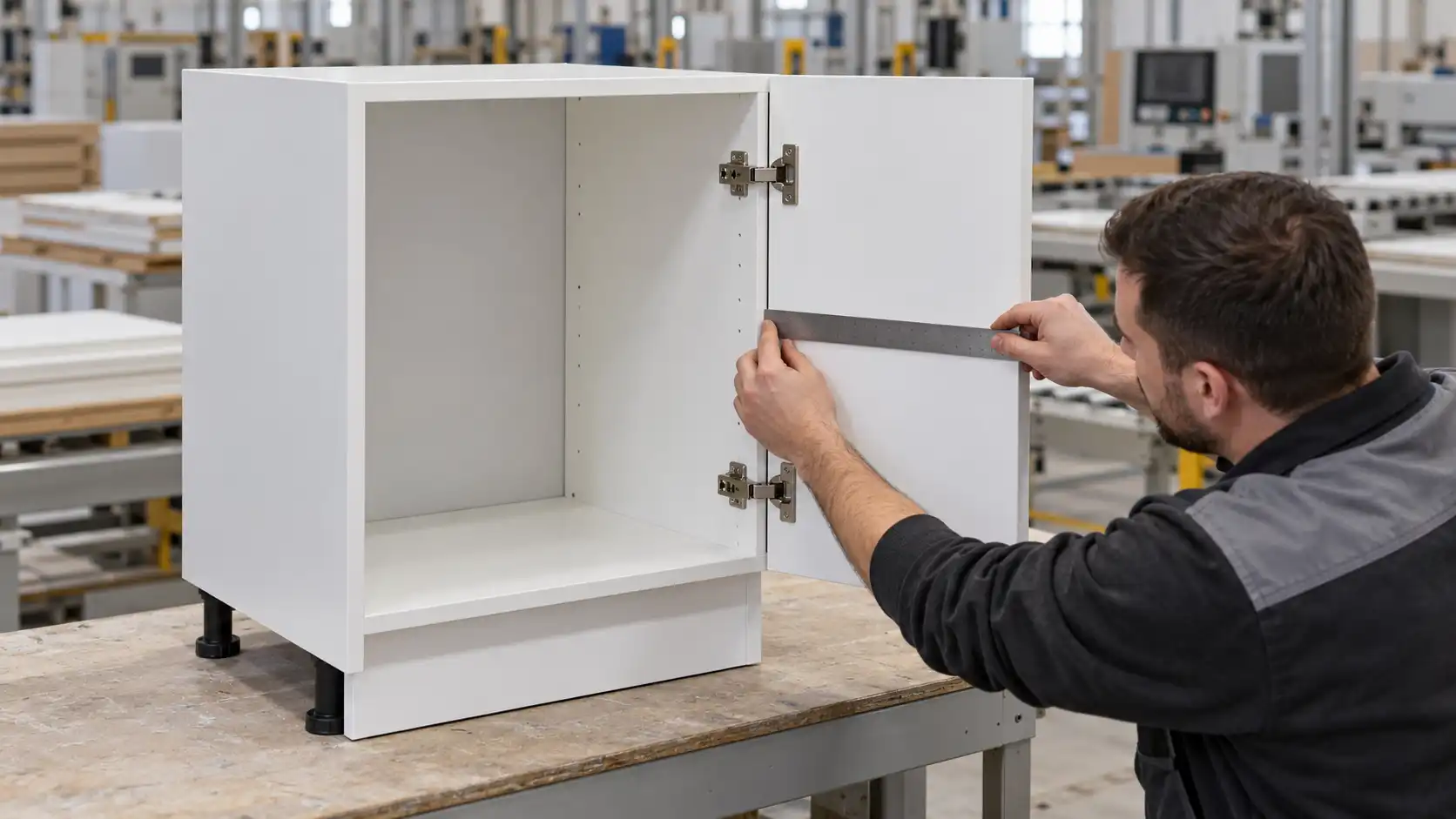
During production, ask for updates that are linked to milestones rather than a stream of uncontextualized workshop photos. Useful updates identify the project or room code, the stage of production, the issue found if any, and the action taken. Before shipment, request final-QC and packing records, room or cabinet coding confirmation, the document list, and the information needed to coordinate the booking.
This does not mean a project manager must run the factory. It means the manufacturer has a clear way to report progress and the project team has a clear point at which to make a decision.
Factory insight: protect the production window with a clean release package
From a custom cabinet manufacturer’s perspective, production time is most reliable when the release package is complete. The package normally brings together the approved drawing revision, room schedule, material and finish requirements, hardware list, production notes, packing requirements, and approved change process. If those items are split between emails, informal mark-ups, and several versions of a drawing, the risk is not only delay; it is building the wrong version correctly.
At KEJIA, the practical approach is to identify unresolved items before the production release rather than calling them “minor.” A late handle centre, appliance model, panel return, or vanity plumbing location can change drilling, panel size, or packing allocation. For a development project, the team should also agree how repeated units will be coded, inspected, and packed so that a correct cabinet reaches the correct room at installation.
Six timeline mistakes that create avoidable cabinet delays
1. Promising delivery from a concept drawing
An early layout helps budgeting, but it is not a production package. Tie any early date to stated assumptions and re-baseline it after detailed drawing review.
2. Treating drawing approval and sample approval as the same event
Drawings approve layout and dimensions; samples or a finish schedule approve visible materials and hardware. Keep both records visible so one approval is not used to imply the other.
3. Starting production with open appliance or site information
Unconfirmed appliance cut-outs, plumbing positions, and site measurements can force a late change to a cabinet that has already been cut or finished. Give these items a named deadline and owner.
4. Allowing changes without a schedule decision
Changes are sometimes necessary. The problem is not the change itself but failing to record its effect on drawings, materials, cost, and delivery. Use a change notice before the factory acts on it.
5. Treating packing as the last task
Packing determines how panels, glass, hardware, and room-coded components survive the trip and reach the installer. Confirm the method during production planning, not after final QC.
6. Confusing production completion with project delivery
Production completion, port departure, arrival, site receipt, and installation are separate events. The ICC Incoterms rules overview can help teams clarify the shipment and risk boundary, but the project schedule should also show who books, receives, and checks the goods.
Custom cabinet project schedule checklist
- Issue one controlled drawing revision and room or cabinet schedule to all decision-makers.
- Assign an owner and due date to every open dimension, appliance detail, finish, hardware, and site-interface question.
- Confirm which physical sample or written specification approves each visible material and fitting.
- Record the production release condition, change-control rule, payment milestone, and the date from which lead time is measured.
- Ask the factory to link production updates to project and room codes, milestone status, and any corrective action.
- Confirm the final-QC points for finish, doors, drawers, drilling, visible panels, accessories, and packing.
- Agree the packing level, accessory separation, cabinet or room identification, spare-part approach, and document list.
- State the named commercial delivery term, booking responsibility, receiving plan, and damage-report process.
- Check site access, storage conditions, finished floors, appliance availability, and installation sequence before shipment.
- Update the project schedule whenever an approved change alters drawings, materials, production, packing, or delivery.
Frequently asked questions
How long does a custom cabinet project take from drawings to delivery?
There is no reliable single duration because the plan depends on project size, product mix, finish, hardware, approvals, production capacity, packing, and shipping route. The useful approach is to identify each release gate and calculate from the date that drawings, specifications, and commercial conditions are complete. Ask the factory to state the assumptions behind its lead-time commitment.
When should cabinet production begin?
Production should begin after the controlled drawings, material and hardware requirements, commercial release condition, and outstanding technical questions are complete enough to create a stable work order. Starting earlier can appear to save time, but it often shifts the risk into costly material changes, rework, or incorrect drilling later.
Who should approve cabinet shop drawings?
The party responsible for the design and project decision should approve the drawings, with input from the contractor for site conditions and from procurement for the agreed scope. The factory should check manufacturability and identify open points, but it should not guess an appliance, site measurement, or finish decision that the project team has not confirmed.
Can finish samples be approved after drawings are released?
Sometimes, but only if the unfinished decision does not affect material ordering, door construction, edge treatment, hardware drilling, or the production sequence. If it does, keep the relevant cabinets out of release or agree a written provisional approach. A clear exception is safer than treating an incomplete finish decision as approved.
What causes the most common cabinet-project delays?
Common causes include late dimensions, unconfirmed appliances, changing quantities or visible panels, late finish or hardware decisions, revisions that are not controlled, and site readiness problems. Packing and delivery planning can also delay a project when responsibility for booking, receiving, storage, or damage claims is unclear.
What information should be available before shipping cabinets?
Before shipping, confirm that final QC and packing are complete, the project coding and packing list are usable, documents and payment conditions are addressed, and the logistics party knows the required booking and receiving arrangements. The contractor should also confirm site access, storage, and the installation sequence so that cabinets are not exposed to avoidable handling damage.
How should a project team manage changes after production release?
Use a written change notice that identifies the affected cabinet codes, drawing revision, material or hardware impact, cost effect, and schedule effect. The factory should confirm whether work has already started and what can still change. Do not rely on a marked-up chat message as the production instruction for a multi-unit project.

Discuss your cabinet project schedule before production release
The most useful time to test a cabinet schedule is before the project depends on it. Discuss a project schedule with KEJIA and share your drawing revision, room schedule, product scope, finish and hardware requirements, destination, and target handover date. We can help identify the approvals, production milestones, packing points, and delivery responsibilities that need to be clear before a custom cabinet order moves forward.